Portuguese
  Spanish


The project in the province of Girona started from scratch, went through four versions until the current one stood up, uses natural material from the forest itself, and shows, step by step, how a cheap cabin is built without professional work
A series of attempts, four cabins erected, and a final bill that impresses any builder: less than 5,000 euros. On a mountain in the province of Girona, Spain, the Spaniard Yaya built an 18-square-meter cabin with a wooden structure and floor, after learning construction techniques by watching YouTube videos, according to the magazine Versa, from the Portuguese group IOL, in an article dated July 10, 2026.
The number that is startling is the cost. Adding up the four cabins she erected throughout the project, the total expenditure was below 5,000 euros, equivalent to about R$ 31,000, notes Versa. It’s less than many bathroom renovations cost in Brazil, and note that this amount covers four constructions, not just one.
Four cabins to get it right: the evolution of the construction
The work didn’t come out perfect the first time, and that’s where the construction lesson lies. The first cabin collapsed, the second incorporated clay and natural materials, and the current one, the 18-square-meter cabin, has a wooden structure and floor, details Versa.
-
In his spare time, a truck driver with no experience in carpentry transforms a plot of land into a workshop, learns to work with wood, and builds 1,700 little houses that have already provided shelter from the cold and rain to more than 5,000 abandoned dogs and cats in the interior of São Paulo.

-
A Brazilian city dredged sand from the seabed, extended 2 km of the Beira-Mar, and created a new 80-meter landfill on one of the most famous coastlines in Brazil; years later, what seemed like a bold project turned into an expanded boardwalk, bike path, standardized kiosks, and a new leisure hub in the state.
-
Friends turn paper into ‘bubble wrap’ without plastic to protect products inside cardboard boxes, win an innovation award in the UK, and join a 13 million euro European project to bring the packaging to industrial scale.
-
Mechanics remove the engine from a used Fiat Fiorino, install an electric kit with WEG and FuelTech, place batteries in the cargo area, and prepare the van to run 100 km per day in Brazil.


Notice what the sequence teaches, in reading this editorial, duly signaled: each version corrected the mistake of the previous one. The first fell because it lacked technique; the second tested clay and natural material; the current one reached the combination that stood up. It’s the trial and adjustment method that supports any self-construction, and the project video shows exactly where each choice succeeded.
Wood, clay, and stone: the material that came from the forest itself
The choice of inputs is the heart of low cost. The current cabin has a wooden structure and floor and features a fireplace for heating, according to Versa.
It makes technical sense, as observed by this editorial, duly noted. The mountain of Girona, in northeastern Spain, is surrounded by forest, so the raw material is around the construction: wood for the structure, stone for supports, clay for sealing. It’s the type of bioconstruction that has spanned centuries in rural areas and that DIY YouTube videos have brought back into fashion, with a global audience. By buying almost nothing ready-made, the budget plummets.
It’s worth understanding what bioconstruction is, still in noted reading, because it explains the cost. It involves erecting the building with natural and local materials, wood, earth, straw, stone, instead of industrialized brick, cement, and steel. Bioconstruction replaces the expense of purchased material with the work of collecting and preparing what nature offers on-site, which is why it results in extremely low-cost projects. The Girona cabin is a manual of this logic: each wall is what the mountain delivered for free, shaped with technique.
And there’s a detail that reduces the cost even further: almost no machinery. The image that opens this article, published by Versa, shows the most sophisticated tool of the project, a domestic chainsaw. The rest, according to the project’s images, is a handsaw, hammer, and time.
This is a point that Brazilians dreaming of a country house need to understand, in noted reading of this editorial. In a traditional project, a good part of the budget goes to specialized labor and equipment. In the bioconstruction of the Girona cabin, the work is done by the builder themselves and the tools are those of any household. It’s this exchange, money for effort and learning, that reduces the cost from tens of thousands of reais to the 5,000 euros of the project. There’s no magic in the low cost: there’s free material, small size, and the hands of those who build their own wall.
Inside the 18 m²: what fits in a minimal cabin
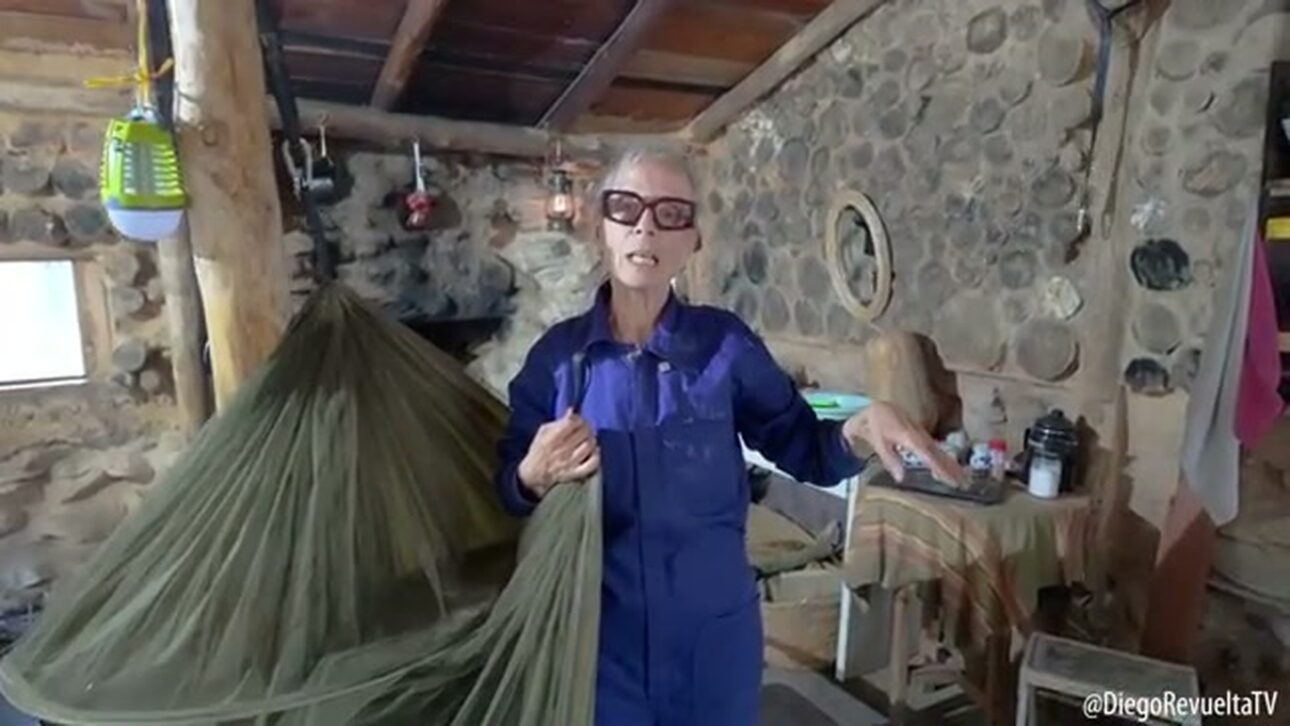
The space is compact and designed for the essentials of construction. The 18-square-meter cabin has a fireplace to warm up in the mountain winter and an improvised hammock bed, while the permanent bed is not ready, notes Versa.

Eighteen square meters is the size of a large garage space, in noted comparison of this editorial. It’s this minimal cut that makes the account of less than 5,000 euros exist: the smaller the area, the less wood, less foundation, less roof. Building small is the first rule for those who want to build cheaply, and the Girona cabin takes the principle to the limit.
The minimal design also has thermal comfort logic, as noted. A small space with a fireplace heats up quickly and uses little wood, which matters in the winter of the Spanish mountains. It’s the same reason why mountain cabins, from Alaska to the Alps, are almost always compact: less volume to heat means less energy spent. The 18-square-meter cabin in Girona follows this centuries-old construction guide for cold climates, but at the cost of bioconstruction.
What the technique teaches (and what it doesn’t solve)
It’s worth separating the replicable method from the rest, in this editorial reading, duly noted. What bioconstruction teaches: you can learn the technique for free in video, as was done here; making mistakes is part of the budget, and the first cabin that fell was cheap enough not to end the project; and living in 18 square meters is what makes the account close at less than 5,000 euros.
There is still a point that the Girona project exemplifies well, still in noted reading: bioconstruction is not just about saving money, it’s also about durability when done well. Treated wood, compacted clay, and support stone withstand winter and humidity if the technique is respected, and that’s precisely why the fourth cabin stood where the first fell. Those interested in the topic can find a flood of free tutorials today, and the video of this specific construction became one of those spontaneous bioconstruction lessons on the internet.
What the technique doesn’t solve, and the article is honest about this: Versa does not provide information on the land situation or what Spanish law says about such constructions, and the rules in Brazil are different. Before any cabin, it’s the ground, documentation, and local legislation that need to be resolved, and no YouTube tutorial provides that. The technique of erecting the cabin is the easy and cheap part; the legal part is what requires attention. Tell us in the comments: would you build an 18-square-meter wooden cabin for less than R$ 31,000?
Watch: the construction of the Girona cabin on video


The step-by-step of the project is recorded on video. In May 2026, the Spanish channel Diego Revuelta published “I live alone in the mountain because I don’t want to pay rent,” showing the construction of the wood and clay cabin in the Girona mountain, the same project reported by Versa.