Portuguese
  Spanish



1915Çanakkale Bridge had a record lift of 155 tons at 318 meters, became the largest suspension bridge in the world, and reduced crossing to 6 minutes.
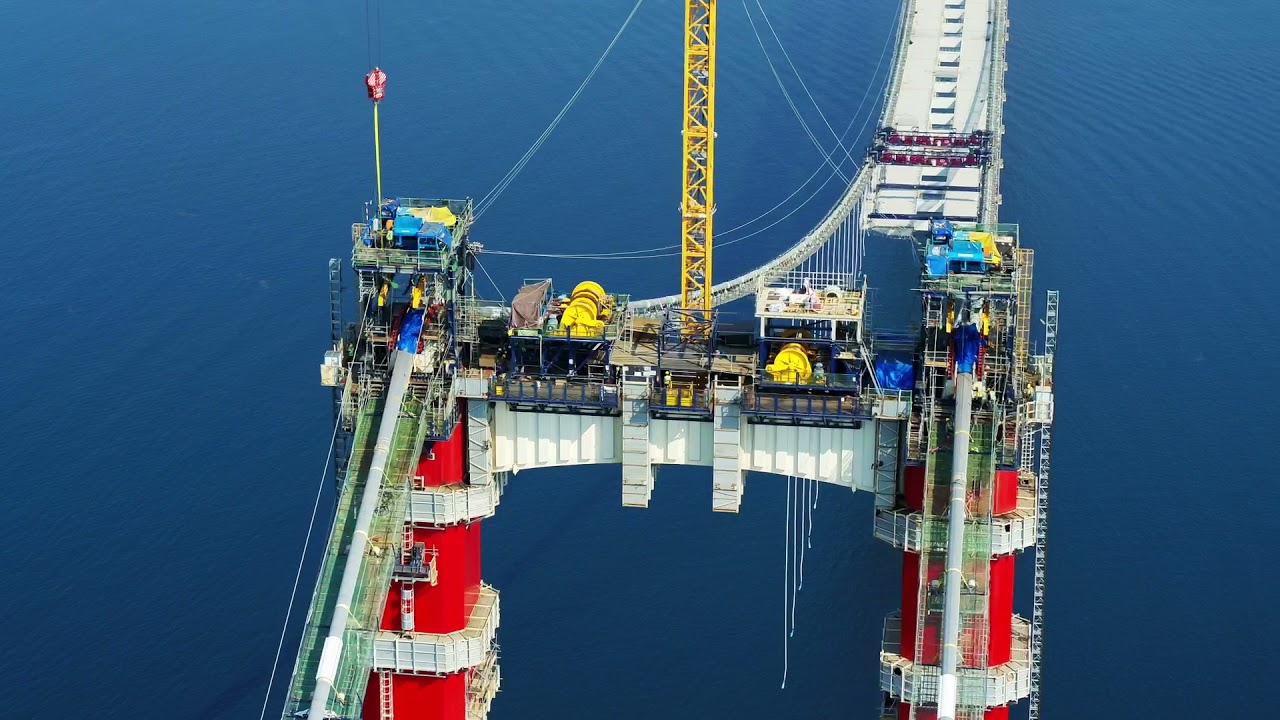
At midnight on June 7, 2020, one of the most delicate moments in the construction of the 1915Çanakkale bridge in Turkey took place at the top of the towers erected over the Dardanelles Strait. According to KHL, a Favco M2480D tower crane, with a capacity of 330 tons, lifted a piece weighing 155 tons to a height of 318 meters, with the top of the equipment reaching 328 meters above the water.
The operation took about 30 minutes and marked the positioning of the central section of the bridge’s upper crossbeam. The project itself also made history: according to the General Directorate of Highways of Turkey and ENR, the 1915Çanakkale became the suspension bridge with the longest central span in the world, at 2,023 meters, and reduced the crossing of the strait to about 6 minutes.
1915Çanakkale Bridge was designed to be record-breaking and full of symbolism
The General Directorate of Highways of Turkey reports that the bridge connects Gelibolu to Lapseki and is part of the Malkara-Çanakkale highway. The central span of 2,023 meters was defined as a reference to the centenary of the Republic of Turkey, while the steel towers were constructed with a height of 318 meters.
-
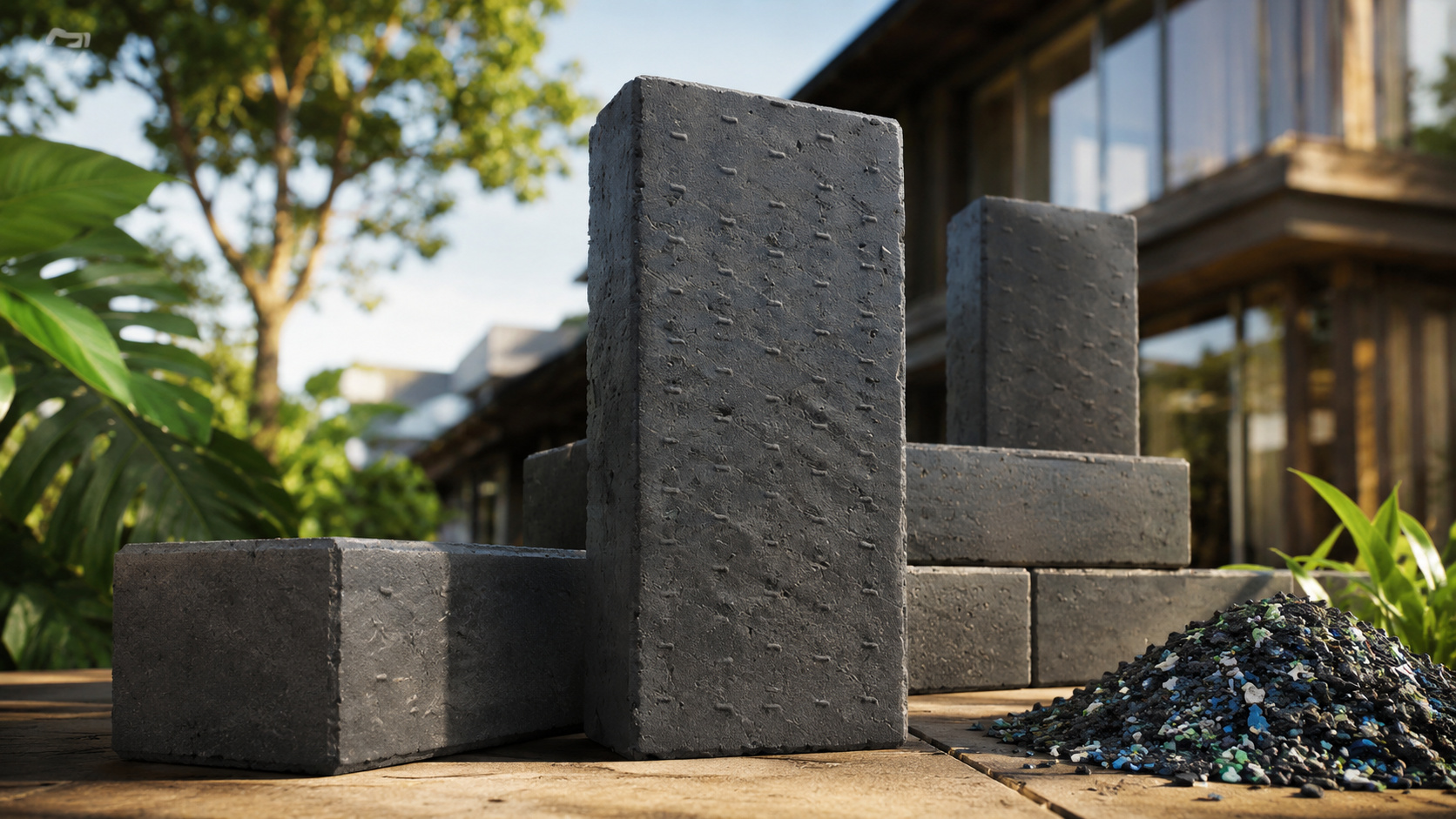
An architect transformed plastic waste into bricks that fit together like Lego, and with just four people, built a 40 m² two-bedroom house in five days for about US$ 6,800, proving that street pollution can become a roof for the poor.

-
Young Moroccan created a system to recycle plastic collected by waste pickers, transformed the waste into construction blocks, surpassed 200 tons reused, started producing more than 15,000 pieces per month, and saw demand exceed the capacity of his own factory.

-
City Hall spends almost R$ 2 million on a wooden bridge only 2.5 meters wide to prevent the isolation of 5,000 people, but information about lifespan, load, and maintenance does not appear in public disclosures.

-
More than 2,100 trucks transported 16,200 cubic meters of concrete without interruption to create the foundation of the tallest skyscraper in the western United States and break a world record.


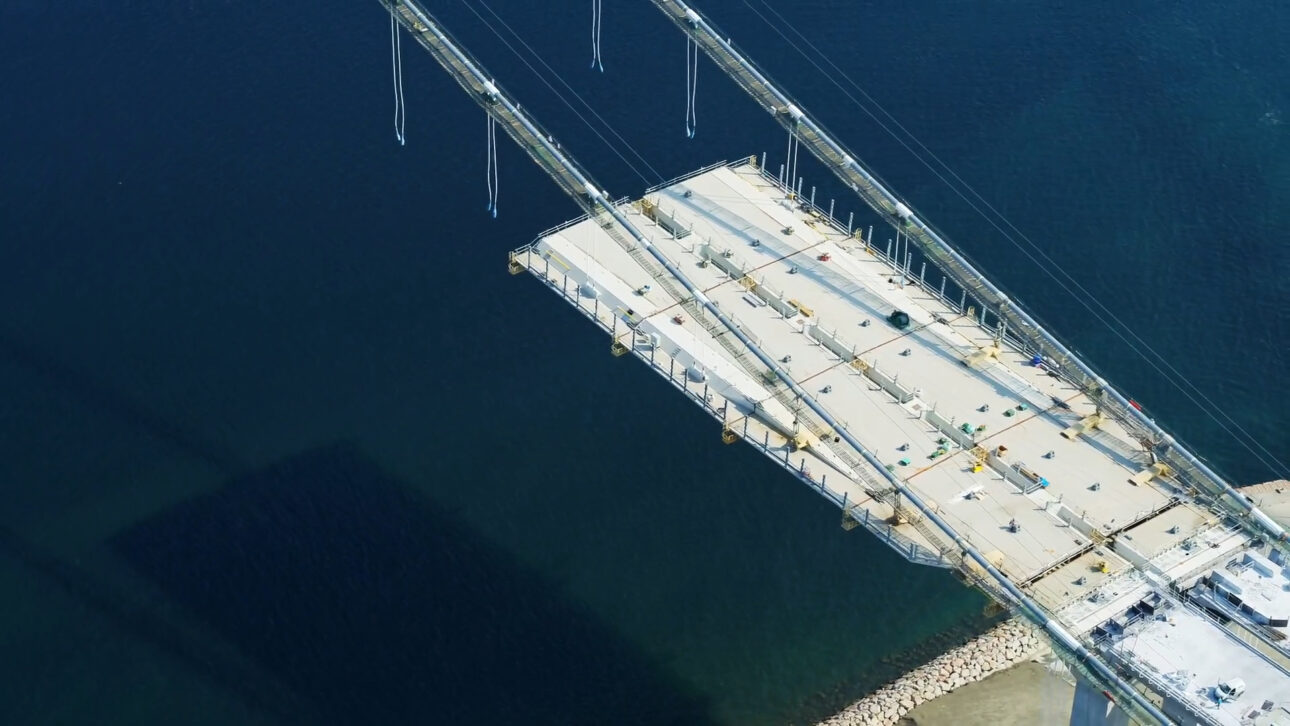
Popular Science highlighted that the 318 meters also carry symbolic value linked to the date of March 18, associated with the memory of the Gallipoli campaign. The publication also noted that the height of the towers was not just symbolic: in suspension bridges with longer spans, the towers need to grow to support the forces transferred by the cables.
With the upper ornaments, the total height reached 334 meters, according to the Turkish highway authority. Meanwhile, ENR recorded that the red and white towers became the tallest in the world among suspension bridges, reinforcing the monumental nature of the project.
Hoisting of 155 tons at the top of the tower became a world record
According to KHL, the M2480D crane used in the project lifted the 155-ton piece to a height of 318 meters on the Asian side of the strait. The maneuver was executed at midnight on Sunday, June 7, 2020, and the equivalent hoisting on the European side was completed 24 hours later.
The same publication reported that the top of the crane was 328 meters above the water and that the operation took about 30 minutes. This made the maneuver one of the most extreme hoistings ever performed by a tower crane at great height.
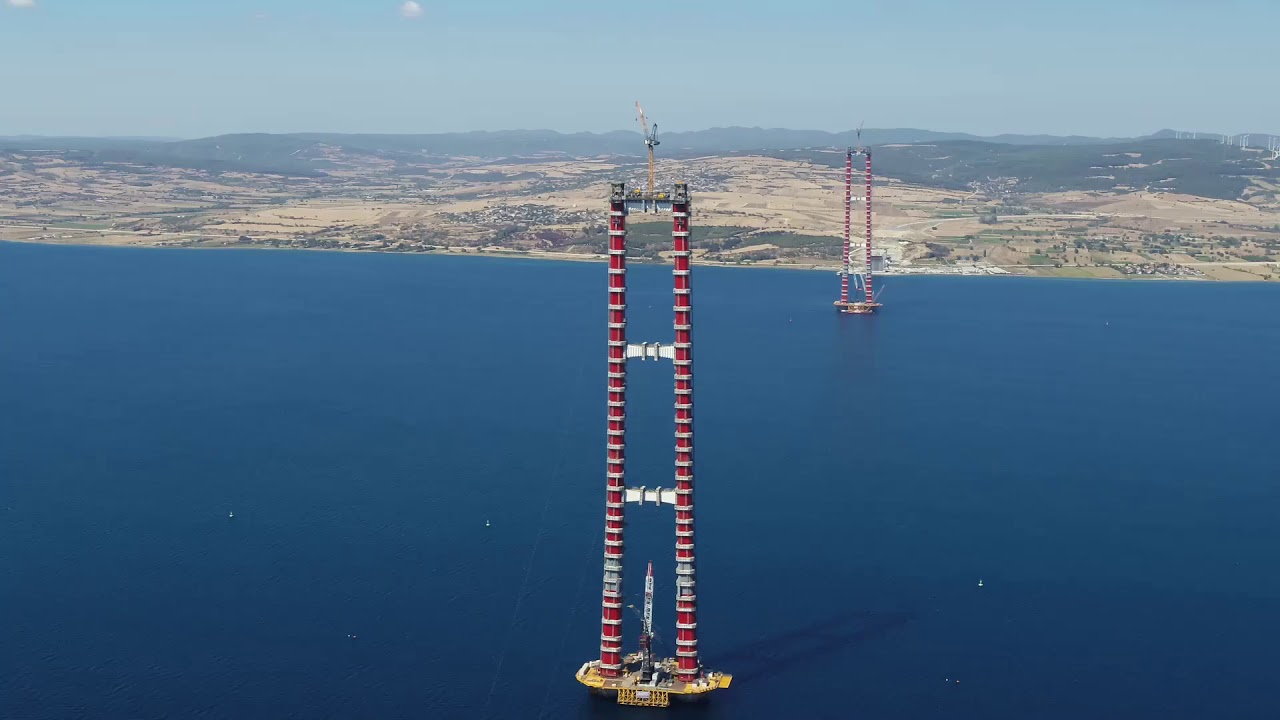
ENR also recorded the feat and reported that the crane was part of a sequence of records on the site. The magazine described the hoisting of the 155-ton piece to 318 meters as part of the achievements that marked the construction of the bridge.
Strategy changed the assembly logic and reduced dangerous work at height
The solution adopted by the construction consortium was to use larger and heavier sections, instead of lifting small pieces for subsequent welding at height. According to KHL, the capacity of the M2480D allowed lifting heavy modules and reducing the need for fragmented assembly at the top of the towers.


This change had a direct effect on the schedule and safety. The publication reports that the strategy was developed to shorten the project, reduce risks, and make a more industrialized construction methodology viable in an extremely demanding environment.
In practice, the logic was simple and powerful: manufacture more in a controlled environment and assemble less at the most dangerous point of the site. In a structure erected over the sea, at great height and exposed to wind, this represented a real gain in productivity and operational control.
600-ton cranes were assembled on land and taken whole to the sea
Even before the record lift, the project had already faced an unusual operation. According to ENR, a floating barge crane with a capacity of 2,000 tons transported and lifted the M2480D already assembled, weighing about 600 tons, from the dry dock to the construction site, about 1 kilometer away.
This avoided piece-by-piece assembly over the bridge’s maritime foundation. The method reduced time, simplified installation, and allowed cranes to be positioned to execute the lifting of the towers and large metal pieces of the project.
Strong winds, seismic risk, and construction over water made the site one of the most difficult of the project
ENR highlighted that the bridge was built in a region of strong winds, intense maritime traffic, and significant seismic activity. According to the magazine, these conditions required specific solutions for structural design, aerodynamic stability, and resistance to seismic actions.
The challenge was not only in the record length of the span. The area’s geology and the strait’s conditions imposed severe demands on the foundations, towers, and construction sequence.
The magazine reports that the project needed to combine wind tunnel tests, solutions for seismic risk, and highly controlled maritime logistics.
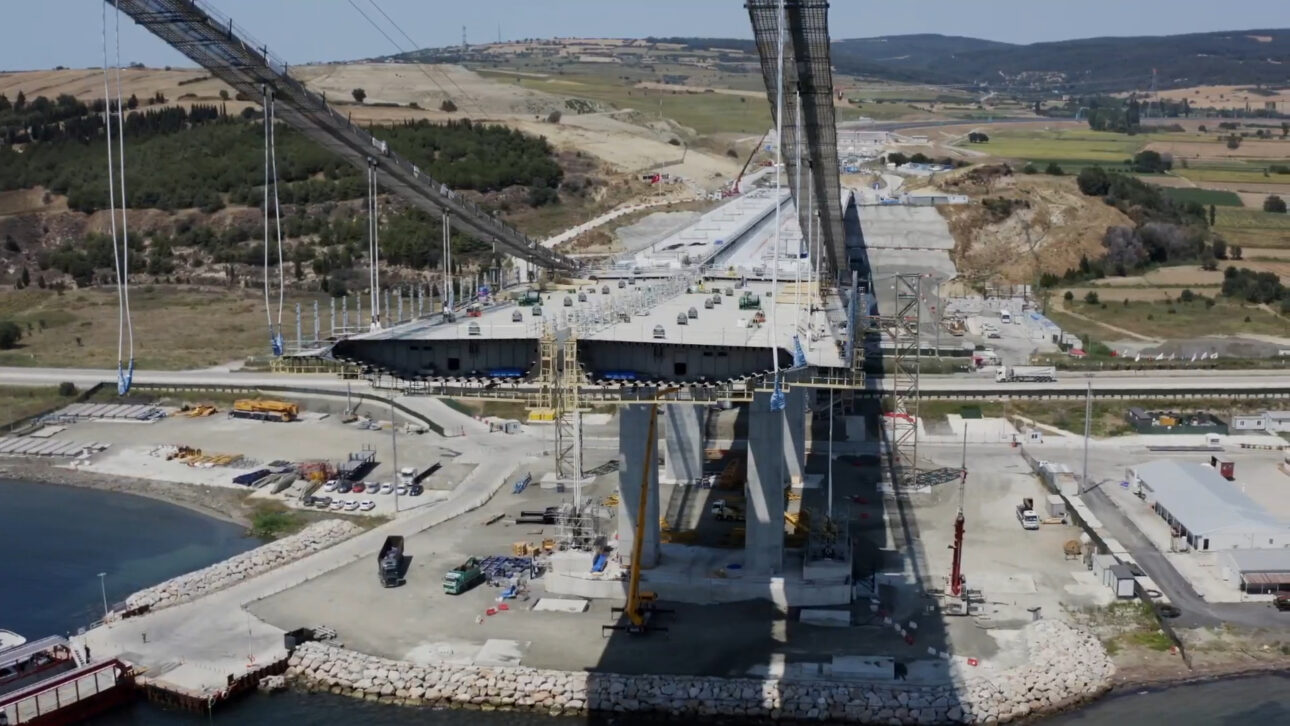
In this context, each critical lift needed to be executed with extreme precision. The greater the height and heavier the piece, the greater the potential impact of wind, oscillation, and misalignment during the maneuver.
Largest suspension bridge in the world was completed in four years and shortened crossing to 6 minutes
ENR reports that the bridge was built in four years by a Turkish-Korean team formed by Limak, Yapı Merkezi, DL E&C, and SK Ecoplant. The magazine also recorded the participation of more than 1,300 subcontractors, suppliers, and consultants from 19 countries throughout the project.
According to the General Directorate of Highways of Turkey, the opening of the bridge reduced the crossing of the strait to about 6 minutes and created a continuous road link at a historically strategic point between Europe and Asia.
The ENR also recorded a value of US$ 2.5 billion for the project in the public-private partnership model. With this, the bridge ceased to be just a technical record and became one of the most significant recent milestones in Turkish infrastructure.

Nighttime record summarized the most extreme aspects of the project
The lifting of the 155-ton section condensed into half an hour almost everything that made the 1915Çanakkale an extraordinary project: extreme height, operation over the sea, reliance on absolute precision, and the use of equipment beyond the common scale of civil construction.
The bridge moved forward and established itself as the largest suspension bridge in the world in central span, but that nighttime moment remained one of the most impressive episodes of its construction.
Instead of a grand ceremony, the record was born from a silent, technical, and tense operation, executed hundreds of meters above the water.