






 Portuguese
  Spanish
  2 min of reading
  0 comments


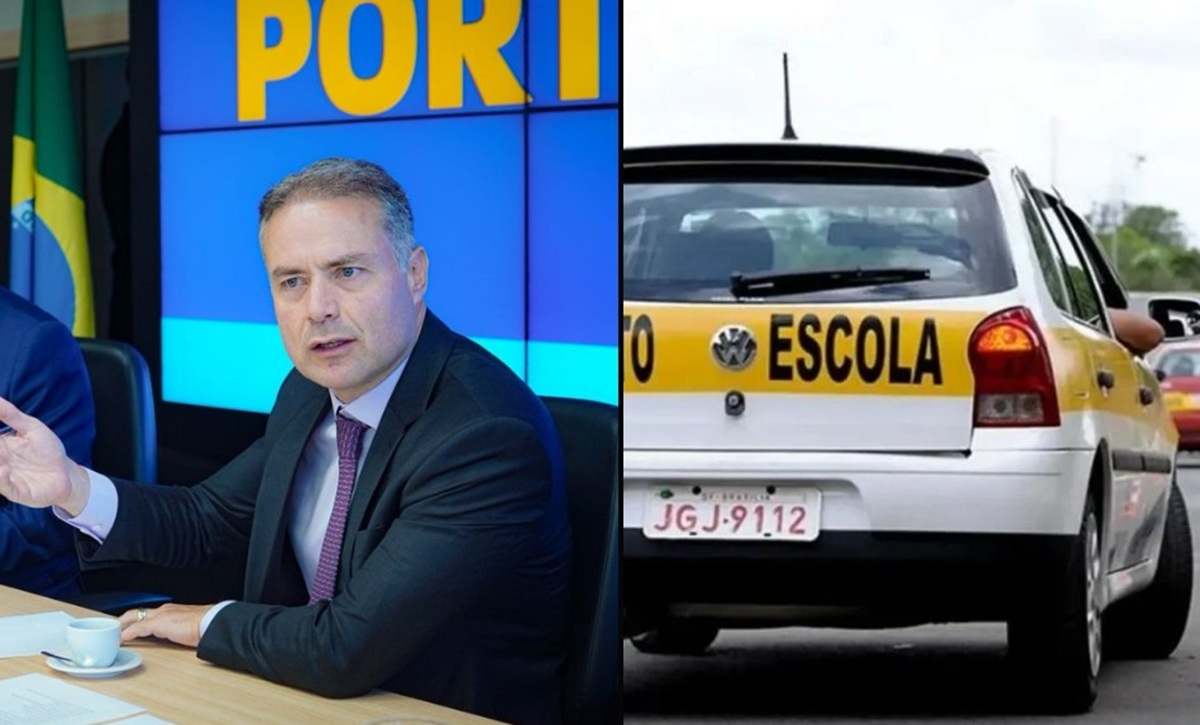
The Proposal of the Ministry of Transport Promises to Reduce Costs, Make Access Easier, and End the Mandatory Auto Driving Lessons.
The federal government is considering ending the requirement of driving school for those who wish to obtain the National Driver’s License (CNH).
According to information from FOLHA, the proposal, which has already been finalized by the Ministry of Transport, will be presented to President Lula (PT) for approval.
According to Minister Renan Filho, the idea is to make the classes optional, keeping only the requirement of passing the theoretical and practical exams.
-
Survivor of 1966 SS Daniel J. Morrell Shipwreck in Lake Huron Recounts 38-Hour Ordeal in Extreme Cold

-
The Greatest Hoax in World Cup History? The Film That Denied Brazil’s 1958 Victory and Exposed How Fake Evidence Can Seem Convincing on TV
-
Fake South Korean Online Stores Offer Shopping Thrill Without Spending Money or Receiving Products
-
The War of Jenkins’ Ear: How a Severed Ear Sparked One of the 18th Century’s Most Unusual Conflicts


Cost Reduction and More Inclusion
Currently, obtaining a driver’s license costs between R$ 3,000 and R$ 4,000, depending on the state.
The new model could cut more than 80% of that amount.
The minister emphasizes that this will benefit the poorest and facilitate access to the first job. The change should also aid in the training of professional drivers.
Renan Filho explained that the obligation is in a resolution of the Contran, allowing for alteration by an act of the Executive.
It will not be necessary to go through Congress. Citizens will be able to choose between hiring a driving school or a licensed self-employed instructor.
A Model Similar to Other Countries
In countries like England and the United States, the use of driving schools is not mandatory. The minister cited these examples as inspiration for the new format.
The proposal also removes the requirement for an adapted vehicle for training.
The candidate will be able to use their own car or that of the instructor.
Gender Inequality and Lack of Drivers
According to data from the ministry, in some medium-sized cities, 40% of people drive without a license. Among women of age to obtain a CNH, 60% do not have the document.
The high cost is one of the main obstacles. Additionally, the current model makes it difficult to train professional drivers, such as truck drivers.
Renan Filho stated that the program will be transformative and will not incur expenses for the Treasury.





-

-

-

-

8 people reacted to this.