Portuguese
  Spanish


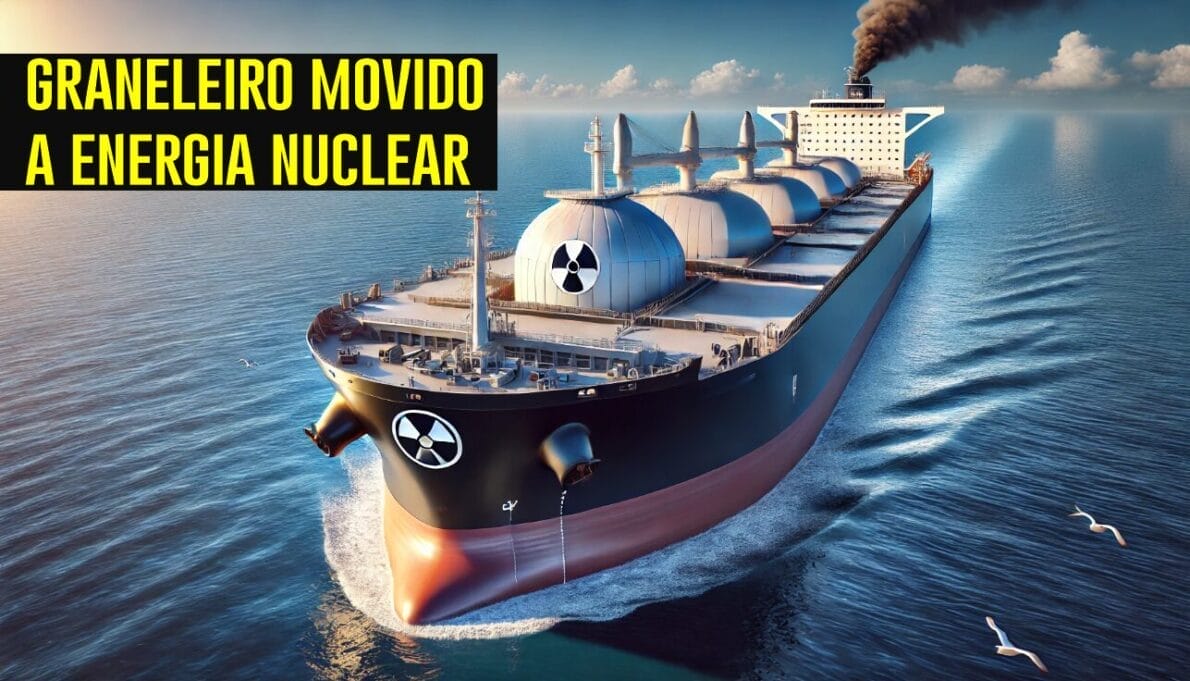

A recent study conducted by ULC-Energy, a nuclear consulting company based in Amsterdam, suggests that nuclear-powered bulk carriers could transform the shipping sector.
According to the results, these cargo ships could sail faster, for longer periods, and with lower operational costs, all while significantly reducing greenhouse gas emissions.
The study compared the efficiency of nuclear propulsion with traditional fuels, revealing that nuclear energy can be a sustainable alternative for transporting dry cargo on a large scale.
-
The U.S. Navy Conducts Submarine Tests in Idaho Lake to Detect Underwater Noises Hidden by the Ocean

-
Nuclear Submarine USS Alexandria Retired After 35 Years, Having Completed Over 1 Million Miles in Missions

-
MODEC Introduces New Hull Design for FPSO Gato do Mato to Produce Up to 120,000 Barrels of Oil Per Day in Brazil’s Pre-Salt Region
-
This Massive 12-Meter, 21-Ton Underwater Drone Can Operate Autonomously for Up to Five Days


Bulk carriers are crucial for global trade, transporting loads such as grains, ores, and other dry products.
With advancements in civilian nuclear technologies, the study explores the possibility of using them to power a Newcastlemax-class bulk carrier – one of the largest categories of bulk carriers – as a replacement for conventional low-sulfur fuel or green ammonia, considered a sustainable alternative.
Nuclear Propulsion: Space and Efficiency
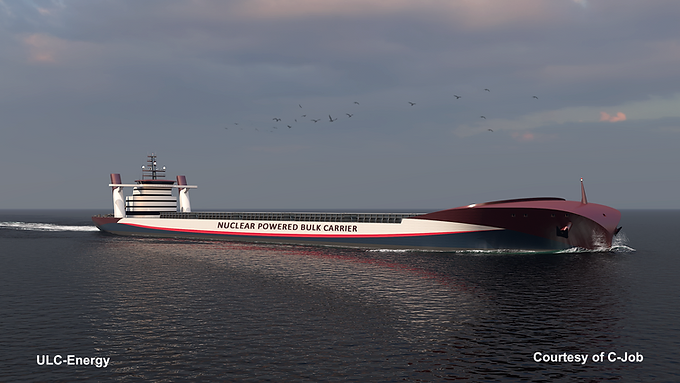
Among the main conclusions of the study is that integrating a nuclear reactor into the Newcastlemax bulk carrier would not compromise its cargo capacity.
The addition of the reactor would occupy a minimal space, allowing the ship to maintain its transport capacity. Additionally, nuclear energy was found to be the option with the lowest operational cost per ton transported, outperforming both green ammonia and conventional fuel (VLSFO).
Even with the higher initial cost for building a ship with a nuclear reactor, the savings achieved with fuel would compensate in the long run.
Dirk Rabelink, CEO of ULC-Energy, emphasized that the study reinforces the company’s mission to integrate nuclear technologies across different sectors. “This study promotes our vision of providing unique insights on the use of nuclear technologies in new contexts,” Rabelink stated in a press release.
Environmental Impact and Regulatory Challenges
One of the biggest attractions of nuclear propulsion is its contribution to sustainability. The study indicates that a nuclear-powered bulk carrier could operate with zero greenhouse gas emissions, representing an important step towards decarbonizing the shipping industry.
Compared to ships powered by green ammonia, which still produce some emissions, nuclear technology offers a clean and efficient alternative.
However, the study acknowledges that there are still significant challenges to implementing this technology.
In addition to operational complexities, there are regulatory and licensing issues that need to be overcome to enable the adoption of nuclear reactors in commercial vessels.
Currently, many maritime reactor projects are in conceptual phases, meaning that cost estimates are preliminary and depend on future advances in technology and regulation.
Niels De Vries, head of energy at C-Job, views the study as an important milestone for the adoption of nuclear energy in the maritime sector. “This study highlights how we can collaborate with clients and integrate systems in innovative ways to make shipping more sustainable,” De Vries stated.
He also praised the partnership with ULC-Energy and emphasized the importance of exploring sustainable alternatives that can change the dynamics of shipping.
The Future of Shipping with Nuclear-Powered Bulk Carriers
Despite the challenges, C-Job and ULC-Energy are optimistic about the future of nuclear bulk carriers. The two companies believe that nuclear propulsion can make shipping more efficient and aligned with global sustainability goals.
The current research adds to a growing interest in using nuclear energy to power ships, with some companies already exploring the feasibility of vessels powered by nuclear reactors for container transport.
However, it is important to note that nuclear energy, even with its potential for efficiency and sustainability, requires rigorous regulatory control.
International regulatory bodies will need to review and adapt their standards to safely and effectively incorporate this technology.
The widespread adoption of nuclear energy in shipping, therefore, will depend on continuous advances in research, as well as a favorable regulatory environment adapted to new needs.
The study by ULC-Energy and C-Job Naval Architects contributes to the debate on the transition to cleaner energy sources in the maritime sector, providing insights on how nuclear energy can be integrated into large bulk carriers.
As the industry seeks alternatives to reduce its carbon footprint, nuclear energy emerges as a promising option, but one that still requires joint efforts between industry and regulators to become a viable reality.