Portuguese
  Spanish


With approval from ANAC and Decea, Wilson Sons began using Speedbird Aero drones to deliver documents to supply ships for platforms — the 8 km route that previously required a boat is now done in just 9 minutes
No one needs to cross Guanabara Bay by boat anymore to deliver documents to offshore ships — Wilson Sons solved the problem with offshore drones that cover 8 kilometers in just 9 minutes.
According to an announcement published this Tuesday (29) by Marine Link, the maritime logistics company started the commercial operation of drones for delivering and collecting documents on supply vessels at its offshore support base in Guanabara Bay, Rio de Janeiro.
Tests began on April 6, 2026, with approval from the National Civil Aviation Agency (ANAC) and the Department of Airspace Control (Decea), as detailed by Wilson Sons in its official communication.
-
Qantas and Airbus Invest in Company Aiming to Convert Unsorted Household Trash into Jet Fuel

-
Brazil’s ANP Opens 86 New Oil Blocks in the Equatorial Margin, Expanding the Amazon River Mouth Frontier

-
Panasonic Shifts Strategy in the U.S., Focuses on AI Data Center Batteries as Global Energy Demand Surges
-
The U.S. Navy Conducts Submarine Tests in Idaho Lake to Detect Underwater Noises Hidden by the Ocean



- Delivery time: approximately 9 minutes for 8 km routes
- Maximum load: up to 5 kg per flight (documents and light items)
- Drone operator: Speedbird Aero
- Approvals: ANAC + Decea (Department of Airspace Control)
- Start of tests: April 6, 2026
Additionally, the operation is conducted by Speedbird Aero, a company specialized in logistics drones, which provides and operates the equipment used on Wilson Sons’ offshore routes.
Wilson Sons offshore drones: 9 minutes, 8 km, and up to 5 kg per flight
The Wilson Sons drones operate from the offshore support base in Guanabara Bay, where the company has two facilities with eight active operational berths.
The drones take off from the land base, cross the 8 kilometers of the bay in approximately 9 minutes, and land on the supply ships anchored in the region.
According to Edwardo Valverde, General Manager of Operations at Wilson Sons’ Offshore Support Base, the technology increases operational efficiency and contributes to the sustainability goals of the offshore energy sector.
Therefore, the current operation focuses on documents and light items — the maximum load capacity of the drones is 5 kilograms.
In practice, this covers most of the flow of papers, authorizations, certificates, and communications that need to circulate between the land base and the support vessels for oil and gas platforms.
According to Rodrigo Lopes, Operations Manager of the company, the project represents a concrete advance in the modernization of Brazilian offshore logistics.
What changes in the safety of offshore workers
Behind the 9 minutes and the 8 km, there is a more important impact than speed: the safety of workers.
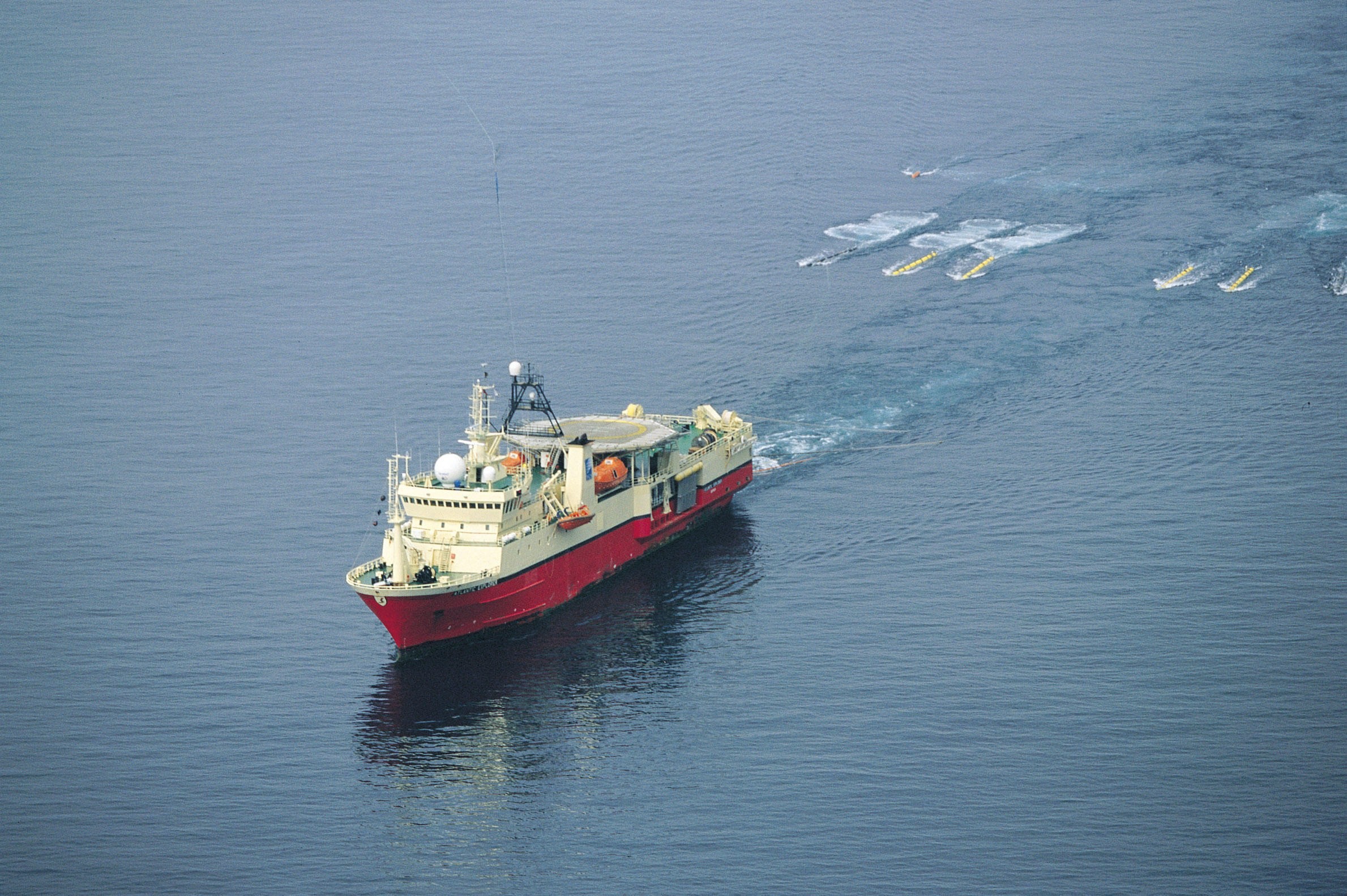
In the previous model, delivering documents between the base and the ships required the use of smaller vessels — boats and support dinghies that need to cross Guanabara Bay in any weather condition.
On days of strong winds, high tide, or reduced visibility, these crossings represent a real risk for the crew of the smaller vessels.
However, with offshore drones, the route no longer depends on an embarked human team. The operator stays on land, and the drone follows its route autonomously.
Moreover, eliminating these repeated crossings reduces the number of movements of smaller vessels in the bay — which also decreases the risks of collisions and port accidents.
Thus, Wilson Sons’ innovation is not just about delivery speed. It’s about removing workers from routine risk routes.
To give an idea, Guanabara Bay is one of the busiest maritime areas in Brazil — with dozens of ships, ferries, boats, and support vessels circulating simultaneously, the risk of incidents in smaller vessels is permanent.

Speedbird Aero and the technology behind the operation
Speedbird Aero is the company responsible for the drones used in Wilson Sons’ operation in Guanabara Bay.
The company operates in the logistics segment with offshore drones and already has experience in delivery operations in port and maritime environments.
However, the difference in this partnership is the operational environment: Guanabara Bay presents specific conditions of winds, air, and naval traffic that required a rigorous regulatory process.
Despite this, the dual approval — ANAC (civil aviation) and Decea (airspace control) — ensures that the flights are integrated into the air traffic management system of the Rio de Janeiro metropolitan area.
Above all, this means that Wilson Sons’ drones fly in coordination with the offshore helicopter traffic that also operates in the bay — a critical requirement to avoid route conflicts in the coastal airspace.
From the Port of Salvador to Guanabara: the history that paved the way
The operation in Guanabara Bay did not start from scratch.
Wilson Sons conducted previous tests of drones for deliveries at the Port of Salvador, where it tested the concept in a port environment before scaling to offshore operations in Rio de Janeiro.
Therefore, the commercial operation started in April 2026 represents the maturity of a project that took months of technical, regulatory, and operational validation.
Additionally, Wilson Sons has over 21 years of experience in offshore support logistics in Brazil, with strategic bases in Guanabara Bay and a history of serving vessels operating in the oil fields of the Campos Basin and the pre-salt.
Similarly, other offshore base operators in Brazil are already observing Wilson Sons’ pilot as a reference for possible similar implementations in their own operations.
Projects like the expansion of Petrobras in the pre-salt with R$ 60 billion in new FPSOs will increasingly demand efficient offshore logistics — and drones enter this context as a piece of the puzzle of increasingly automated operations.

Fewer boats, fewer emissions: the offshore drones that change O&G logistics
Wilson Sons highlights the reduction of emissions as one of the central benefits of the offshore drones operation in Guanabara Bay.
Each boat crossing between the base and a ship consumes fuel and emits carbon — especially when the trip is made to deliver just one set of documents.
However, an electric drone that covers the same route in 9 minutes consumes a fraction of the energy and does not generate local emissions during the flight.
In summary, for an operator that performs dozens of these crossings per day, the replacement by drones can represent a significant reduction in the carbon footprint of land operations.
This aligns the initiative with the sustainability goals that companies in the oil and gas sector are being pressured to meet — both by environmental regulations and by ESG investor demands.
Workers like the underwater welders working on oil platforms depend on a functional and safe logistics chain — and drones are another link in this modernization.
What is still unknown — and why it’s worth following
Finally, there is an important caveat: the operation is still a commercial pilot in its initial phase.
The current capacity of 5 kg limits the drones to documents and light items — spare parts, larger equipment, and heavy supplies still require conventional vessels.
However, if the pilot shows consistent results in punctuality, safety, and emission reduction, Wilson Sons has the infrastructure to scale the operation to more routes and more ships in the bay.
Even so, there are open questions: what happens to the drones in extreme wind conditions? Does Decea’s approval allow night flights? Will there be integration with the existing vessel tracking system?
In this sense, Wilson Sons’ model in Guanabara Bay could become a reference for the Brazilian offshore sector — or it could encounter operational limitations that have not yet appeared in the tests.
Is Brazil finally ready to incorporate drones as a permanent infrastructure for offshore logistics — or will this be another pilot that remains stuck in innovation reports?