Portuguese
  Spanish


They live in pressurized chambers the size of a shipping container, breathe voice-distorting helium, and dive up to 300 meters to weld oil rig structures — all for US$2,500 a day
According to industry data compiled by Tentacle Tools, saturation welders — the elite of commercial divers working on offshore oil rigs — can earn between US$200,000 and US$300,000 per year. Each underwater welder receives between US$1,000 and US$2,500 per day, depending on the depth and complexity of the mission.
However, this salary comes with a cost that few would be willing to pay. In practice, these professionals spend up to 28 consecutive days locked inside a pressure chamber on a ship’s deck, never seeing sunlight.
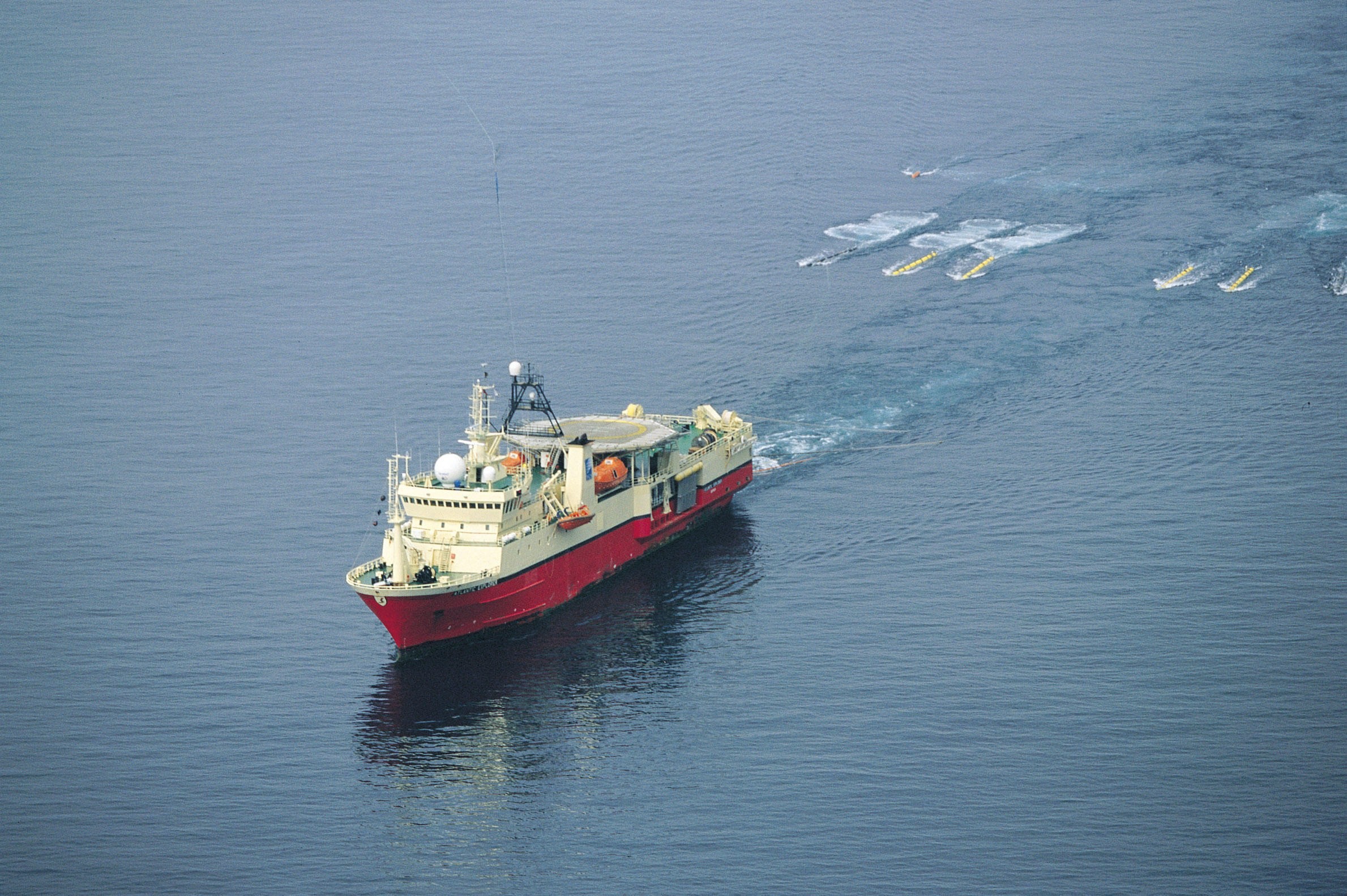
From this chamber, the underwater welder descends daily to the seabed inside a diving bell — a metallic capsule that transports them to the work zone hundreds of meters deep.
-
Brazil’s ANP Opens 86 New Oil Blocks in the Equatorial Margin, Expanding the Amazon River Mouth Frontier

-
The U.S. Navy Conducts Submarine Tests in Idaho Lake to Detect Underwater Noises Hidden by the Ocean

-
Nuclear Submarine USS Alexandria Retired After 35 Years, Having Completed Over 1 Million Miles in Missions

-
MODEC Introduces New Hull Design for FPSO Gato do Mato to Produce Up to 120,000 Barrels of Oil Per Day in Brazil’s Pre-Salt Region


What is saturation diving — and why it transforms a diver’s life

As Commercial Divers International explains, saturation diving is a technique used for work at depths greater than 50 meters. In this system, the diver’s body is pressurized to a level equivalent to the working depth.
This way, they remain under constant pressure throughout the mission, without variations that could cause health problems.
In other words, the underwater welder lives permanently under the same pressure they would face at the bottom of the ocean. Therefore, they do not need to decompress between each dive — which saves hours and makes the work more efficient.
Furthermore, inside the saturation chamber, divers breathe a gas mixture containing helium instead of normal air. Consequently, their voices become high-pitched and distorted — like cartoon characters — throughout the period they are pressurized.
Their living environment is cramped. In fact, saturation chambers are the size of a shipping container, equipped with bunks, a shower, a compact kitchen, and space for 2 to 6 divers.
Just as astronauts live confined in the International Space Station, these underwater welders spend weeks isolated from the outside world in a pressurized habitat — only underwater.
A typical day 300 meters under the sea

According to industry reports, the routine of a saturation underwater welder follows a strict pattern. The diver enters the diving bell, which is lowered to the working depth — often between 100 and 300 meters.
At the bottom, they perform welds, cuts, inspections, or repairs on subsea structures for periods of 6 to 8 hours.
In this regard, the work demands extreme precision in conditions of near-zero visibility, unpredictable marine currents, and temperatures close to freezing.
Upon returning, the bell is hoisted back to the ship and reconnected to the saturation chamber.
On the other hand, at the end of the entire saturation period — which lasts between 12 and 28 days — decompression begins.
Equally impressive is the time required for decompression: 4 to 7 full days. During this period, the underwater welder remains in the chamber while the pressure is slowly reduced to prevent decompression sickness.
Underwater welders face a mortality rate 1,000 times higher than the national average
According to the Maritime Injury Law Firm, the estimated career mortality rate for an underwater welder is approximately 15%. Despite this, many continue in the profession for decades.
Furthermore, the fatality rate for underwater welders is about 40 times higher than that of commercial divers in general — and more than 1,000 times above the US national average for all professions.
The main risks include:
- Decompression sickness — dissolved gases in the blood form bubbles if decompression is too rapid, causing pain, paralysis, or death
- Nitrogen narcosis — at great depths, nitrogen causes disorientation, loss of coordination, and impaired judgment
- Electric shock — the combination of electricity and saltwater can be fatal if equipment fails
- Gas explosions — hydrogen and oxygen accumulated during welding can be ignited by the electric arc
- Hypothermia — near-zero temperatures at extreme depths drain body heat even with special suits
Above all, the life expectancy of underwater welders is estimated to be about 10 years less than that of the general population, due to chronic exposure to extreme conditions.
Why this profession is essential for the energy sector