Portuguese
  Spanish


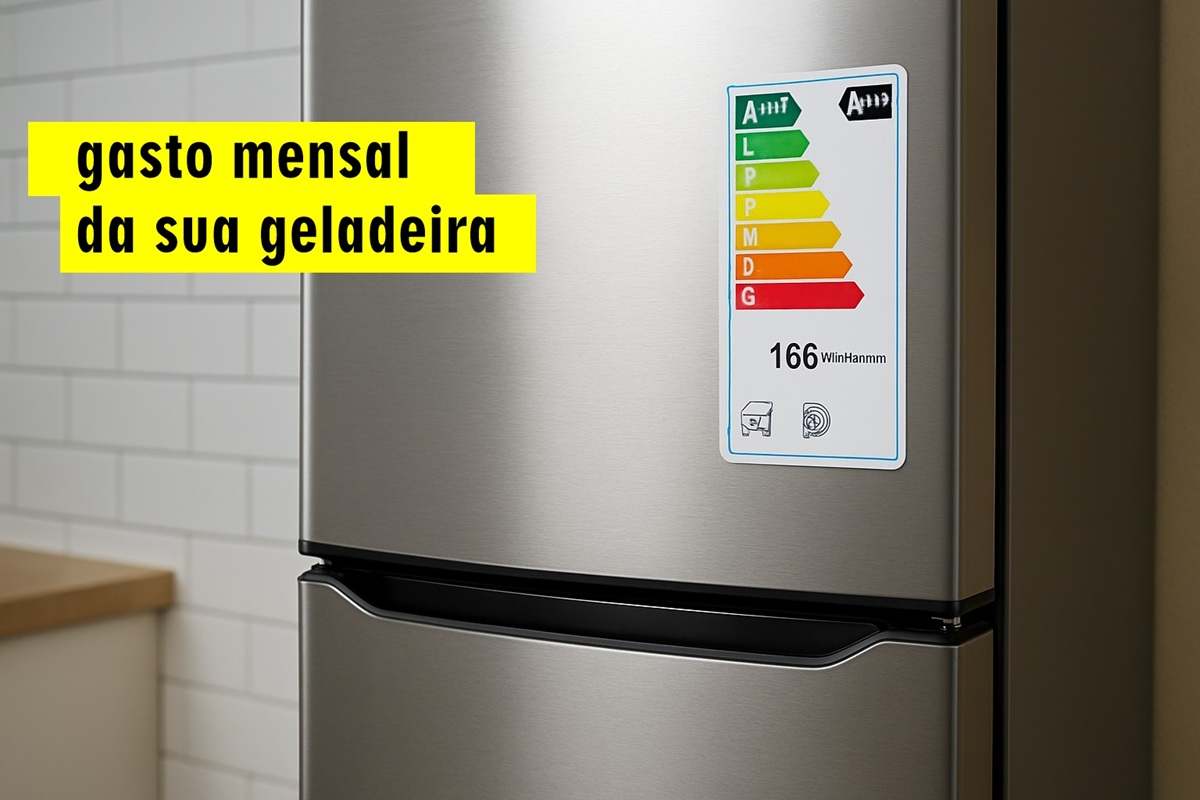

Even Running 24 Hours a Day, The Refrigerator Can Surprise You With The Amount Of Electricity It Consumes. The Monthly Spending Varies Quite A Bit Depending On The Model, Size, And Age Of The Appliance. Knowing How To Calculate This Consumption Helps Save On The Electric Bill.
The refrigerator is one of the most important appliances in the house. Without it, foods like meat, milk, and eggs would spoil quickly, compromising food safety and the day-to-day of families. However, keeping this appliance running 24 hours a day has a cost: electricity consumption.
Even though it is always running, the energy consumption of a refrigerator varies significantly. Factors such as the size of the model, the technology involved, and even the age of the appliance directly affect the electric bill.
This guide shows, clearly and simply, how much a refrigerator consumes per month and how to calculate this amount.
-
Brazilian National Team Traveled by Ship to First World Cup, Boarding Conte Verde to Reach Uruguay

-
Ancient Burial Site Uncovered in Brazil: 11,000-Year-Old Artifacts Found Beneath 300-Ton Rock

-
18-Year-Old Student Designs Modular Microhouse from Fiberglass and PET to Combat Homelessness in Brazil, Plans to Live in Prototype for a Year to Demonstrate Quick Assembly

-
The Frenchman Who Brought the World Cup to Life: Overcoming Resistance and Crossing the Atlantic with the Trophy to Create Football’s Biggest Tournament




How Much Does A Refrigerator Consume Per Day?
The daily consumption of a refrigerator depends on several factors. The first is size, usually measured in liters.
Additionally, the appliance’s energy efficiency, ambient temperature, programmed cooling level, and even the number of times the door is opened influence consumption.
For example, a new refrigerator with 280 liters typically consumes about 25 kWh per month. Conversely, a 400-liter double-door refrigerator can reach up to 60 kWh monthly. To calculate the consumption for a single day, simply divide this figure by 30. That means a refrigerator that consumes 60 kWh per month uses, on average, 2 kWh per day.
You can also use a more direct calculation. Multiply the power of the appliance by the number of hours it remains on (usually 24).
The result will be in Wh (watt-hour). Divide this number by 1000 to find out the consumption in kWh. This allows for a more accurate check of the spending of the model you have at home.
How To Know If Your Refrigerator Is Spending Too Much?
Many people wonder if their refrigerator is consuming more energy than normal. There are a few simple ways to check this, even without specific equipment.
The first tip is to look at the energy efficiency label. Models are rated from A to G, with A+++ being the most economical and G being the most consuming. If your model is far from the more efficient classes, consumption may be high.
Another sign is a sudden increase in your electric bill. If you haven’t changed your habits or acquired new appliances but noticed a spike in your bill, the refrigerator may be the culprit.
Also, check the external temperature of the appliance. If the sides or the back are very hot, this may indicate that the motor is overloaded. This extra effort consumes more energy.
Older models tend to consume more than newer ones. Also, if the door seal is dry or damaged, cold air escapes, and the motor works harder to compensate.
Another practical test is to turn off all appliances in the house except the refrigerator and observe the energy meter. After a few hours, you can get an approximate sense of the exclusive consumption of the refrigerator.
How To Calculate The Monthly Cost Of The Refrigerator?
Knowing how much the refrigerator consumes per month is essential for understanding its impact on your electric bill. The calculation is simple.
First, find the nominal power of the refrigerator, given in watts (W) on the label or in the manual. To convert to kW, divide the value by 1000.
Next, multiply this power by the number of hours the appliance is on per day — typically 24 hours. The result will be the daily consumption in kWh.
Finally, multiply the daily consumption by the number of days in the month (30 or 31). The result will be your refrigerator’s monthly consumption.
To find out how much this represents in your local currency, check your electricity bill. The price of kWh varies according to the state and the utility company. Multiply the total kWh consumed by the price of kWh in your area.
For example: if your refrigerator consumes 45 kWh per month and the price of kWh is R$ 0.15, the monthly cost will be R$ 6.75.
What Is The Average Monthly Cost Of A Refrigerator?
Although there are many variations, it is possible to make a general estimate of the monthly consumption of refrigerators, taking size and model into account.
- Small Refrigerators (100 to 200 liters): consumption of 15 to 20 kWh/month
- Medium Refrigerators (200 to 400 liters): consumption of 20 to 40 kWh/month
- Large Refrigerators (over 400 liters): consumption of 40 to 60 kWh/month
Models with two doors tend to consume more than single-door models. Additionally, older or poorly maintained versions may have consumption above average.
If you want to know the actual consumption of your refrigerator, check the energy efficiency label. It provides the average monthly value in kWh, measured under normal usage conditions.
How To Save Energy With The Refrigerator?
Even though the refrigerator is indispensable, there are ways to save energy in daily use. Some simple practices help reduce consumption and also prolong the appliance’s lifespan.
- Adjust The Temperature According To The Season. Avoid Setting Very High Cooling Levels Without Necessity.
- Avoid Frequent Door Openings Or Leaving It Open For Long Periods.
- Do Not Store Hot Foods, As This Forces The Motor To Work Harder.
- Check The Sealing Rubber. If It’s Dry, Replace It.
- Defrost Periodically, For Non-Frost-Free Models.
- Keep The Appliance Clean And The Condenser Coils Dust-Free.
- Avoid Pressing The Refrigerator Against The Wall, Leaving Space For Ventilation.
These simple actions, when combined, help reduce the refrigerator’s impact on the electric bill.
Does An Inverter Refrigerator Use Less Energy?
Yes, inverter technology is an ally for savings. While traditional models turn the compressor on and off several times a day, inverter models keep the motor running continuously and in a controlled manner.
This prevents energy spikes and improves efficiency. The result is a more stable and generally lower consumption. Although the initial price of these models is higher, long-term savings make up for the investment.
Additionally, inverter models tend to be quieter and have greater durability, which represents an extra advantage.
When To Replace The Refrigerator?
If your refrigerator is many years old, consumes a lot of energy, or has frequent problems, it may be time to replace it. Although a new model represents an immediate cost, the gain in energy efficiency can compensate for this investment in a short time.
Furthermore, newer models bring technological innovations, more efficient compartments, and features that help better preserve food. Many are also designed with a focus on sustainability and lower environmental impact.
Before buying a new refrigerator, check the efficiency label, the ideal capacity for your profile, and the type of technology used. Also, compare the reported monthly consumption with the value of the model you currently have.
The Refrigerator’s Consumption On Your Electric Bill
The refrigerator is among the appliances that most affect the electric bill. Precisely because it operates 24 hours a day, every detail matters: size, model, maintenance, and even usage habits directly influence consumption.
Knowing how much it consumes per month helps to better plan your budget and adopt more conscious habits. Small changes in daily routines, combined with an efficient appliance, can lead to significant savings at the end of the month.
If you still have doubts, a good tip is to monitor your energy bill for two or three months and compare the values. This way, you can understand if it’s worth replacing your refrigerator or just correcting small details to reduce spending.
The refrigerator is essential in daily life, but its continuous use requires attention to energy consumption. Understanding how to calculate this spending, identifying signs of excessive consumption, and adopting good usage practices can make a difference in your electric bill and your budget.
Evaluating the power, checking the energy efficiency, and keeping maintenance up to date are simple measures that help balance comfort, safety, and savings every month.