Portuguese
  Spanish


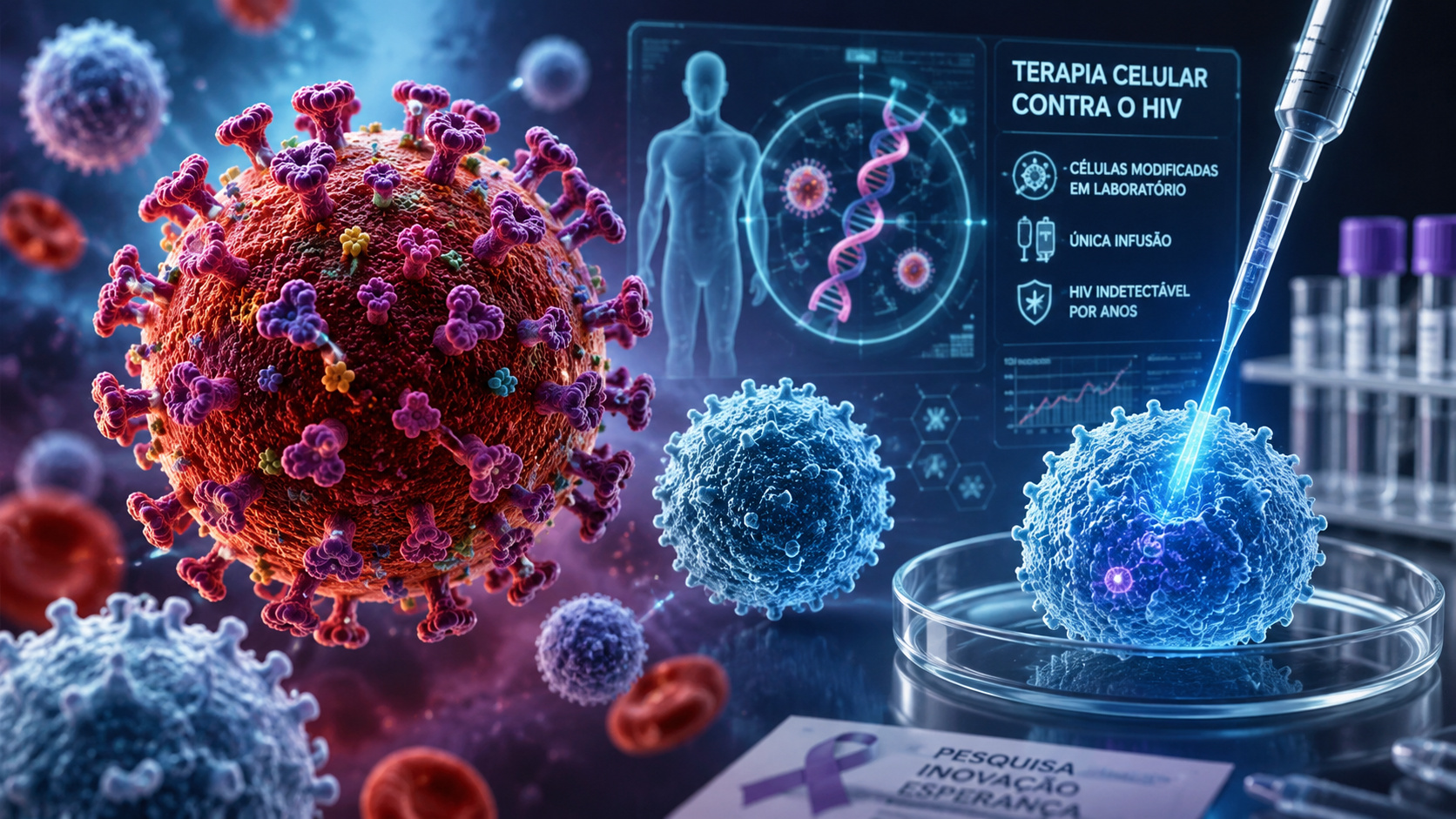


A new cell therapy developed by researchers at the University of California, San Francisco, has shown promising results in the fight against HIV and rekindled hopes for future strategies for long-lasting viral control. The study revealed that two patients remained with undetectable HIV levels for years after receiving just one infusion of laboratory-modified immune cells.
Furthermore, the research utilized techniques inspired by modern treatments for blood cancers, especially cell therapies applied in leukemias and lymphomas. The results will be presented during the American Society of Gene and Cell Therapy meeting and are already considered an important “proof of concept” for new therapeutic approaches against HIV.
How the new cell therapy works
The therapy uses cells from the patients’ own immune system, which undergo genetic modification in the laboratory before being reinfused into the body.
-
China to Drill 15 Kilometers into the Earth, Set to Break Russia’s Record for Deepest Man-Made Hole

-
Researchers Use Algae to Enhance 3D-Printed Walls, Boosting Strength by 25% and Speeding Construction by 33%

-
Drill Uncovers Freshwater Rivers Hidden Beneath the Ocean Floor
-
3,000-Ton, 81-Meter Attack Submarine Begins Sea Trials, Equipped with Heavy Torpedoes and Anti-Ship Missiles


Additionally, researchers programmed these cells to recognize and combat HIV more efficiently.
The goal is to strengthen the body’s immune response and prevent the virus from continuing to replicate.
According to experts, the strategy represents a new stage in the development of advanced treatments for chronic viral infections.
Patients remained for years without detectable HIV levels
Researchers reported that two treated patients remained with undetectable HIV levels for years after a single cell infusion.
Furthermore, the results occurred without the need for repetitive procedures throughout the monitored period.
Although the study still involves a small number of participants, experts consider the results extremely relevant.
In this context, the research strengthens expectations for therapies capable of prolonged viral control.
The inspiration came from cancer treatments
The technology used by scientists was based on techniques already applied in the treatment of hematological cancers, such as leukemias and lymphomas.
These therapies use modified immune cells to specifically attack diseased cells.
Additionally, researchers adapted part of this technology to combat HIV.
Experts state that this advance shows how cell therapies are expanding applications beyond oncology.
What undetectable HIV means
When HIV becomes undetectable, it means that the amount of the virus in the body is so low that laboratory tests cannot detect it.
Furthermore, patients in this condition usually have a better quality of life and a lower risk of transmission.
However, experts emphasize that undetectable does not necessarily mean a definitive cure.
Therefore, new research will still be fundamental to understanding the long-term effects of the therapy.
The importance of “proof of concept”
Scientists classified the study as an important “proof of concept.”
This means that the initial results demonstrate that the strategy has real potential to work in humans.
Furthermore, this type of research helps validate new technologies before larger and more extensive studies are conducted.
Experts state that proofs of concept represent essential steps in the development of innovative therapies.
HIV remains a global challenge
Despite medical advances, HIV still represents a significant global public health challenge.
Millions of people currently live with the virus in different countries.
Furthermore, although current treatments are effective for disease control, they typically require continuous medication use.
In this scenario, therapies capable of keeping the virus controlled for long periods could transform the future of treatment.
How traditional treatment works
Currently, most patients use antiretroviral therapy to control HIV.
Medications prevent virus replication and help keep viral load low.
Furthermore, the treatment allows many people to have a life expectancy close to that of the general population.
However, patients need to maintain regular use of medication throughout their lives.
For this reason, researchers are looking for more lasting alternatives that are less dependent on continuous medication.

Genetic engineering gains ground in medicine
The research reinforces the growth of therapies based on genetic engineering and cell manipulation.
Furthermore, technological advancements have allowed human cells to be modified with increasing precision.
Experts state that these techniques are revolutionizing areas such as:
- Oncology
- Immunotherapy
- Genetic diseases
- Viral therapies
- Regenerative medicine
In this context, HIV treatment could be one of the next frontiers of this medical transformation.
The role of the immune system
The new therapy focuses on strengthening the patients’ own immune system.
Instead of directly attacking the virus with traditional medications, the strategy seeks to create cells capable of identifying and controlling HIV naturally.
Furthermore, researchers believe that immunological approaches can offer more lasting responses.
Experts state that the immune system will continue to play a central role in future advanced therapies.
What still needs to be studied
Despite the positive results, researchers emphasize that the study is still in its initial phase.
Furthermore, it will be necessary to evaluate:
- Therapy safety
- Duration of effects
- Response in more patients
- Possible side effects
- Application costs
Only after further research will it be possible to fully understand the technology’s potential.
The scientific community’s expectation
The results have sparked great interest in the international scientific community.
Furthermore, experts consider the study one of the most relevant recent advances involving cell therapies for HIV.
Researchers believe that future versions of the technique could become even more effective.
In this scenario, the development of personalized treatments is gaining increasing ground in modern medicine.
The impact for HIV patients
A therapy capable of controlling HIV for years after a single application could profoundly transform the lives of millions of people.
Furthermore, it would reduce daily dependence on medications and enhance patients’ quality of life.
Experts state that advances of this type also help combat the stigma associated with the disease.
For this reason, the study is being followed with enormous anticipation by doctors and researchers.
The search for a possible functional cure
Although scientists are not yet talking about a definitive cure, many experts consider the research an important step towards a possible “functional cure” for HIV.
In this model, the virus would remain controlled without the constant need for medication.
Furthermore, immunological and genetic therapies can open new avenues for more lasting treatments.
Experts state that medicine is currently experiencing one of its most promising phases in the fight against HIV.
The future of cell therapies
Cellular therapies have been rapidly gaining ground in various areas of health.
Furthermore, new research continues to expand the possibilities for applying these technologies.
Experts believe that advances in biotechnology, artificial intelligence, and genetic engineering should further accelerate the development of personalized treatments.
In this scenario, the fight against HIV could undergo a profound transformation in the coming years.
What experts expect now
Future studies should involve a larger number of patients and longer follow-up periods.
Additionally, researchers want to understand how different immunological profiles respond to therapy.
Among the main points to be analyzed will be:
- Stability of the immune response
- Persistence of modified cells
- Clinical safety
- Prolonged viral control
- Potential for treatment expansion
All these factors will be decisive for the evolution of the research.


Medicine may be on the verge of a new historic breakthrough
The results presented by the University of California reinforce the revolutionary potential of cellular therapies in the treatment of complex diseases.
Furthermore, the study shows how technologies originally developed for cancer can open unprecedented avenues in the fight against HIV.
As new research advances, scientists continue to work to transform experimental results into accessible and safe treatments.
Finally, the possibility of keeping patients free of HIV for years after a single infusion represents one of the most promising signs ever observed in the search for more lasting strategies against the virus.