Portuguese
  Spanish


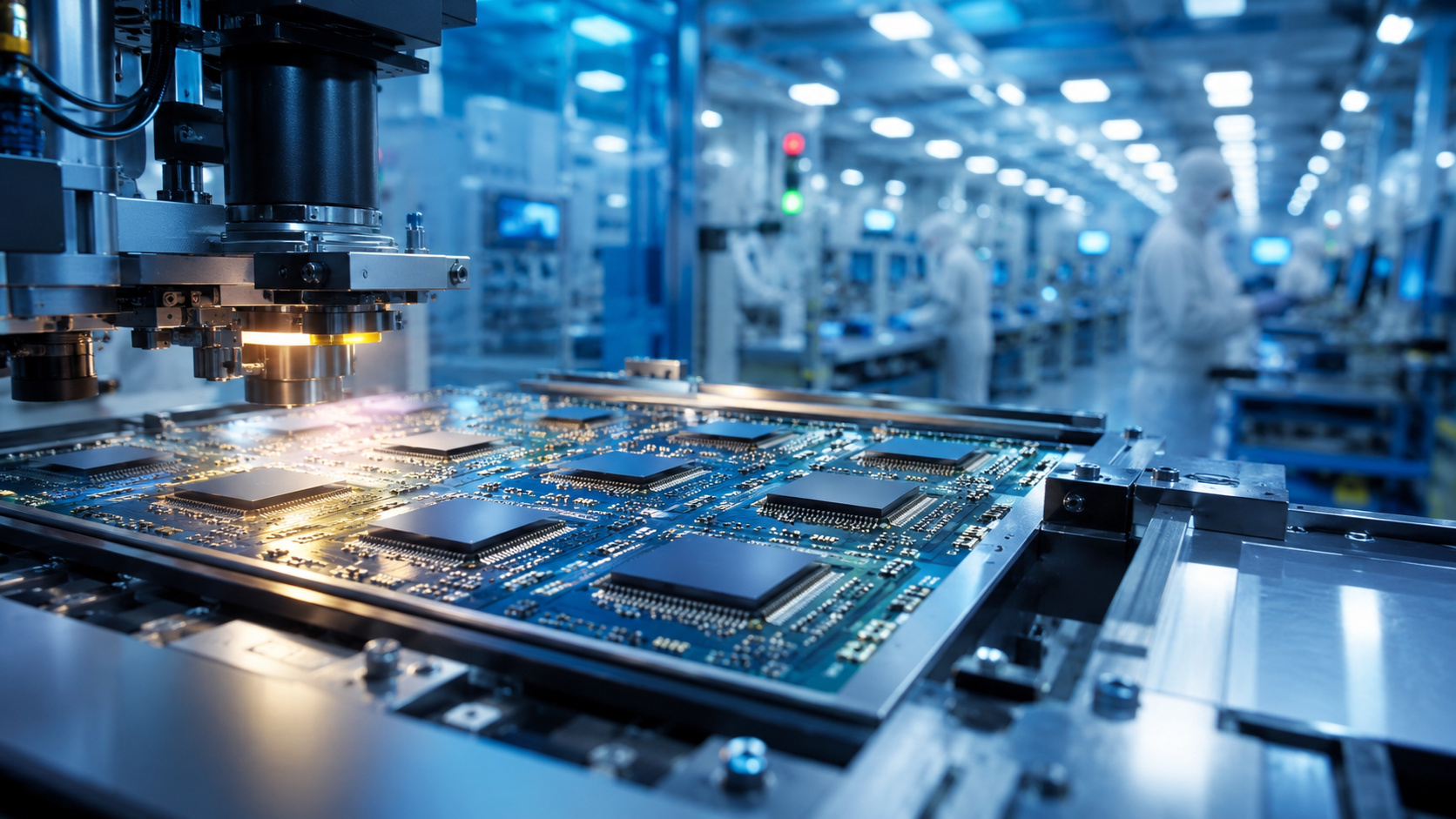

Brazilian company Tellescom advances in the chip industry with a project in Rio Grande do Sul and an international partnership to expand national microelectronics.
The Brazilian microelectronics industry gained a new chapter in 2026. The Brazilian company Tellescom began negotiations with international partners to install a semiconductor packaging factory in Rio Grande do Sul, primarily aimed at the automotive industry. The project emerged from the Southeast Asian Semiconductor Mission 2026, coordinated by the Ministry of Science, Technology and Innovation (MCTI).
According to MCTI information on May 27, the initiative reinforces Brazil’s approach to global high-tech chains and can expand national participation in a strategic market for sectors such as artificial intelligence, electric mobility, telecommunications, medical equipment, defense, and space systems. Furthermore, the agreement strengthens international cooperation in research, innovation, and training of specialized professionals.
Tellescom advances in one of the most strategic sectors of the global economy
Semiconductors are present in virtually all modern electronic devices. From smartphones and computers to satellites and connected vehicles, these components are essential for the functioning of the digital economy.
-
16-Year-Old from Brazil’s Sertão Wins Young Scientist Award for AI Predicting Rainfall with 94.5% Accuracy to Aid Farmers

-
Netherlands Reports First Child Euthanasia Case Since Rule Expansion for Minors

-
Brazilian Innovator Survives Homemade Submarine Dive in Paraty Despite Hatch Leak and False Oxygen Alarm
-
China Develops Custom 140-Ton Electric Mining Truck with 770 kWh Swappable Battery, Deploys 290 Units in Xinjiang’s Largest Zinc Mine



For this reason, governments and companies worldwide have been increasing investments in the sector. The entry of a Brazilian company into a relevant stage of this production chain represents an opportunity to reduce external dependencies and increase the country’s industrial competitiveness.
The initiative led by Tellescom also demonstrates Brazil’s growing interest in occupying more strategic positions within the global chip industry.


Technology and semiconductors gain prominence on the Brazilian government’s agenda
The international mission took place between April 24 and May 9, 2026. Over a little more than two weeks, a delegation composed of 16 representatives from the government, academia, and industry visited important technological hubs in Singapore, the Philippines, and Malaysia.
The goal was to bring the Brazilian ecosystem closer to some of the world’s leading references in microelectronics, applied research, and technological innovation.
Among the main results of the mission are:
- Negotiations for the establishment of a chip packaging factory in Brazil;
- New opportunities for cooperation in quantum computing;
- Expansion of professional training programs;
- Strengthening of research and development agreements;
- Closer ties with leading companies and institutions in the semiconductor sector.
Malaysian Groups Help Pave the Way for New Factory in Rio Grande do Sul
The final stage of the mission took place in Malaysia, considered one of the world’s main centers for semiconductor packaging and electronic testing.
It was in this environment that negotiations advanced involving the Brazilian company Tellescom and Malaysian groups for the installation of the future industrial unit in Rio Grande do Sul.
The choice of partners is no accident. Malaysia holds a strategic position in the global chip supply chain and hosts operations of various multinational companies in the electronics industry.
The expectation is that the partnership will contribute to knowledge transfer, development of technical skills, and integration of Brazil into higher value-added international markets.

Semiconductor Packaging: The Step That Turns Chips into Usable Products
Although less known to the general public, the semiconductor packaging phase is essential for chips to be used in electronic equipment.
After the manufacture of integrated circuits, the components need to be protected against physical impacts, moisture, heat, and other factors that could compromise their functionality.
Among the main functions of packaging are:
- Protection of electronic circuits;
- Heat dissipation;
- Electrical connection with other components;
- Increased chip durability;
- Preparation for industrial and commercial use.
As it is a strategic stage, countries that master this process can add more value to the microelectronics production chain.
Rio Grande do Sul could become a new national microelectronics hub
The choice of Rio Grande do Sul strengthens the state’s position as a potential center for technological development in the coming years.
In addition to having a diversified industrial base, the region has universities, research centers, and companies capable of contributing to the training of specialized labor.
The arrival of a semiconductor packaging plant can also stimulate new investments in innovation, logistics, engineering, and the development of local suppliers.
In practice, this means creating a more favorable environment for the growth of the entire chain linked to advanced technology.
Singapore presented cutting-edge technologies and billion-dollar investments to Brazil
The first stage of the mission took place in Singapore, a country responsible for about 11% of the global semiconductor market.
During the agenda, Brazilian representatives visited the Centre for Quantum Technologies (CQT), linked to the National University of Singapore (NUS), where they learned about a 10-qubit superconducting quantum processor operating at cryogenic temperatures of just 13 millikelvin.
The delegation also visited the National Quantum Computing Hub and participated in meetings with the Singapore Semiconductor Industry Association (SSIA) and the research agency A*STAR.
Another highlight was the presentation of the RIE 2030 plan, a national strategy that foresees investments of approximately 37 billion Singapore dollars in research and development between 2026 and 2030.
Cooperation with the Philippines expands opportunities for the Brazilian industry
In the Philippines, the agenda was marked by the first Brazil-Philippines Dialogue on Semiconductors and Microelectronics.
The meeting brought together government representatives, universities, and companies from both countries to discuss ways to expand technological and industrial cooperation.
During the visit, a memorandum of understanding was also signed between the Brazilian Semiconductor Industry Association (Abisemi) and the Semiconductor and Electronics Industries in the Philippines Foundation.
Additionally, the delegation visited the University of the Philippines in Diliman and participated in meetings with the Department of Science and Technology of the Philippines, expanding the exchange of knowledge between the two countries.
Tellescom participates in a movement that strengthens research and talent development
In addition to industrial agreements, the mission also generated opportunities for researchers, students, and professionals in the technology field.
Among the announced measures are the expansion of the CI-Innovator program in Southeast Asia and the promotion of international scholarships aimed at Brazilian researchers.
Another highlight was the launch of the ChampionChip eXperience Malaysia, an initiative based on technology developed by the Wernher von Braun Center.
The program plans to train 300 Malaysian engineers in integrated circuit design, reinforcing international collaboration in areas related to semiconductors.
What this initiative represents for the future of Brazilian technology
The negotiation conducted by Tellescom with Malaysian groups goes beyond the installation of a new factory. It symbolizes an important advancement for Brazil’s insertion into a sector considered essential for the 21st-century economy.
By bringing a semiconductor packaging structure to Rio Grande do Sul, the country expands its possibilities of participating in global value chains, strengthens its technological base, and creates conditions to attract new investments in innovation.
In a scenario of increasing demand for chips for artificial intelligence, electric mobility, telecommunications, and advanced computing systems, initiatives like this can contribute to positioning Brazil more relevantly in an industry that moves hundreds of billions of dollars every year.
With information from MCTI.