Portuguese
  Spanish


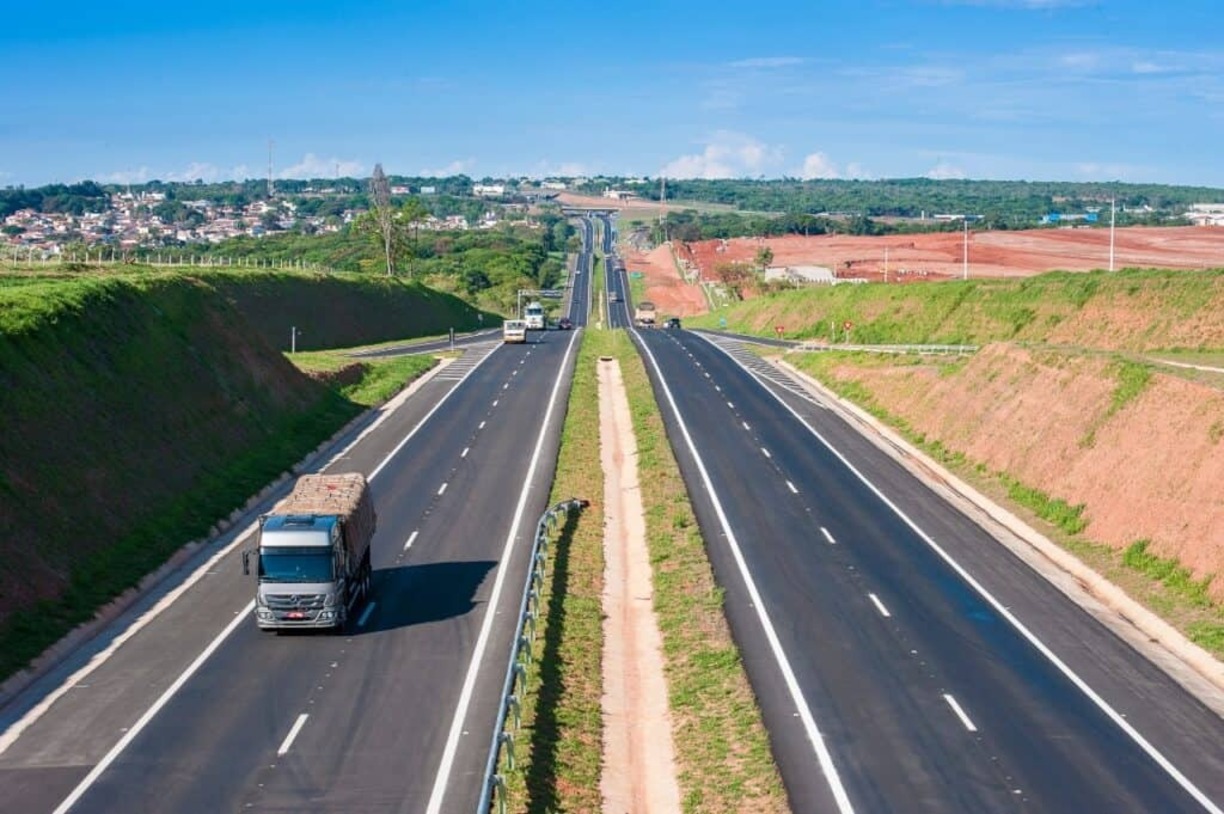

The Automotive Sector Can Celebrate Innovation on the Tracks. New Investments Are Expected to Be Injected into the Construction of New Highways by the End of 2027. This Way, They Aim to Generate Thousands of Jobs Across Brazil.
According to the president of the Brazilian Association of Highway Concessionaires (ABCR), Marco Aurélio de Barcelos Silva, it is estimated that, within five years, Brazil could double its infrastructure and highway concessions. Overall, Brazil has at least 24,000 km of roads already built, and the number could reach about 48,000 km by the end of 2027. A large portion of road construction comes from auctions, but this is not a rule, since the federal government has, under its responsibility, more than 19,000 km under construction.
Silva stated that he participated in the Paving Expo 2022 and highlighted the initiatives taken by the Ministry of Infrastructure to attract international investors from New York and other locations around the world. Brazil has been receiving various foreign investments, especially when it comes to innovation – the state of Ceará, for example, will see financial returns from companies in the Netherlands for the construction of renewable energy networks for businesses. The potential entry of new brands into the sector is showing to be quite promising. According to him, road maintenance should be largely carried out by the federal government. It is thanks to initiatives taken by the federal government that access to less complex contracts can be achieved, including for the construction of smaller roads that would incur lower costs.
Infrastructure Companies Will Be Privileged with the Creation of Jobs in the Construction of New Highways
The construction of new highways is not an advantage provided only for the automotive sector, but also for the creation of job opportunities. During this quarter, Brazil experienced one of the largest drops in unemployment in the G20. However, despite this, new investments for the creation of opportunities, both for educated professionals and those without higher education, are a way to improve the data revealed by the IBGE this week.
-
At 14 years old, she worked in a factory in Hong Kong, studied economics abroad, and then entered the Chinese real estate market, which helped change the landscape of Beijing.

-
While NATO secured more than $10 billion in missiles and space surveillance at a single forum, Brazil still spends 1.1% of its GDP on defense and is stalling its own anti-aircraft system.

-
Corn ethanol attracts R$ 23 billion in 21 new plants and prepares for a nearly 50% jump in Brazilian production by 2027, even with high interest rates.
-
A newly opened terminal in the middle of the Amazon has begun transporting soy and corn through Amapá, eyeing the queue of ships that is congesting the ports in the South.


Riumar dos Santos, president of the Brazilian Association of State Departments of Highways and Roads (Abder), claims that investments can generate jobs while Brazil increases its capacity to develop infrastructure-related projects.
According to Riumar, Brazil has more than 1.7 million highways spread across all states, which facilitate the transport of cargo, tourism, and population dispersion. However, despite being a significant number of highways, only 270,000 of them are paved and in good condition for use. To put it into perspective, France, which is similar in size to the state of Minas Gerais (MG), already has at least 800,000 paved roads. The figures from the French are much lower than those provided by the United States, which shows more than three times the amount invested in infrastructure, that is, 3.8 million streets are already paved, even with a lower tax burden than Brazil.
The head of the Directorate of Works and Cooperation (DOC), Brigadier General Rogério Cetrim de Siqueira, stated that the DOC is an alternative created by the federal government to attract investors. However, the advantages provided for companies have not been so attractive to encourage them to invest in public works, resulting in a smaller number of brands interested in investing in infrastructure.