






 Portuguese
  Spanish


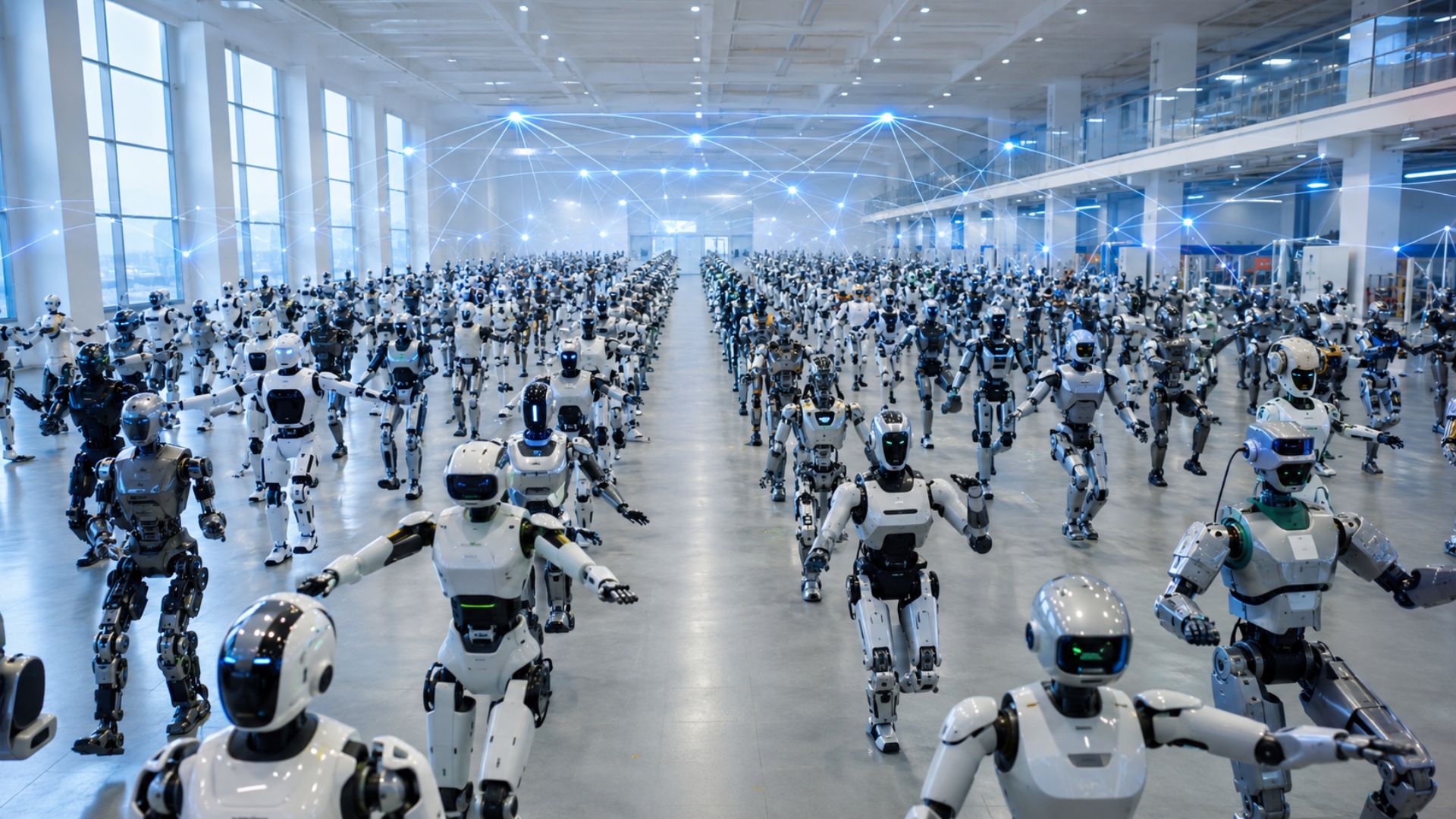


China inaugurates in July the first training school for multi-brand humanoid robots, bringing together more than 100 different models from over a dozen companies in facilities of 5,000 square meters in Shanghai. According to NewsAtlas, the humanoid robots will learn 45 basic skills such as grabbing, transporting, and organizing objects, repeating each movement up to 600 times a day. The center will generate 50,000 data points daily and 10 million per year, creating a database that will be shared among companies to accelerate the development of humanoid robots across the country.
China is building something that seemed like science fiction until a few years ago: a school where humanoid robots from different brands and manufacturers sit side by side to learn together. The National and Local Innovation Center in Humanoid Robotics, located in the Zhangjiang technology hub in Shanghai, will receive in July more than 100 humanoid robots from over a dozen companies for the world’s first heterogeneous training class. The mechanical students will master simple tasks like holding a book to complex activities like folding clothes and cleaning equipment, with each movement being repeated hundreds of times while scientists collect performance data.
The goal goes beyond training the humanoid robots of the 2026 class. The millions of data points collected will be used to create what researchers call a “superbrain,” a general-purpose model that will allow humanoid robots of all shapes and sizes, developed by different manufacturers, to learn and evolve together. Xu Bin, general manager of the center, stated that “we created the center to enable large-scale data sharing and utilization, empowering the entire sector.” The facility is another example of the collaborative ecosystem of the Chinese robotics industry, where startups and established companies share infrastructure to advance faster.
The 45 Skills That Humanoid Robots Will Learn
The inaugural class of humanoid robots will start by mastering 45 “atomic skills,” basic movements that serve as a foundation for more complex tasks. Among them are grasping objects, picking items from shelves, placing pieces in specific positions, and transporting loads between predetermined points, actions that seem trivial to humans but represent significant technical challenges for machines.
-
AI-powered toys that talk, recognize faces, and collect data face scrutiny from Brazilian government over children’s privacy concerns

-
4,000-Year-Old Child’s Skull Unveils Ancient Burial in 7,500-Year-Old Norwegian Rock Shelter, Impressing Archaeologists

-
Norway Defeats Brazil in World Cup but Invests Billions to Preserve the Amazon, Strengthens Amazon Fund, and Joins Brazil in Leading Global Effort Against Tropical Deforestation

-
Denmark Constructs Its Largest Breakwater with 175 Concrete Blocks and World’s Largest Excavator to Combat 8-Meter Waves, at a Cost of $156 Million



The art of grasping objects like humans is one of the most challenging areas for humanoid robots. Knowing when to squeeze and when to release, adjusting pressure according to the material, and manipulating objects with irregular shapes require a level of motor control that previous models did not master. At the training center, each robot will repeat a single basic action up to 600 times a day under the supervision of a scientist who collects data on position, pressure, speed, and success rate.
The 10 Million Data Points Per Year
The center is designed to function as an information factory about humanoid robots. The expectation is to generate 50,000 data points per day, totaling 10 million pieces of information per year on how different models perform the same tasks, where they fail, and how they can be improved.
Yang Zhengye, director of market systems at the center, explained that “the robots with integrated bodies being trained will perform more complex tasks, requiring a sequence of actions based on autonomous judgments, formed through the search and comparison of data collected during training.” The diversity of the humanoid robots present, varying in shape, size, and degrees of freedom of movement, is intentional: the more varied the group of students, the richer the database generated.
The “Superbrain” That Will Teach Future Humanoid Robots
The massive amount of data collected will be gathered to create a general-use model that researchers already compare to a collective brain. This model will allow new humanoid robots entering the facility in the future to learn tasks already mastered at a much faster pace, without needing to repeat hundreds of times what the class of 2026 has already learned.
The center will also create a data exchange system that will allow robotics companies to access specific information to focus their products on sectors like healthcare, hospitality, or industry. The idea is that a company specializing in hospital humanoid robots can access medical movement data collected at the center without needing to train its own models from scratch, accelerating development and reducing costs.
What Humanoid Robots Will Be Prepared For
The class of 2026 will be trained to master 10 essential tasks in three main areas: domestic work, industrial environments, and tourism. Humanoid robots still need to improve activities that humans consider basic, such as folding clothes, organizing shelves, moving objects, and cleaning equipment, tasks that require fine motor coordination and the ability to adapt to unforeseen situations.
China already has 3,000 robots working alongside humans in a megafactory in Chongqing, and the training center in Shanghai is the next step to expand the presence of humanoid robots in sectors that require direct interaction with people. If the school works as planned, the next generation of humanoid robots will reach the market faster, more skilled, and cheaper, trained not by a single company, but by the collective knowledge of the entire Chinese robotics industry that passes through the Shanghai school.
Did you know that China is opening a school where humanoid robots from different brands learn together? Do you think this accelerates the future or brings the science fiction scenario closer? Tell us in the comments.









Wow amazing ❤️❤️
The only thing wrong with AI and Robotics etc etc, is that it gives people more power. People who have love and only want to do good things for other people will have more power to do that. People who have neither love nor anger will use it self-centeredly, with only a nominal concern about the influence it has on others. People who have negative emotions such as anger or desire for power will use it to cause great harm.
There is a great thrust in expanding and extending the use of AI. There needs to be a great thrust in expanding and extending morality. A great man said that the basis of morality is love. He also had the words of God, including supernatural power. Jesus.
As reported by Google’s Gemini, the most rapidly expanding Church in the world is Pentecostal. We emphasize the experiencing of God, and Supernatural power.