Portuguese
  Spanish


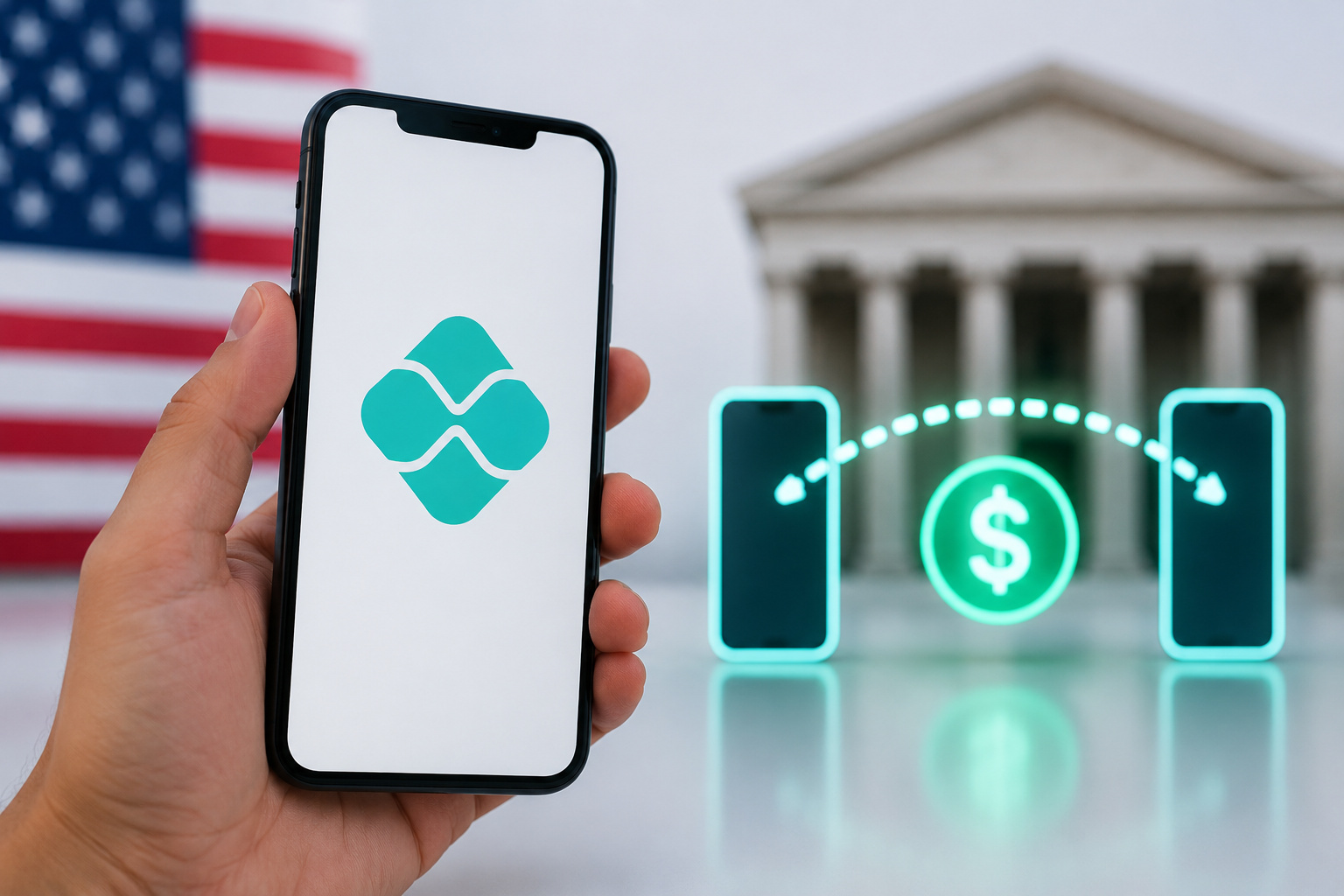

Instant payments have transformed how people and businesses move money in different parts of the world. In Brazil, Pix revolutionized the financial system by allowing fast, free, and 24/7 transfers. However, many people began to question whether a similar system exists in the United States, especially after the Brazilian government defended Pix against commercial concerns raised by the US.
The topic gained momentum in recent months because US authorities began to analyze the impact of the Brazilian system on the financial market and international competition. Furthermore, the accelerated growth of Pix garnered global attention due to the massive adoption by the Brazilian population.
Is there an “American Pix”?
The United States has an instant payment system called FedNow, created by the Federal Reserve, the American central bank.
-
Man Digging in Kentucky Cornfield Uncovers Over 800 Civil War-Era Coins, Including 700 Gold Pieces Worth Millions

-
Viral Video of Giant Gold Nugget in Brazil’s Oiapoque Revealed as Painted Rock by French Guiana Miner
-
18th-Century Treasure Uncovered in Brazilian Amazon: 20 Réis Coin and Dutch Pipes Found at Construction Site
-
New York Resident Uncovers Complete Mastodon Jawbone in Backyard After Spotting Teeth Emerge from Ground



The service officially launched in July 2023 and allows real-time transfers between participating financial institutions. Like Pix, the system operates 24 hours a day, every day of the week.
For this reason, FedNow has become popularly nicknamed the “American Pix.”
However, despite the similarities, there are important differences between the two models.
How FedNow works in the United States
FedNow was developed by the Federal Reserve to enable instant payments within the US financial system.
In practice, when a person makes a transfer through a participating institution, the money can be sent and received in a few seconds.
Furthermore, the service operates continuously, including on weekends and holidays.
According to the Federal Reserve, banks and financial institutions can develop their own products using the FedNow infrastructure.
The main differences between Pix and FedNow
Although the two systems operate similarly, there are relevant differences between them.
Pix, created by the Central Bank of Brazil, has virtually universal adoption among Brazilian financial institutions. FedNow, on the other hand, depends on the voluntary participation of US banks.
Furthermore, Pix quickly became popular in Brazil thanks to its freeness for individuals and broad integration with banking applications.
In the United States, the payment system is more fragmented. There are different private platforms competing with each other, such as Zelle and RTP, in addition to FedNow itself.
Why Pix garnered international attention
The growth of Pix has been extremely rapid since its official launch in 2020.
According to data from the Central Bank of Brazil, the system has already surpassed 150 million users and has become the most used payment method in the country.
Furthermore, Pix revolutionized payments between individuals, businesses, and even governments.
The success of the Brazilian system aroused international interest precisely because few countries have managed to achieve such high levels of adoption in such a short time.
The role of the Central Bank in Pix’s success
One of the most important factors for Pix’s success was the direct involvement of the Central Bank of Brazil.
Unlike the United States, where private systems have a strong presence, Pix was created as a centralized infrastructure regulated by the Brazilian monetary authority.
Furthermore, the Central Bank mandated broad participation of financial institutions in the system’s ecosystem.
This model helped accelerate adoption and increase the standardization of operations.

Why the topic gained relevance recently
The issue returned to the center of the debate after commercial concerns raised by the United States involving Pix and the Brazilian financial system.
According to recent reports, U.S. authorities have begun to analyze the impact of the Brazilian model on international payment companies.
Furthermore, the growth of Pix has been observed globally as an example of large-scale financial innovation.
In this context, comparisons between the Brazilian system and FedNow gained even more prominence.
The impact of Pix on the Brazilian economy
Pix has profoundly changed financial behavior in Brazil.
Currently, millions of people use the system daily for payments, transfers, and purchases.
In addition, small merchants have reduced costs with card machines and card fees.
According to specialists, the system also expanded financial inclusion and facilitated digital transactions in different regions of the country.
The growth of instant payments worldwide
Instant payments have been growing globally in recent years.
Several countries have begun to develop similar systems to modernize financial transfers and reduce dependence on traditional methods.
In addition to Brazil and the United States, countries like India and the United Kingdom also have real-time payment platforms.
In this scenario, the advancement of financial digitalization has become a global trend.
What differentiates the American financial market
The United States financial system has different characteristics from the Brazilian model.
While Brazil has strong regulatory centralization in the Central Bank, the U.S. operates with a large presence of private institutions and multiple payment networks.
Furthermore, the North American banking fragmentation hinders a standardization as broad as that observed in Pix.
Therefore, the adoption of FedNow is occurring more gradually.


The role of competition among payment systems
In the United States, different platforms compete for space in the instant payments market.
Among them are:
- FedNow
- RTP (Real-Time Payments)
- Zelle
- Private banking systems
In addition, financial technology companies also compete by offering their own transfer solutions.
This scenario makes the American market more decentralized compared to Brazil.
The impact of financial technology on the future
The expansion of instant payments shows how technology is transforming the global financial sector.
Furthermore, consumers have begun to demand faster, more secure, and always-available transactions.
In this context, systems like Pix and FedNow represent part of a new generation of digital financial infrastructure.
At the same time, governments and central banks seek to increase efficiency and reduce operational costs.
What specialists say about Pix
Pix has received international recognition for its adoption speed and economic impact.
According to internationally published analyses, the Brazilian system has become a global benchmark in instant payments.
In addition, specialists point out that the combination of simplicity, gratuity, and broad integration helped boost the platform’s success.
Therefore, the Brazilian model has been observed by other countries interested in modernizing financial systems.
What to expect from instant payments in the coming years
The trend is for instant payments to continue growing worldwide.
Additionally, new technologies are expected to enhance integration between banks, digital wallets, and financial platforms.
In the United States, FedNow is still in its expansion phase, while Pix remains consolidated in Brazil.
In this scenario, the advancement of financial digitalization is expected to further transform the way people and businesses move money.
Finally, the debate about the existence of an “American Pix” shows how instant payment systems have become strategic not only for banks and consumers, but also for global economic competitiveness.