Portuguese
  Spanish


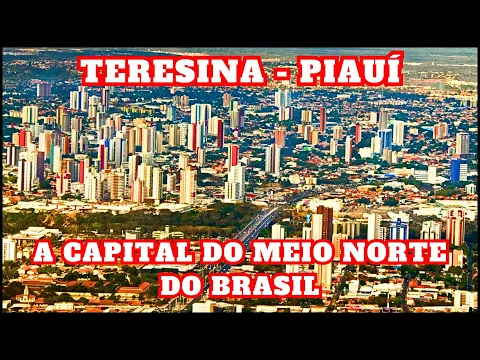
Founded in 1852 by order of Dom Pedro II, Teresina is the first planned capital of Brazil and the only one in the Northeast that is not on the coast. The city was designed in a chessboard format before receiving its first residents, and today it hosts the natural spectacle of the meeting of the Parnaíba and Poti rivers, centenary avenues that justify its nickname of Green City, and cajuína, a drink listed as Cultural Heritage by IPHAN.
Teresina is the most unusual capital on the Northeastern map. Founded on August 16, 1852, it was the first Brazilian planned capital before it even existed, with grid-patterned streets designed in the colonial model that still facilitates movement today. Located 366 km from the coast, it is the only capital in the Northeast without a beach, a fact that surprises those who exclusively associate the region with sun and sea. The name honors Empress Teresa Cristina, wife of Dom Pedro II, and the nickname Green City came from the Maranhão writer Coelho Neto, impressed by the avenues shaded by centenary trees.
The city holds a Northeast different from the beach postcard that dominates the country’s imagination. Instead of a seafront, Teresina offers two rivers that meet in the urban area, a striking gastronomy with chilled cajuína as its star, and an architectural heritage ranging from imperial mansions to a cable-stayed bridge inaugurated in 2010. For those seeking a destination outside the conventional circuit, the capital of Piauí is a discovery that combines history, nature, and flavors that exist nowhere else in Brazil.
How Teresina was planned like a chessboard

According to information released by the Correio Braziliense portal, the change of the capital of Piauí from Oeiras to Teresina was a strategic decision. The new city was laid out in a chessboard format before receiving any residents, with straight and perpendicular streets that form regular blocks and facilitate orientation. The model, inspired by Portuguese colonial urbanism, anticipated by more than a century the concept of planned cities that Brazil would repeat with Belo Horizonte in 1897 and Brasília in 1960.
-
In his spare time, a truck driver with no experience in carpentry transforms a plot of land into a workshop, learns to work with wood, and builds 1,700 little houses that have already provided shelter from the cold and rain to more than 5,000 abandoned dogs and cats in the interior of São Paulo.

-
A Brazilian city dredged sand from the seabed, extended 2 km of the Beira-Mar, and created a new 80-meter landfill on one of the most famous coastlines in Brazil; years later, what seemed like a bold project turned into an expanded boardwalk, bike path, standardized kiosks, and a new leisure hub in the state.
-
Friends turn paper into ‘bubble wrap’ without plastic to protect products inside cardboard boxes, win an innovation award in the UK, and join a 13 million euro European project to bring the packaging to industrial scale.
-
Mechanics remove the engine from a used Fiat Fiorino, install an electric kit with WEG and FuelTech, place batteries in the cargo area, and prepare the van to run 100 km per day in Brazil.


The choice of location between two rivers was also calculated. The Parnaíba River, which serves as a natural border with Maranhão, and the Poti River, which cuts through the city from South to North, guaranteed access to water and fluvial transport routes that were essential in the 19th century. This position between two waterways earned Teresina the nickname “Brazilian Mesopotamia,” a reference to the region between the Tigris and Euphrates rivers that housed ancient civilizations. Almost two centuries later, the grid-patterned streets remain functional, and the rivers continue to be the most striking landscape of the capital.
The meeting of the Parnaíba and Poti rivers in the heart of the city
The Encontro dos Rios Environmental Park, in the Poti Velho neighborhood, is the point where the waters of the Parnaíba and Poti unite before heading towards the Atlantic. The visual phenomenon is impressive because the waters of different colors run side by side for meters before mixing, creating a natural spectacle that residents and visitors watch at sunset from the park’s two viewpoints.
The space has ecological trails, clay handicraft stalls made by local artisans, and a monument to Cabeça de Cuia, a character from one of Teresina‘s most well-known legends. The Meeting of the Rivers is the main natural tourist attraction of the capital and serves as a symbol of a city born from its relationship with water, not with the sea. For those who arrive expecting to find beaches in the Northeast and discover rivers of distinct colors crossing, the experience is unforgettable.
The centenary avenues that made Teresina become the Green City
The nickname Coelho Neto gave to Teresina at the beginning of the 20th century remains pertinent. The avenues shaded by centuries-old trees create green corridors that reduce the thermal sensation in a city where temperatures can exceed 37°C in the hottest months. The urban vegetation cover is one of the most characteristic features of the capital and surprises those who imagine the interior of Piauí as an arid landscape.
The presence of trees is not just aesthetic. In a city with a hot climate all year round, the shade of centuries-old canopies transforms walks that would be unbearable into pleasant strolls, especially in the historic center, where imperial mansions, 19th-century churches, and museums are just a few blocks away. The Green City is a living example of how urban tree planting, even when not the result of modern environmental policy, can define the identity and quality of life of a capital.
Cajuína and the flavors that only exist in Teresina
The star of the Teresina table is cajuína, a clarified cashew juice drink, sweet, non-alcoholic, and served chilled with almost every meal. IPHAN registered cajuína as a Cultural Heritage of Brazil in 2014, recognizing a product that is a symbol of identity and hospitality in Piauí. Finding it outside the region is rare, which makes the experience of drinking it in Teresina something genuinely local.
The gastronomy goes beyond cajuína. Arroz com capote, made with guinea fowl and babassu coconut oil, Maria Isabel, a mix of rice with sun-dried meat, and paçoca pounded in a mortar with clarified butter form a menu that blends indigenous, Portuguese, and African roots. The Mercado Central Mestre Dezinho gathers ceramic, wood, and leather crafts made by local masters, besides being a starting point for those who want to dive into the flavors and popular culture of a capital that eats differently from any other in the Northeast.
What to visit in the historic center and beyond

The center of Teresina concentrates heritage sites that tell the history of Piauí and imperial Brazil. Karnak Palace, the seat of the state government, has a neoclassical style with gardens designed by Roberto Burle Marx and offers guided tours. The Piauí Museum, housed in a downtown mansion, gathers 16 rooms with fossils, indigenous artifacts, and imperial collections. The Theatro 4 de Setembro, inaugurated in 1894, is one of the oldest in the Northeast still in operation.
Outside the center, the João Isidoro França Cable-Stayed Bridge offers a 360° view over the Poti River and was built to mark the 158th anniversary of the capital. The Church of São Benedito, built in 1917 on the initiative of the Black community next to an old cemetery for enslaved people, is a heritage site that connects Teresina to the Afro-Brazilian memory of Piauí. The city rewards those who take the time to walk through its grid-patterned streets and discover what each block hides.
Did you know Teresina, or did you think every capital in the Northeast had a beach? Tell us in the comments if you’ve tried cajuína, if you know about the meeting of the rivers, and what else surprised you about Brazil’s first planned capital.