






 Portuguese
  Spanish
  6 min of reading
  0 comments


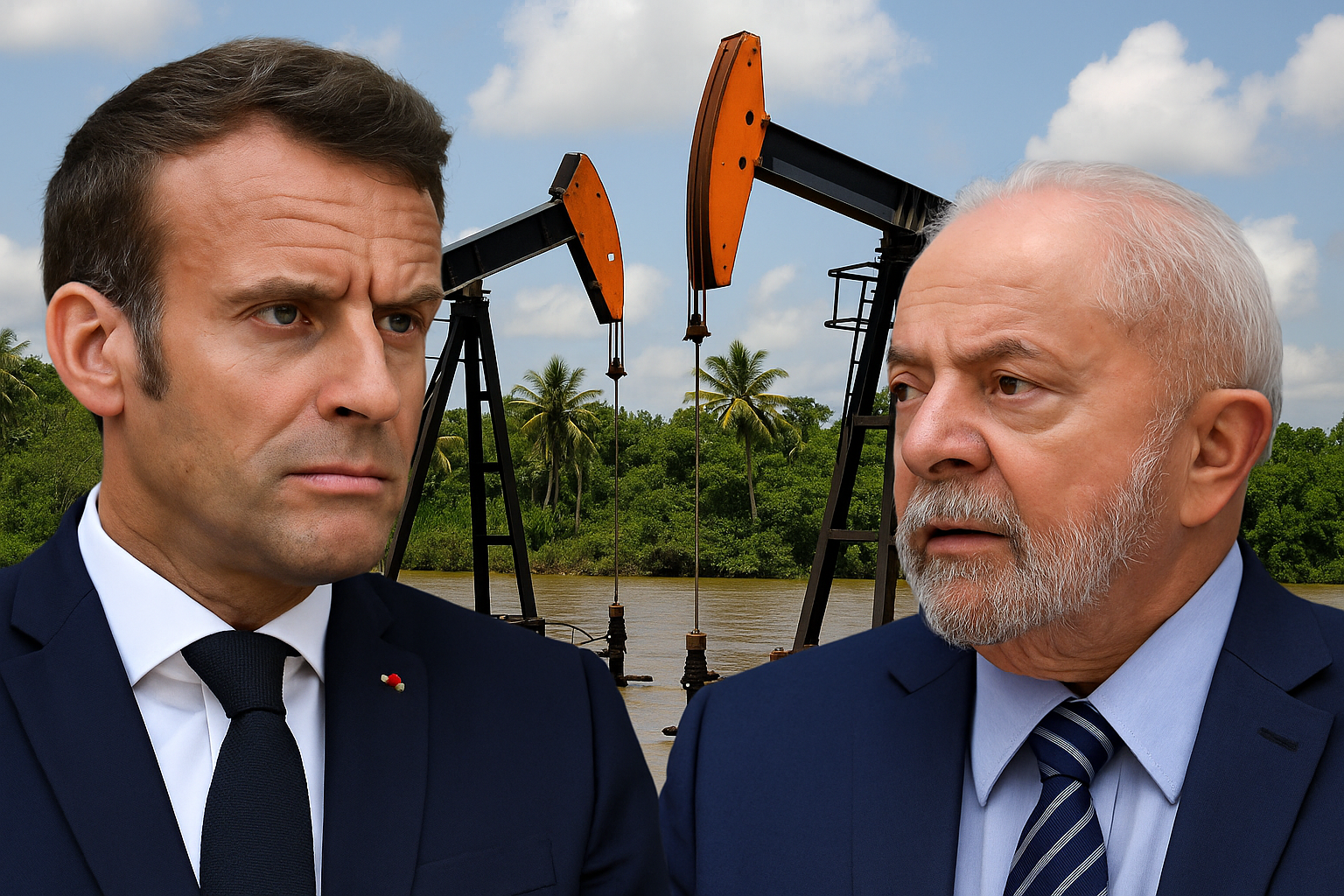
The Discussion About Oil in the Amazon Gained a New Chapter with the Statement from French President Emmanuel Macron. During a UN Event, He Suggested That Brazil Abandon Projects at the Mouth of the Amazon River
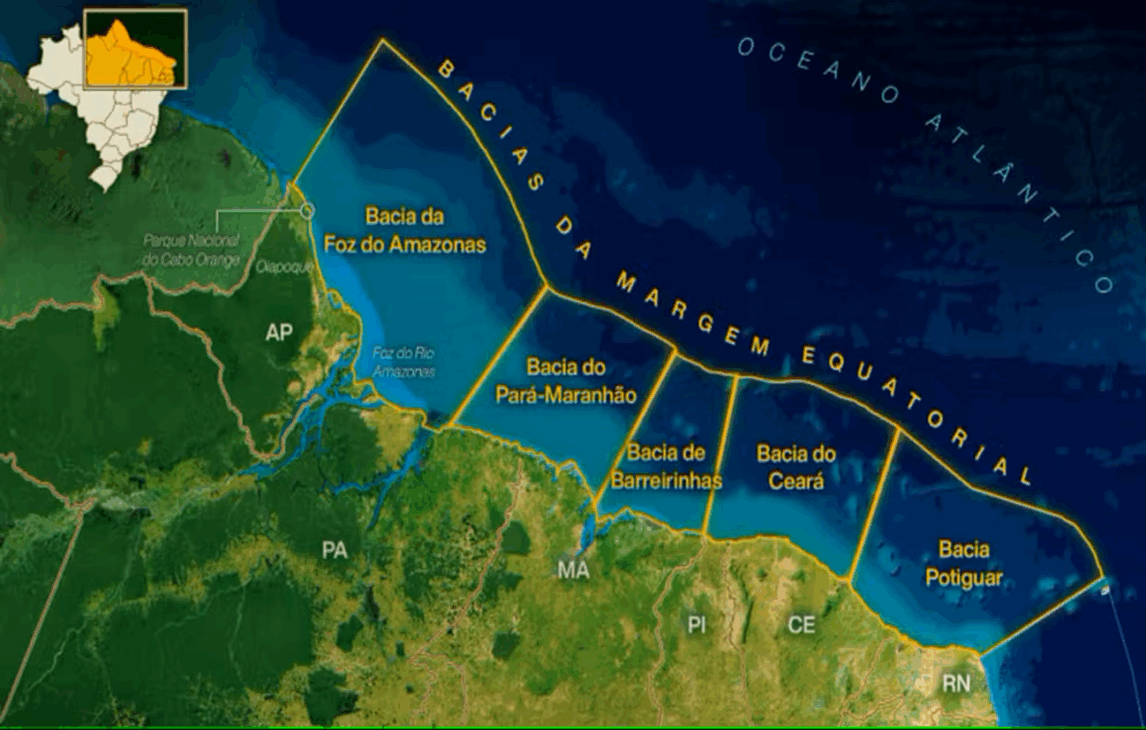
The French President Emmanuel Macron publicly spoke about Brazil’s interest in oil exploration at the mouth of the Amazon River.
The topic, already surrounded by controversies, gained traction following his participation in the 3rd UN Conference on Oceans, held in Nice, France.
Macron not only suggested that Brazil should abandon projects in the region but also highlighted the decisions made by his own country regarding fossil fuels.
-
Survivor of 1966 SS Daniel J. Morrell Shipwreck in Lake Huron Recounts 38-Hour Ordeal in Extreme Cold

-
The Greatest Hoax in World Cup History? The Film That Denied Brazil’s 1958 Victory and Exposed How Fake Evidence Can Seem Convincing on TV
-
Fake South Korean Online Stores Offer Shopping Thrill Without Spending Money or Receiving Products
-
The War of Jenkins’ Ear: How a Severed Ear Sparked One of the 18th Century’s Most Unusual Conflicts


But French reality is far from being as coherent as the rhetoric.
Video of Chief Raoni Opens Debate at the Conference
It all started when a video recorded by Chief Raoni Metuktire, 93 years old, was shown. One of the most respected indigenous leaders in the world, Raoni directly asked Macron for support to stop the advancement of oil at the mouth of the Amazon River.
“I do not want oil exploration at the bottom of the ocean and at the mouths of rivers, so help me stop this project. I told Lula and I tell you too,” Raoni declared in the recording. His words had an immediate impact on the event’s attendees.
Mouth of the Amazon River — Request Reinforced Live by Young Indigenous Leader
On the same occasion, Tau Metuktire, Raoni’s grandson, was present at the event.
He participated in a special program on the France 2 channel, broadcast live from the beach in Nice, and reinforced his grandfather’s message.
Tau emphasized that indigenous peoples continue to face the encroachment of agribusiness, deforestation, and the environmental impacts caused by large projects in their territories. According to him, it is essential to protect not only the oceans but also rivers and forests.
Macron Cites French Example and Suggests Change of Course for Brazil
In response to the indigenous appeal, Macron stated that France has already adopted a clear policy against opening new oil exploration projects. He also stated that this policy applies to overseas territories, such as French Guiana.
“Our country has adopted this project for itself. I think it would be good for him to do the same, but it’s not up to me to give him lessons,” Macron said, referring to Brazil.
France Prohibits New Contracts Since 2017
The French president referred to the Law No. 2017-1839839, known as the “Hulot Law.” Approved on December 30, 2017, this legislation prohibits the issuance of new contracts for oil and gas exploration throughout French territory. This includes both mainland France and overseas departments.
The regulation also stipulates that existing licenses cannot be renewed after January 1, 2040.
With this, France aims to completely end all research and extraction activities for hydrocarbons by that deadline. This policy applies even to areas like the mouth of the Amazon that belong to French Guiana.
French Guiana: Oil Under the Soil, But Not Exploited
French Guiana borders countries like Suriname and Guyana, which are experiencing a true oil boom. However, French legislation prevents French Guiana from taking advantage of this economic potential.
While neighboring countries are advancing with extraction and export projects, French Guiana remains unexploited.
This decision is supported by environmentalists, but also generates local criticism about the economic impact of the measure.
In 2024, the French Senate reaffirmed its commitment to the “Hulot Law.” Any attempts to alter the text were deemed incompatible with the Paris Agreement and the goal of net zero carbon emissions by 2050.
Macron Calls for Sustainable Growth for Southern Countries
During his speech at the UN Conference on Oceans, Macron acknowledged that developed countries, like France, built their wealth based on the use of fossil fuels. But he argued that it is possible to follow another path.
According to him, the world needs to find alternative ways to promote development without compromising the climate. Macron suggested that Brazil and other developing countries seek this new model.
“I believe there are other alternative projects that allow job creation and wealth. In any case, I think it is not a good project for the climate,” he said regarding oil at the mouth of the Amazon.
“Nature Is One,” Warns Indigenous Leadership
Young Tau Metuktire also highlighted the connection between rivers and oceans. According to him, environmental damage caused on land ultimately impacts the seas.
“Nature is unique. It connects one to the other, the river to the sea. That’s why we come here to contribute with our knowledge,” he said in an interview with Radio France Internationale.
Tau also warned about the excessive use of pesticides and deforestation in southern Pará and northern Mato Grosso.
According to him, the residues contaminate rivers used by indigenous communities for fishing and drinking water, causing serious illnesses, including cancer.
French Promise Is Not Fully Kept
Despite Macron’s critical tone, France has not fully kept its promise to end oil exploration. Data released by the investigative website Disclose shows a different reality.
Since the law was signed in 2017, at least 47 new oil wells have been authorized in French territory. This data was obtained from information provided by ten local municipalities.
The authorization was possible because many of these areas already had old concessions. The 2017 law did not cancel existing mining titles, which opened loopholes for new drilling in sensitive locations.
Oil in Areas Destroyed by Fires
One of the most emblematic cases occurs in the La Teste-de-Buch forest, in southwestern France. In 2022, a mega-fire driven by heat and winds destroyed thousands of hectares of vegetation.
In the same location, today it is possible to see oil pumps and tanks from the Canadian company Vermilion. The scene contrasts with the environmentalist discourse promoted by the French government.
Legal Loopholes and Old Licenses Maintain Exploration
According to the investigation, the justification for these new drillings is based on the idea of “economic balance” and the preservation of acquired rights.
This allows companies to continue operating until 2040 — and, in some cases, beyond this deadline — provided the licenses were issued before the new law was approved.
At least 19 of the 47 wells identified by the report are already active. These are in addition to more than 600 oil extraction points still operating in France.
Criticism Grows Among French Environmentalists
Environmental organizations criticize the gap between the rhetoric of the French government and real practices. According to them, new projects go unnoticed by public opinion but cause concrete damage to the environment.
In Nonville, one project directly threatens the aquifer that supplies Paris. The risk of contamination worries local authorities and advocates for safe drinking water.
Leaks and Accidents Are Not Rare
Moreover, the history of accidents at French facilities is concerning. In 2020, for example, a leak of 200 liters of oil contaminated the Seine River, affecting animals and vegetation along the banks.
According to Disclose, at least 22 environmental incidents have been recorded in French wells since 2010. Among them are leaks, fires, technical failures, and illegal discharges.
Discourse and Practice Still Do Not Align
Although Emmanuel Macron has taken a clear stance against oil exploration at the mouth of the Amazon, the situation within France itself is still far from an ideal model.
While the law prohibits new contracts and limits renewals, legal loopholes allow exploration to continue at a considerable pace. The contradiction between discourse and practice generates internal and external criticism.





Be the first to react!