






 Portuguese
  Spanish
  4 min of reading
  0 comments


Nature Study Shows Greenland’s Extreme Ice Melt Increased 6 Times — from 12.7 to 82.4 Gigatons per Decade Since 1990
On May 4, 2026, researchers from the University of Barcelona published a study in Nature Communications about the Greenland ice melt.
As reported by ScienceDaily, the production of meltwater sextupled in just three decades.
Between 1950 and 2023, the average ice melt was 12.7 gigatons per decade. On the other hand, since 1990, the number rose to 82.4 gigatons per decade.
-
Federal Police involved in the case to identify the person responsible for hacking the Civil Defense system, which sent ten false alerts, frightened residents of different capitals, and turned messages about real risks into notifications with “misanthropy” and even alien attacks.

-
Extreme drought causes ghost village to reappear at the bottom of the reservoir that supplies Athens, revealing houses, a school, and ruins swallowed since the 1980s as the lake shrinks and exposes the water crisis threatening the capital of Greece.

-
Without a mansion, without high investment, and without a traditional classroom, a teacher living in a 22 m² house taught students to build a 9 m² studio apartment with the equivalent of R$10,000.
-
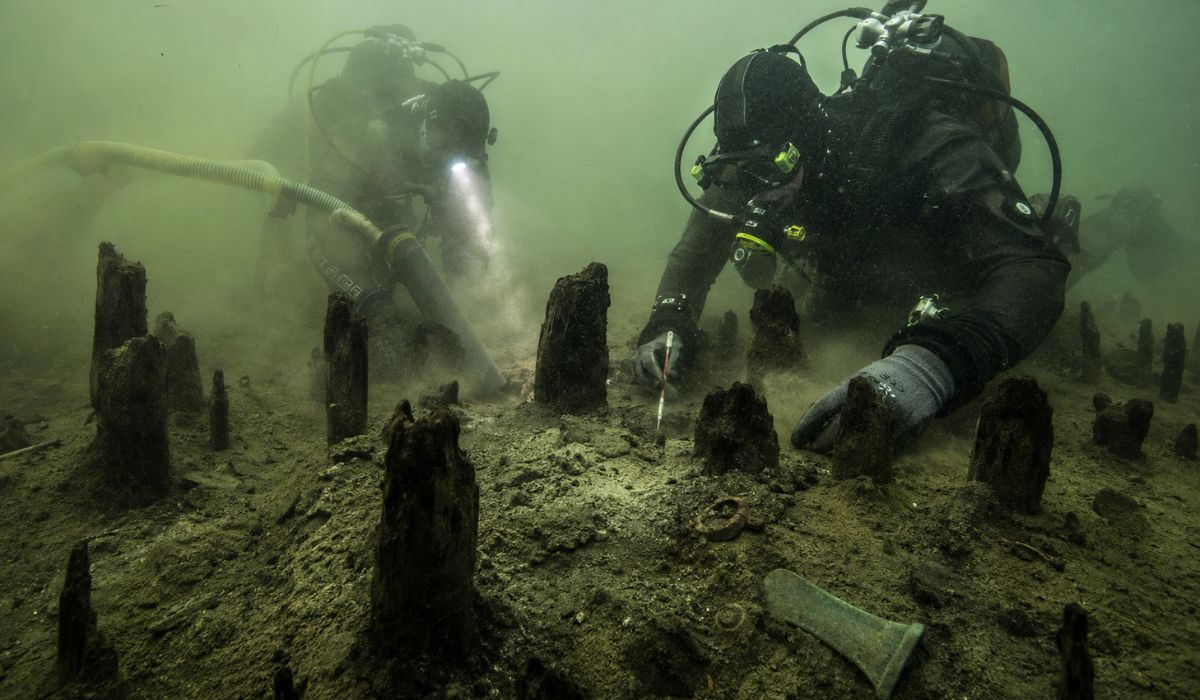
An entire village lay asleep at the bottom of a lake for 3,000 years: divers suction sediments in Italy and reveal more than 600 wooden stakes, bronze tools, and traces of a Bronze Age settlement hidden underwater.


According to the study published in Nature Communications, the area affected by extreme melting episodes grew by 2.8 million km² per decade since 1990.
Josep Bonsoms Leads Study of the ANTALP Group at the University of Barcelona
The paper was led by Josep Bonsoms, a member of the Antarctic, Arctic and Alpine Environments (ANTALP) research group. According to the institutional presentation, the team operates at the University of Barcelona.
In other words, the work mobilizes experts in cryosphere and climate. Indeed, the group has been monitoring alpine, Arctic, and Antarctic glaciers for over two decades.
Therefore, the study combines historical satellite series with climate modeling. Thus, it provides a solid basis for sea level rise projections.
Extreme Events of 2012, 2019, and 2021 Have No Dynamic Precedents

Three recent events marked the island’s extreme ice melt. In August 2012, July 2019, and July 2021, massive episodes affected more than 60% of the ice surface.
As pointed out by the paper, these episodes have no precedents in the historical series studied. At that time, air temperature exceeded records set over 70 years ago.
Similarly, northern Greenland emerges as a new hotspot. Compared to previous decades, the northern portion suffers more intense and frequent melting.
Greenland Ice Melt Affects an Extra Area of 2.8 Million km² per Decade
The study recorded a systematic expansion of the affected area. According to the paper’s data, the surface subject to extreme episodes advances by 2.8 million km² per decade.
In other words, it’s as if the entire area of Argentina were added to the intense melting zone every 10 years.
As a result, previously stable regions have started to experience seasonal events.
According to the University of Barcelona, seven of the 10 largest recorded ice melt events occurred after the year 2000. Therefore, the acceleration challenges previous climate projections.
- Average Ice Melt 1950-2023: 12.7 Gt/decade
- Ice Melt Since 1990: 82.4 Gt/decade
- Increase: 6.5 times in 30 years
- Area Affected by Extremes: +2.8 million km²/decade
- 7 of 10 Largest Events: recorded after 2000
- Current Hotspot: northern Greenland
Greenland Ice Melt Raises Projections of Global Sea Level Rise

The water produced by the melting contributes to sea level rise. According to international data, Greenland already adds 0.8 mm annually to the average ocean levels.
On the other hand, if the current pace continues, the contribution could double by 2050. In other words, coastal cities would have less time to adapt.
Indeed, the paper connects the ice melt to atmospheric temperatures. Thus, extreme episodes coincide with increasingly frequent heatwaves in the North Atlantic.
Brazil Also Feels Impacts of Distant Ice Melt on Northeast Coastal Zones
Brazil has a coastline of over 7,000 kilometers. According to INPE data, areas like the Pernambuco and Rio de Janeiro coastlines are already experiencing accelerated erosion.
Compared to Argentina, the country monitors the issue through CEMADEN and the Ministry of the Environment.
Other recent global research includes the launch of SpaceX’s Dragon CRS-34 on May 13, which carries climate observation instruments to the ISS.
Similarly, the Brazilian coast receives specific modeling based on series from the last 30 years. Recent research on other fronts includes the advancement of underground infrastructure works in Japan and in Arctic zones.
Therefore, Greenland’s ice melt directly or indirectly enters the national climate adaptation planning.
Next Steps: ANTALP Plans Continuous Monitoring Over the Next Five Years

The ANTALP group plans to extend monitoring. According to the internal schedule, the next publication covers projections up to 2050.
According to the researchers, satellites like the European Space Agency’s Sentinel provide data in near real-time.
At that time, the expectation is to anticipate extreme events 30 to 60 days in advance.
Compared to previous models, the new approach combines artificial intelligence with historical series. Consequently, the accuracy of predictions is expected to improve over the next five years.
There are recognized limitations. Ice mass behavior is non-linear.
As pointed out by the paper, models based solely on atmospheric temperatures underestimate the melting. In other words, factors like aerosols, albedo, and internal ice cap dynamics weigh more than previously thought.
According to consulted Argentine and Brazilian scientists, the Andean region may suffer similar impacts. Consequently, joint global cryosphere monitoring generates critical value for regional projections.
Compared to 1990, Greenland’s ice melt rate today exceeds any projection made by the IPCC in reports of that time. Therefore, new updates to climate models immediately incorporate these data.
Will coastal cities like Recife, Santos, and Rio de Janeiro invest in preventive infrastructure before sea level rise becomes irreversible? The next decade will give the verdict.
According to the IPCC, elevation projections by 2100 range from 30 cm to 1 meter. According to Bonsoms’ paper data, Greenland’s contribution could add between 8 and 15 cm of that total.
In other words, cities like Venice, Bangkok, and Recife would have to significantly raise dikes. Consequently, global investment in climate adaptation is expected to double by 2035.




Be the first to react!