





 English
  5 min of reading
  0 comments


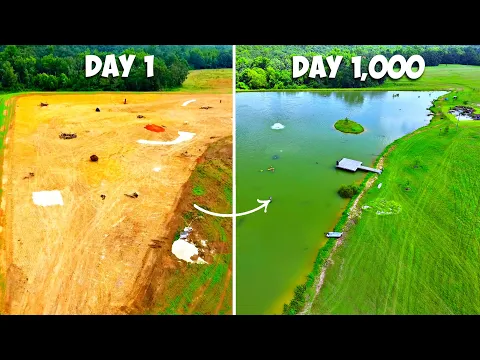
Project started as a 5-acre lake to raise tiger bass on a farm, but in 1,000 days attracted eagles, deer, ducks, owls, and other animals. With towers, shelters, cameras, and live streaming, the site became an informal laboratory of biodiversity and rural environmental management to observe real wildlife.
A 5-acre lake created to develop tiger bass on a farm ended up transforming into a wildlife sanctuary after 1,000 days of changes, observations, and adaptations. The project began with a focus on fish, water quality, and aquatic habitat, but started attracting animals that chose the location as a refuge.
In a video published on the BamaBass channel, the transformation occurred at Crimson Oak Pond, on a rural property monitored by cameras and constant recordings. Over time, eagles, deer, ducks, owls, raccoons, squirrels, and other species began to roam the area, changing the project’s purpose and expanding its environmental importance.
Lake created to raise bass ended up attracting much more than fish

Initially, the goal was to build a lake capable of sustaining tiger bass, a variety of bass known for aggressiveness and rapid growth. The focus was on submerged structure, dissolved oxygen, water quality, feeding, and fish behavior.
-
Man built a 5-acre lake to raise bass, but after 1,000 days the project turned into a wildlife sanctuary with eagles, deer, ducks, owls, and live cameras that transformed the farm into a biodiversity laboratory.
-
Man built a 5-acre lake to raise bass, but after 1,000 days the project turned into a wildlife sanctuary with eagles, deer, ducks, owls, and live cameras that transformed the farm into a biodiversity laboratory.
-
Water hyacinth that blocks boats, oxygen, and channels gains a new function as a lightweight construction panel, creating a sustainable alternative, reducing waste, and offering efficient thermal insulation.

-
More than 230 Brazilian companies move production to Paraguay, pay a tax rate close to 12%, compared to about 80% in Brazil, and use Mercosur to sell back to the domestic market without import tax.

As months passed, however, the project ceased to be just a fish management experiment. What seemed to be a controlled environment for fish began to function as a meeting point for free animals, which started using the water, the shores, and the surrounding farm as part of their routine.
Wild animals chose the area as a new home
About six months after the start of the project, the presence of animals became more evident. Eagles, deer, ducks, owls, fishing birds, raccoons, and other visitors began to frequently appear in the images and observations made on the property.
The difference caught attention because the fish were placed in the lake, but the wild animals arrived on their own. This choice changed the way of seeing the project, as the area ceased to be just a rural tank and began to offer food, shelter, water, and safety for different species.
Eagles gained a tower and started using the lake as a fishing area

One of the most remarkable moments was the arrival of the eagles. Before the construction of the lake, the farm was basically a cultivation area, with little attraction for birds of prey that only passed through the region. After fish like tilapia and rainbow trout were added, the birds had a reason to stop.
To support the presence of the eagles, a tower about 45 feet high was built. The structure began to serve as an observation and fishing point. Later, the platform received improvements to try to favor nesting, including reinforcements, organized branches, and a dedicated camera for monitoring the birds.
Ducks, owls, and other animals transformed the place into a living scene
The lake also received different species of ducks, including birds that began to reproduce on the property. In one case, a family of ducks raised ducklings in the environment, showing that the place offered sufficient conditions for feeding, protection, and permanence.
The owls also became constant characters of the space. Some used structures built for other birds and appeared at night on the cameras. Over time, the farm began to record natural interactions that would hardly be seen without continuous monitoring, including disputes for space, food, and shelter.
Cameras revealed invisible behavior of biodiversity

The installation of cameras changed the relationship with the project. By recording animals day and night, inside and outside the water, the lake began to function as a kind of informal biodiversity laboratory, allowing observation of behavior patterns, feeding, and coexistence.
This monitoring showed details such as deer using feeding areas, raccoons exploring structures, squirrels competing for shelter, and birds returning in different seasons. The simple decision to record continuously transformed the farm’s routine into environmental documentation, with spontaneous scenes of wildlife.
Farm began to be managed with all animals in mind
After realizing that the project had exceeded its initial goal, the management of the property changed. Part of the efforts continued to focus on the lake and the fish, but another part began to target the surrounding farm, with food, shelters, plantations, and structures aimed at different species.
Foods such as corn, soybeans, sorghum, sunflowers, and other crops were planted to attract and feed animals at different times of the year. The idea became to maintain food sources around the lake throughout the year, favoring deer, birds, and other visitors.
Second lake helped to observe fish in clear water

In addition to the main 5-acre lake, a second smaller environment was created, with clear water, a waterfall, rocks, trees, and aquatic vegetation. This space allowed close observation of behaviors that would hardly be seen in the larger lake, where the water does not always allow good visibility.
In this environment, it was possible to observe tilapia protecting their young, bass in aggressive feeding, and different species interacting below the surface. The contrast between the two spaces reinforced the educational function of the project: a larger lake for a broad ecosystem and a smaller one for detailed observation.
Bass remained at the center of the project, but ceased to be the sole focus

The tiger bass remained important to the project. Management included feeding, growth monitoring, use of aquariums, fish tagging, and observation of hunting habits. Some specimens grew from a few centimeters to robust fish in less than three years.
Even so, the story stopped being just about raising big bass. The lake showed that a project designed for one species can create ripple effects, providing food for birds, attracting predators, favoring duck reproduction, and changing the ecological dynamics of the entire property.
Live broadcasts should enhance interaction with wildlife
With the advancement of cameras, the next step became transforming the farm into an interactive environment. The idea is to allow the public to follow animals and fish in real-time, including underwater cameras, feeding areas, and nighttime broadcasts with appropriate lighting.
The project also foresees systems that can activate feeders and allow viewers to see the reaction of fish, deer, raccoons, and other species. If it works, the lake will no longer be just a place observed by the owner and will be followed by people interested in nature, fishing, and animal behavior.
Now the question remains: can private projects like this help bring people closer to wildlife and inspire more conservation, or is there a risk of interfering too much with the natural behavior of animals? Leave your opinion in the comments.





Be the first to react!