Portuguese
  Spanish


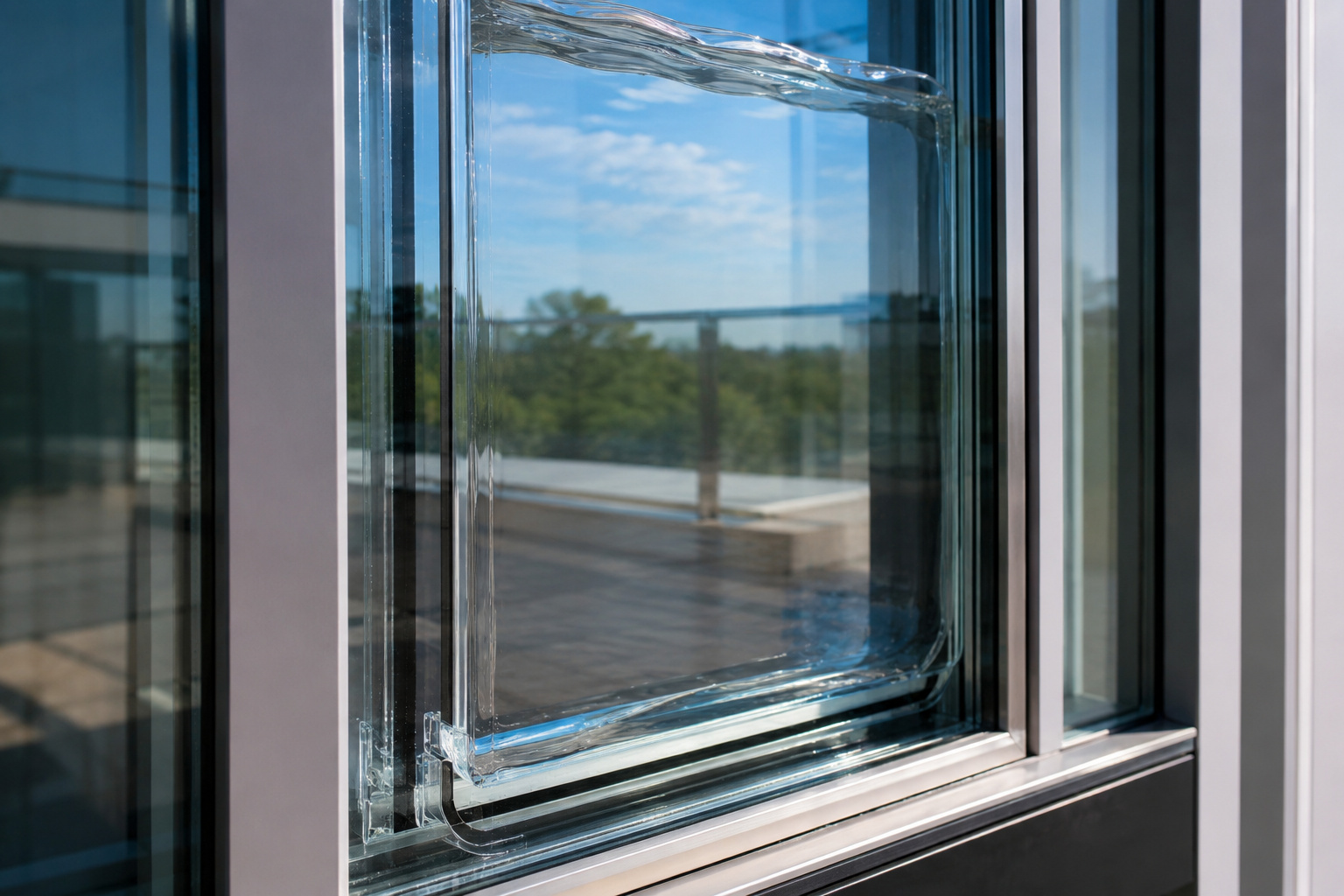

Water-Filled Glass technology makes water circulate inside the glass to absorb heat, reduce energy consumption, and transform facades into active thermal regulators.
For decades, the evolution of windows has followed practically the same path: thicker glass, larger air chambers, special films, and increasingly sophisticated insulation systems. The logic has always been the same: prevent heat from entering in the summer and escaping in the winter. Now, a group of researchers and European companies is betting on a completely different idea. Instead of just blocking heat transfer, the Water-Filled Glass (WFG) technology places a thin layer of water circulating inside the glass itself to capture, transport, and redistribute thermal energy throughout the building.
The result is a facade that stops being a passive barrier and starts functioning as an active heat management system.
Water ceases to be a hidden detail and becomes part of the window’s engineering
The Water-Filled Glass system uses glass panels filled with a layer of water connected to a hydraulic circulation network.
-
Humanoid Robots Transition from Demonstrations to Real Work in Factories

-
Anti-poaching patrol in Thailand accidentally discovers hidden cave with 2,000-year-old petroglyphs, geometric engravings, and mysterious three-finger patterns on sandstone walls.

-
Russia Deploys Largest Nuclear Icebreaker in Arctic Capable of Breaking Through Three-Meter-Thick Ice
-
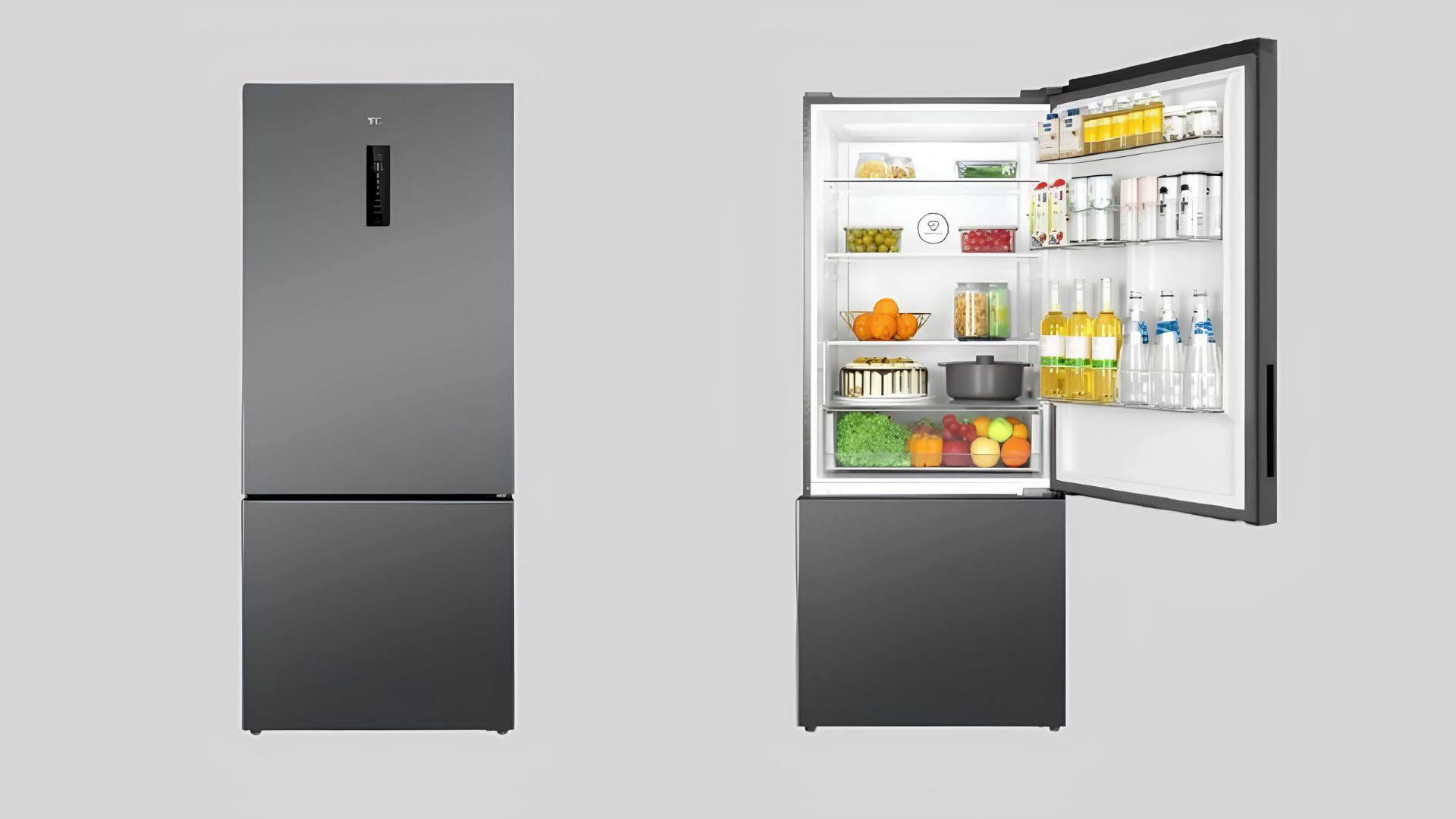
TCL Launches Energy-Efficient Refrigerator in Brazil, Promising 70% Less Consumption Than Competitors




According to the technology developers, the water absorbs the thermal radiation that would normally pass through the window and transports this energy to other points in the building. Instead of simply resisting heat, the system captures and relocates it.


The proposal was developed by Hungarian researcher Mátyás Gutai, currently affiliated with Loughborough University, and has been refined by companies specializing in facades and energy efficiency.
In the summer, heat is removed before entering the environments
The main difference of the technology appears on hotter days. The developers explain that the water absorbs the incident solar radiation before it completely passes through the glass. This heat can then be directed to the building’s mechanical systems, stored, or dissipated as needed.
According to the company Water-Filled Glass, about 66% of typical energy exchanges through a window occur by radiation, something that conventional insulation cannot completely block. The circulation of water aims to address exactly this point.
In the winter, the same window can help reduce heat loss
The operation is not limited to hot periods. When the external temperature drops, the water can absorb part of the thermal energy trying to escape from the interior of the building and redistribute it to other environments or heating systems.
In practice, the window starts to act as a dynamic element of the building’s energy system, instead of functioning only as a transparent surface.
The creators claim that energy savings can reach 75% compared to conventional glass
One of the most striking numbers released by the developers is related to energy consumption.
According to Water-Filled Glass, the technology can reduce between 60% and 75% of costs associated with heating and cooling when compared to conventional double-glazed systems, although results depend on climate, design, and installation method.

Academic research also indicates significant gains. Simulations conducted by researchers in the field recorded energy consumption reductions of over 10% in certain office building scenarios.
The technology aims to solve one of the biggest problems of modern construction
Glass facades have become a symbol of contemporary architecture. Corporate skyscrapers, hotels, and residential buildings use large transparent surfaces to maximize natural lighting and create a modern look. The problem is that these surfaces can also significantly increase the internal thermal load.
The Water-Filled Glass aims to tackle precisely this contradiction: maintaining transparency without turning the facade into a huge heat entry during much of the day.
One of the biggest bets is on the renovation of existing buildings
Another important aspect is that the technology was designed for retrofit. According to the developers, the panels can be installed as an additional layer on the inside of the building, reducing the need to completely remove existing windows.

This can facilitate applications in old, commercial, or historical buildings, where replacing the entire facade usually incurs high costs, activity interruptions, and major structural interventions.
The window becomes part of the building’s energy infrastructure
The deepest innovation might not be in the glass itself. Researchers describe the system as a kind of thermal network distributed across the facade. The water not only absorbs heat but also transports it to where it can be used more efficiently.
This approach brings the window closer to equipment typically associated with climate control and energy management in smart buildings.
| Feature | Information |
|---|---|
| Technology | Water-Filled Glass (WFG) |
| Concept | Glass with internal water circulation |
| Main function | Heat absorption and redistribution |
| Application | Facades, windows, and retrofit |
| System | Closed hydraulic circuit |
| Operation in summer | Captures solar heat before entering the environment |
| Operation in winter | Recovers part of the heat that would leave the building |
| Reported savings | 60% to 75% in heating and cooling costs |
| Installation | Can function as a second internal layer |
| Development | Teams led by Mátyás Gutai |
| Country of development | United Kingdom |
Data compiled from technical publications, technology presentations, and materials from developers.
If the idea works on a large scale, facades may no longer be just glass
For more than a century, the construction industry has treated windows as surfaces that needed to block or resist heat transfer.
The Water-Filled Glass follows a different logic: instead of fighting thermal energy, it tries to capture, move, and utilize it.
If the technology can overcome challenges of cost, scale, and commercial adoption, the facade of the future may function less like a transparent wall and more like an active energy system spread throughout the building.