Portuguese
  Spanish


Assaí Reports US$ 80.6 Billion in Revenue in 2024, but Banks Capture More Profit Than the Wholesaler with Hidden Fees in Every Financial Transaction
The supermarket and wholesale sector is one of the pillars of the Brazilian economy, with revenue exceeding R$ 1 trillion in 2024, according to the Brazilian Supermarket Association (Abras). Among the highlights, Assaí alone generated R$ 80.6 billion during the period, consolidating its position among the largest chains in the country.
However, behind these impressive numbers, there is a contradiction: those who profit the most from this cash flow are not the retail chains, but the banks and card operators.
How Banks Capture Wholesalers’ Profit
Every purchase made with credit or debit cards involves fees that range between 2% and 4% of the total transaction amount. Additionally, when the wholesaler needs to anticipate payment, it pays about 1% extra. For a sector whose net margin ranges between 2% and 5%, this means that a considerable part of the operating result goes straight to the financial system.
-
Eco Invest Auction Aims to Unlock $10 Billion in Investments, Focusing on Green Fertilizers, Critical Minerals, Batteries, and AI for Clean Industry in Brazil

-
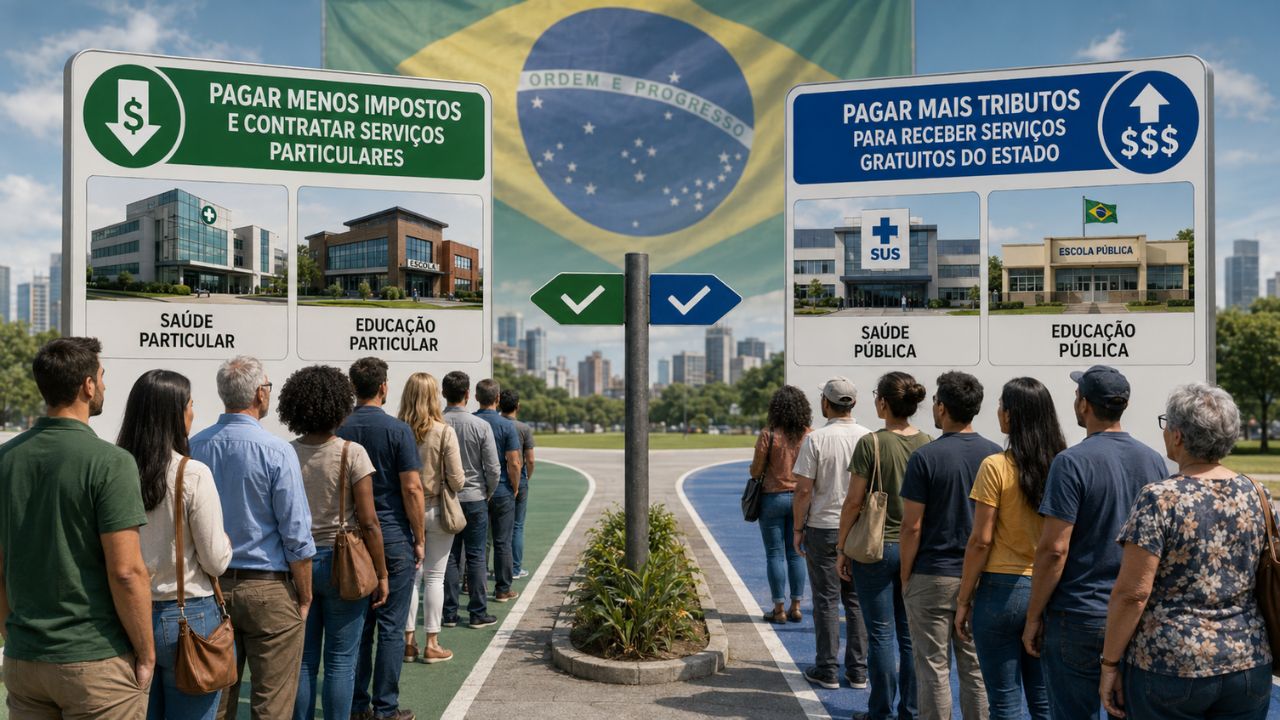
Half of Brazilians Prefer Lower Taxes with Private Health and Education, While 44% Opt for Higher Taxes for State-Provided Services, Datafolha Survey Reveals

-
Brazil’s Most Expensive Toll Rises to R$ 40.60 on Route from São Paulo to the Coast, Nearly Matching Bus Fare to Santos

-
As Brazil Expands Social Welfare, Survey Reveals 40% Blame Poverty on Laziness, While 58% Cite Lack of Opportunities




The phenomenon is even more severe when considering the scale. Millions of daily transactions generate fees that, when totaled, can exceed the effective profit of the chains themselves. Thus, even while dealing with billion-dollar figures, the final cash flow of companies ends up compromised by the financial mechanisms surrounding retail.
The Hidden Power of Data in the Hands of the Financial System
In addition to direct fees, banks control customer transaction data, giving them an advantage in offering credit, insurance, and other financial products. This additional revenue does not pass through the wholesalers, who end up excluded from the most profitable stage of the chain.
In other words, while the wholesaler takes on operational, logistical, and tax risks, banks profit quietly, exploiting the ecosystem created by retail itself. It is an asymmetry showing how the financial sector has managed to capture value at virtually every stage of the economy.
Wholesalers Begin to React
This scenario, however, is beginning to change. Large chains such as Assaí, Carrefour, and Atacadão are already structuring their own financial solutions, creating digital wallets, receivables anticipation systems, and even credit and cashback programs. The idea is simple: turn each transaction into an opportunity for customer loyalty and internal revenue generation.
In practice, this means that wholesalers can evolve into true fintechs disguised as supermarkets, reducing operational costs and increasing margins. The impact can be twofold: on one hand, greater competitiveness in the sector; on the other, breaking the almost absolute dominance of banks over payment methods.
The analysis shows that wholesalers deal in billions but still hand over a significant part of their profits to the financial system. Creating their own structures could be the decisive step for chains like Assaí to transform sales volume into real profitability.
And you, do you think that wholesalers should heavily invest in their own financial solutions to reduce dependence on banks? Or should the sector maintain focus on traditional retail? Please leave your opinion in the comments—we want to hear from those who experience this reality daily.