Portuguese
  Spanish




Red Crabs of Christmas Island Shape Soil and Vegetation by Removing Leaf Litter, Influencing Nutrients and Transforming Forests Monitored for Decades.
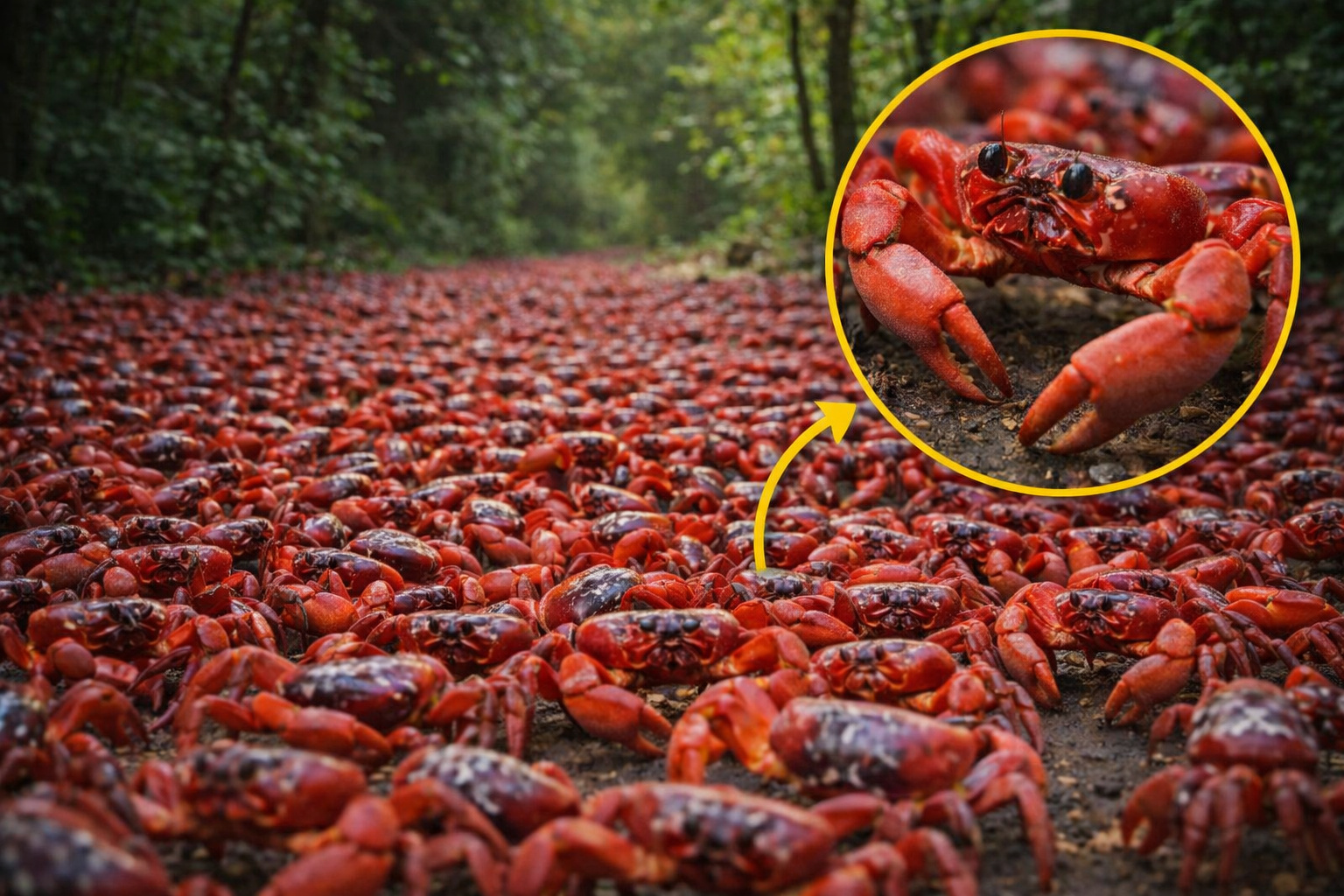
Few people imagine that a terrestrial crustacean can reshape entire forests. On Christmas Island, an Australian territory in the Indian Ocean, this scene repeats every year: millions of red crabs (Gecarcoidea natalis) cross scrublands, roads, and beaches to spawn in the sea. Photos and videos of this phenomenon have circulated the globe, but what truly intrigues ecology is not just the visual spectacle, but the silent transformation that these animals exert on the soil, leaf litter, and native vegetation.
Unlike many tropical forests, where the layer of decomposing leaves and branches can accumulate several inches, on Christmas Island this layer practically does not exist in well-preserved areas. The reason is simple and surprising: red crabs consume the leaf litter almost as quickly as it falls, altering decomposition processes, nutrient cycling, and seed germination. This effect, documented by Australian and British researchers, places the animal in the category of “ecosystem engineer,” a term used for organisms that modify environmental structures with a profound impact on other species.
Christmas Island, Red Crabs, and Ecological Importance
Christmas Island is a remote territory, primarily covered by humid tropical rainforest. It is home to one of the largest known populations of terrestrial crabs, with estimates varying according to seasons and reproductive cycles, but reaching millions of individuals. The red crab, endemic to the island, spends much of its life in the forest but migrates to the sea to spawn, following a timing marked by rains and moon phases.
-
Stingless Bee Honey from Brazil Can Cost Up to $120 a Liter, Surprises with Flavors of Wood, Citrus, and Even Cheese

-
Woman Claims to Have Spotted a Technical Pattern in Recent FIFA Tournaments, Predicts Possible World Cup Winner
-
Chevrolet Offers Chance to Win a 2026 Sonic RS for Free via WhatsApp
-
Earthquake vs. Tsunami: Which Causes More Destruction and Why One Can Be Even More Dangerous


Although the migratory behavior is what most attracts public attention, the environmental impact occurs year-round. The crabs consume fresh leaves, dead leaves, small seedlings, and even dead organisms. This foraging habit reduces leaf litter and limits recruitment of seedlings from certain trees. The consequence is a forest with a structure different from what would be expected in humid tropical areas: exposed soil, little ground vegetation, and more efficient drainage.
Researchers who have studied the site for decades have observed that where the crab is present in high density, the landscape is decisively shaped. It is not simply a predator-plant interaction, but an ecological control that includes feeding, mobility, nutrient cycling, and even indirect seed dispersal.
Leaf Litter, Nutrients, and Soil: What Science Has Discovered
Leaf litter — a layer of leaves, branches, and decomposing organic material — plays a critical role in tropical forests, regulating moisture, fertility, temperature, and germination. In Christmas, the continuous removal of this material generates a technical effect that surprises even experienced ecologists: the soil does not retain the same moisture, which influences plant species that depend on wetter microclimates to establish.
There are published studies in the Proceedings of the Royal Society B showing that crab activity alters the physical and chemical characteristics of the soil, affecting the proportions of nitrogen, phosphorus, and carbon. This modifies the rate of decomposition and the presence of fungi and microorganisms. As a result, scientists have observed changes in the composition of flora, with a lower density of shrubs and seedlings and predominance of species adapted to more exposed soils.
In other words, the crab not only consumes leaf litter — it alters the rate of decomposition, moisture, and plant recruitment. This chain of effects extends to fauna, as decomposer insects and small vertebrates distribute differently when leaf litter is reduced.
Migration, Reproduction, and a Spectacle of Natural Engineering
The annual migration is a chapter apart. Between October and December, triggered by the first rains and synchronized with lunar phases, millions of crabs leave the forests and walk to the sea, where females release their eggs into the water. This synchronization, observed for decades by ecologists and the Australian government, is so precise that road operators even close roads or set up barriers to guide the crustaceans and avoid crushing.
However, the most curious aspect for forest ecology is not the phenomenon itself, but the subsequent cycle. After spawning, juvenile crabs return to the forest, replenishing the population that maintains the characteristic vegetative structure of the island. It is this dynamic of continuous replenishment that sustains the ecological role of the crustacean throughout the year.
When the Cycle Was Interrupted: Invasive Ants and Local Ecological Collapse
A dramatic episode in the 2000s showed what happens when this “natural engineering” is interrupted. The introduction of the yellow crazy ant (Anoplolepis gracilipes), an invasive species, led to a massive decline of crabs in certain areas. The ants killed adult crabs through collective poisoning, resulting in a sudden reduction of the population.
The result was immediate and visible: leaf litter accumulated for the first time in a long time, new plant species sprouted in unusual densities, and ground vegetation gained volume. Researchers and the Australian environmental agency recorded the alteration and monitored the process, treating it as an unintentional “natural experiment” that confirmed the role of crabs as ecological engineers.
This episode was documented by agencies such as Australian Government – Parks Australia and analyzed in scientific journals studying biological invasion dynamics. What impressed researchers the most was the speed of the changes: in just a few years, the structure of the forest transformed, highlighting the strength of control exerted by crabs.
Long Term, Monitoring, and the Concept of Ecosystem Engineer
The term “ecosystem engineer” is used for organisms that physically alter the environment in significant ways — beavers, elephants, and termites are some famous examples. In the case of Christmas, crabs fall into this category because they modulate essential processes: consumption of leaf litter, maintenance of exposed soil, vegetative composition, and biogeochemical cycles.
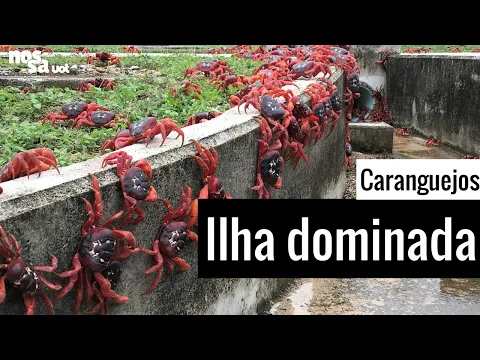
Long-term monitoring conducted by Australian researchers reinforces the importance of this function. Scientists from Australian Government – Parks Australia and affiliated universities have been measuring impacts since the 20th century, compiling data on flora, fauna, and soil. This continuity is rare in island ecosystems, which makes Christmas an international reference for island biology studies.
Reflection: What Christmas Island Teaches About Ecology and Conservation
The case of the red crabs reveals something essential about ecology: not all environmental engineering comes from machines or megaprojects — sometimes, it comes from organisms that have shaped landscapes over thousands of years without us noticing. It also exposes vulnerabilities: a single invasive species was able to interrupt a vital ecological cycle and trigger a cascade of effects.
As science continues to monitor the recovery of crab populations and the control of the invasive ant, a question arises: how many other ecosystems depend on silent engineers whose ecological roles we have not yet fully understood?
In this sense, Christmas Island is not just an open-air laboratory; it is a reminder that biodiversity is not decorative — it is natural infrastructure, and when that infrastructure collapses, entire ecosystems change before our eyes.