






 Portuguese
  Spanish
  6 min of reading
  0 comments


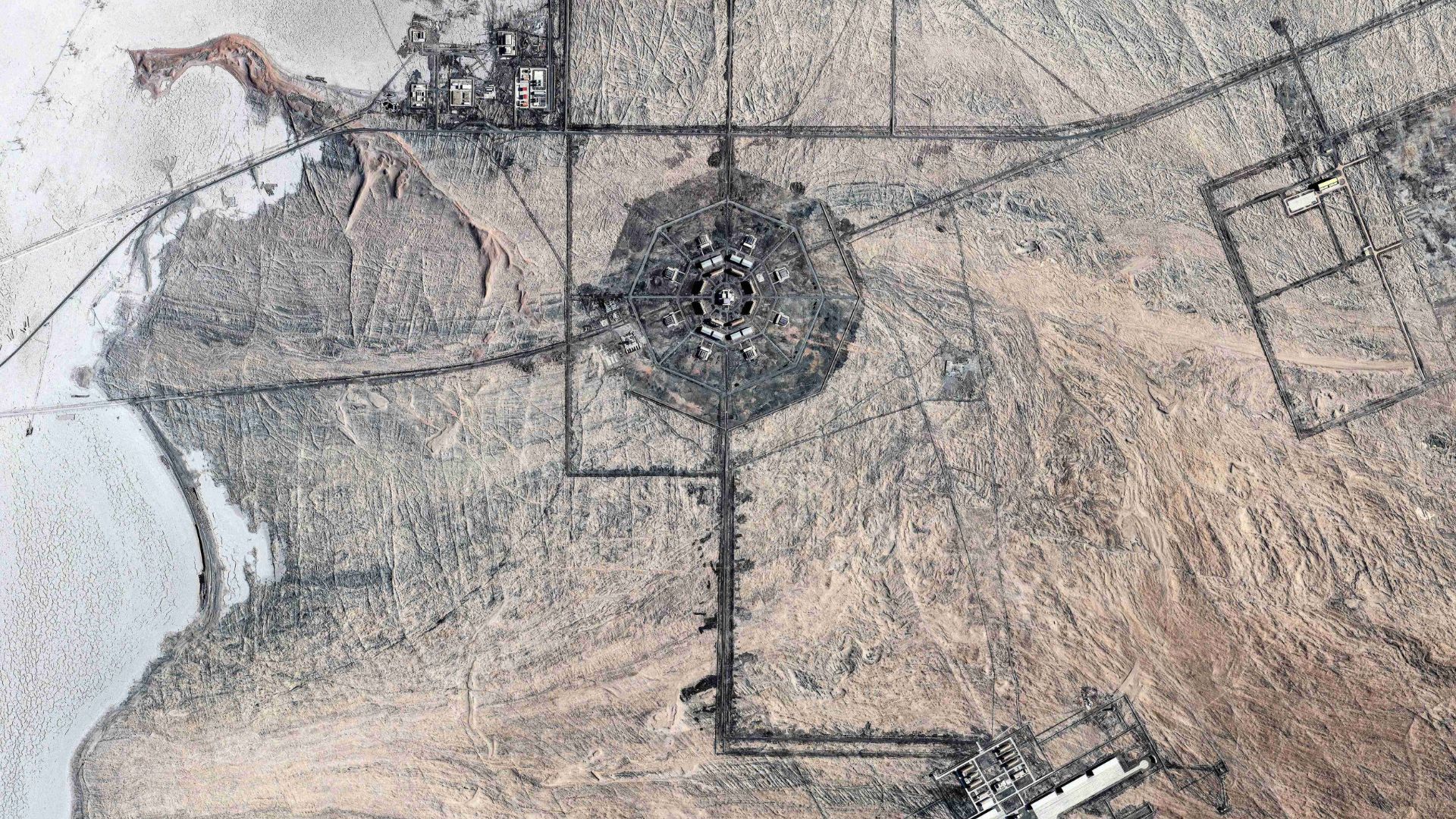
The discovery was made from photos by a commercial satellite company, not official data. The experts consulted by the agency are cautious: the scale is impressive, but the exact use of the structures remains uncertain, and Beijing has not commented. “I’ve never seen anything like it,” summarized one of the analysts.
Satellite images analyzed by Reuters reveal that China is building, in the Xinjiang desert, a vast network of more than 80 launch platforms, bunkers, and communication centers near its nuclear silos. According to security analysts consulted by the agency, the effort appears to aim at ensuring the so-called second-strike capability, that is, the possibility for China to retaliate if first hit by an adversary.
The report, published on May 29, 2026, by Reuters, is based on satellite images from the commercial company Vantor, evaluated by independent experts. It is important to clarify from the start that this is an analysis of commercial images and expert evaluations, not officially confirmed information: China’s Ministry of Defense did not respond to inquiries, and the Pentagon stated that it does not comment on intelligence matters. Therefore, much of what follows is expert interpretation, not established fact.
What the satellite images show

The images show more than 80 concrete platforms that, according to analysts, could be used by China’s growing fleet of mobile missile launchers and air defense batteries, as well as facilities that could serve for electronic warfare, satellite communications, and command operations, spread across thousands of square kilometers of desert.
-
Largest bridge in São Paulo reaches 75% completion and is expected to strengthen strategic connection in the interior of São Paulo.

-
Without her own home and pressured by rent, a 25-year-old bought a small 15-meter boat, gradually renovated the interior by herself, transformed the interior with paint, new flooring, a larger bathroom, and started living on the canals, paying much less per month.

-
Tired of seeing families sleeping on the street, São Paulo delivered 18 m² furnished microhouses and took 888 people off the streets: Vila Reencontro became the model social housing for the homeless population.
-
The hydroelectric plants on the Madeira River, like Jirau, came for the energy, but now the drought wave has reduced artisanal fishing by 39% and emptied the tables of the riverside communities in the Amazon.


The infrastructure is centered around two octagonal facilities, built in the past six years in eastern Xinjiang. Both are southwest of the nuclear silo fields of Hami, one about 140 kilometers away and the other about 230 kilometers. The images indicate that these octagons house accommodations for personnel and large military vehicles, and are surrounded by armored bunkers, fortified storage areas, airfields, and railway terminals that connect them to the silos.
Why analysts talk about “second strike”
The key concept to understand the experts’ interpretation is nuclear deterrence. China’s nuclear missiles are already capable of reaching any city in the United States, and the new network, according to analysts, would make it much more difficult for a potential enemy first strike to eliminate Beijing’s ability to retaliate, reinforcing what is called a second-strike capability.
This logic aligns with China’s stated goal of maintaining a minimal but credible nuclear deterrent, based on retaliatory capability. The country also has an official “no first use” policy, which means that, at least formally, it would not initiate a nuclear exchange. Still, some Western analysts assess that Beijing could resort to nuclear pressure to limit external interference in a potential conflict, a topic that is directly connected to tensions around Taiwan.
The octagons in the desert
The octagonal structures are the heart of this network and arouse great interest among researchers. Each octagon is at the center of a network of dirt roads and pipelines that extend through the desert and connect to concrete platforms, nestled between rock formations and dry riverbeds, in an arrangement that, according to experts, suggests sophisticated military planning.
According to Hans Kristensen, director of the Nuclear Information Project at the Federation of American Scientists, it is difficult to say with certainty how each facility would be used, but the scale of the work in such a hostile environment is striking. Tong Zhao, from the Carnegie Endowment for International Peace, assesses that there is a real possibility that the octagons and nearby towers are linked to command, control, and communications, as well as maintenance and storage activities related to Hami’s nuclear operations. These are assessments, it is worth noting, not confirmations.
What is still unknown
This is the point that requires the most caution in reading the entire report. The five experts interviewed by Reuters themselves warn that crucial details remain unknown, including what weapons China could actually install on the platforms and whether the octagonal structures house missiles mounted on trucks or warhead assembly facilities. In other words, the exact function of the constructions remains uncertain.
The platforms “could” house mobile intercontinental missile launchers, electronic warfare nodes, or air defense batteries, but none of this is confirmed. The very existence of the octagons was already known; what Reuters brings as new is the extent of the network of platforms connected to them, the recent military activity recorded in the images, and analysts’ assessments of possible uses. All of this reinforces the need to address the topic with due rigor, without turning hypotheses into certainties.
The context of the nuclear race
The report comes at a time of heightened attention to the Chinese arsenal. According to American authorities and the Pentagon, China is expanding its nuclear capabilities more rapidly than any other nation, with the goal of having about 1,000 warheads installed by 2030 and, likely, 100 intercontinental missiles in its three main silo fields. The country is also strengthening its early warning system, based on satellites.
This movement occurs amid intensifying nuclear competition with the United States and tensions over Taiwan, an island that China claims and whose government rejects this claim. This month, Chinese President Xi Jinping warned American Donald Trump that mismanaging the differences over Taiwan could lead the two countries to a “dangerous” situation, according to the report. The scale of the construction in the desert, for Kristensen, is impressive: “I’ve never seen anything like it. It’s an extraordinary effort,” said the analyst.
The echo of the dispute in Brazil and the world
Although geographically distant, the topic has global and economic relevance. The arms race between the great powers affects international stability, commodity prices, trade routes, and investment flows, in a world increasingly marked by the dispute between the United States and China, which are also Brazil’s two largest trading partners.
For a country like Brazil, which maintains strategic relations with both sides, monitoring the evolution of these tensions is important to understand geopolitical risks that may reflect on the economy, energy, and international trade. Episodes like this, revealed by increasingly accessible satellite images, also show how technology is making what was once completely secret in the military field more transparent, albeit indirectly.
The satellite images analyzed by Reuters reveal an impressive scale of military construction in the Chinese desert, near its nuclear silos, which analysts interpret as part of Beijing’s effort to ensure its retaliatory capability. More than a certainty about specific intentions or weapons, what we have is a partial portrait, made of images and specialized analyses, of a power that is rapidly modernizing its arsenal. The topic requires sober and attentive monitoring, without alarmism, but with the awareness that the nuclear competition between the great powers remains more alive than many imagine.
And you, how do you view the nuclear race between China and the United States? Do you believe that this type of military modernization increases or reduces the risk of conflicts in the world? Leave your comment, share your opinion on current geopolitics, and share the article with those who follow topics of defense, technology, and international relations.






Be the first to react!