






 Portuguese
  Spanish
  2 min of reading
  0 comments


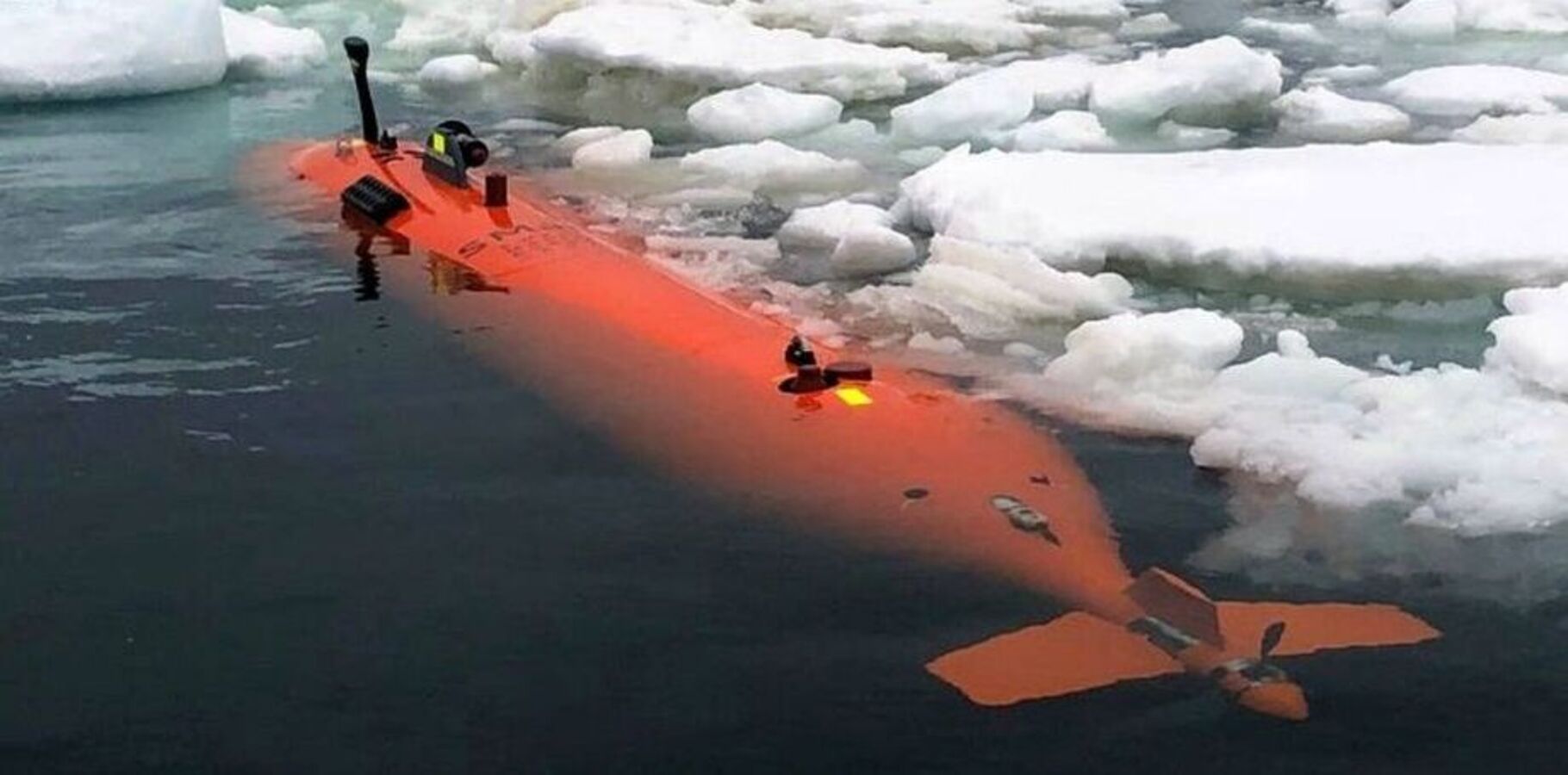
Submarine Ran Disappeared in Antarctica After Discovering Caves and Melting Patterns That Challenge Scientific Predictions About the Future of Ice
In early 2024, the autonomous submarine Ran disappeared in the Dotson Ice Shelf in West Antarctica. Developed by the team at the International Thwaites Glacier Collaboration (ITGC), the vehicle was launched in 2022 with the goal of exploring submerged regions never visited before.
Before disappearing, Ran sent unprecedented data, including high-resolution maps of previously unknown ice structures.
In one of its main discoveries, it traveled over 16 kilometers of caves beneath the shelf, revealing complex erosion patterns and formations that challenge current theories about glacial melting.
-
Brazilian student creates a cheap formula that makes plants grow up to 90% faster and wins an award in a global scientific competition.

-
Europe unveils armored tank with remote turret, 1,500 horsepower, and 120-millimeter cannon

-
Old hard drives may hide neodymium, dysprosium, praseodymium, and terbium, and a United States company is expanding its network with a new 93,000-square-foot facility to recover rare earths used in electric cars, artificial intelligence, defense, and renewable energy.

-
Giant crane lifts up to 3,000 tons, requires special logistics to reach the site, and can transform 18-hour operations into just 3 hours, speeding up the hoisting of oil platforms, refineries, and plants in giant industrial projects.




These observations exposed flaws in the models used to predict ice behavior, indicating that some of the scientific assumptions need to be revised.
Significant Differences in Ice Melting
The central objective of the mission was to understand the melting mechanisms, focusing on underwater currents.
Developing a detailed map of the region’s topography was one of the priorities.
The data showed that the eastern portion of the ice shelf is thicker and melts more slowly than the western part.
The likely cause lies in the uneven influence of circumpolar deep waters, formed by the mixing of waters from the Pacific and Indian Oceans.
According to the measurements, these warmer and more turbulent waters hit the base of the western part more intensely, accelerating erosion.
Challenges and Limitations of Underwater Exploration
Operating in such an extreme environment makes real-time communication with vehicles like Ran impossible. Navigation and data collection occur without constant contact, which increases risks.
In 2022, Ran completed 14 successful missions. However, in 2024, just on its first mission after the research was resumed, it disappeared without a trace.
The possible causes range from mechanical failures to interactions with local fauna.
Despite the loss, scientist Anna Wallin, a professor of ocean physics and lead on the study, emphasizes the importance of the work.
For her, replacing Ran is essential for research on the ice layers to continue, as this data is crucial for predicting future changes in the climate.
A More Complex Scenario Than Expected
The results, published in the journal Science, show that the melting of ice shelves is more complex than previously thought.
The influence of ocean currents, combined with differences in thickness and resistance of the ice, creates a dynamic picture that challenges prediction models.
Even with the abrupt end of the mission, Ran’s legacy lies in opening new doors for Antarctic science—and in showing that understanding changes in the continent’s ice is a race against time.
With information from O Antagonista.





-

3 people reacted to this.