






 Portuguese
  Spanish
  5 min of reading
  0 comments


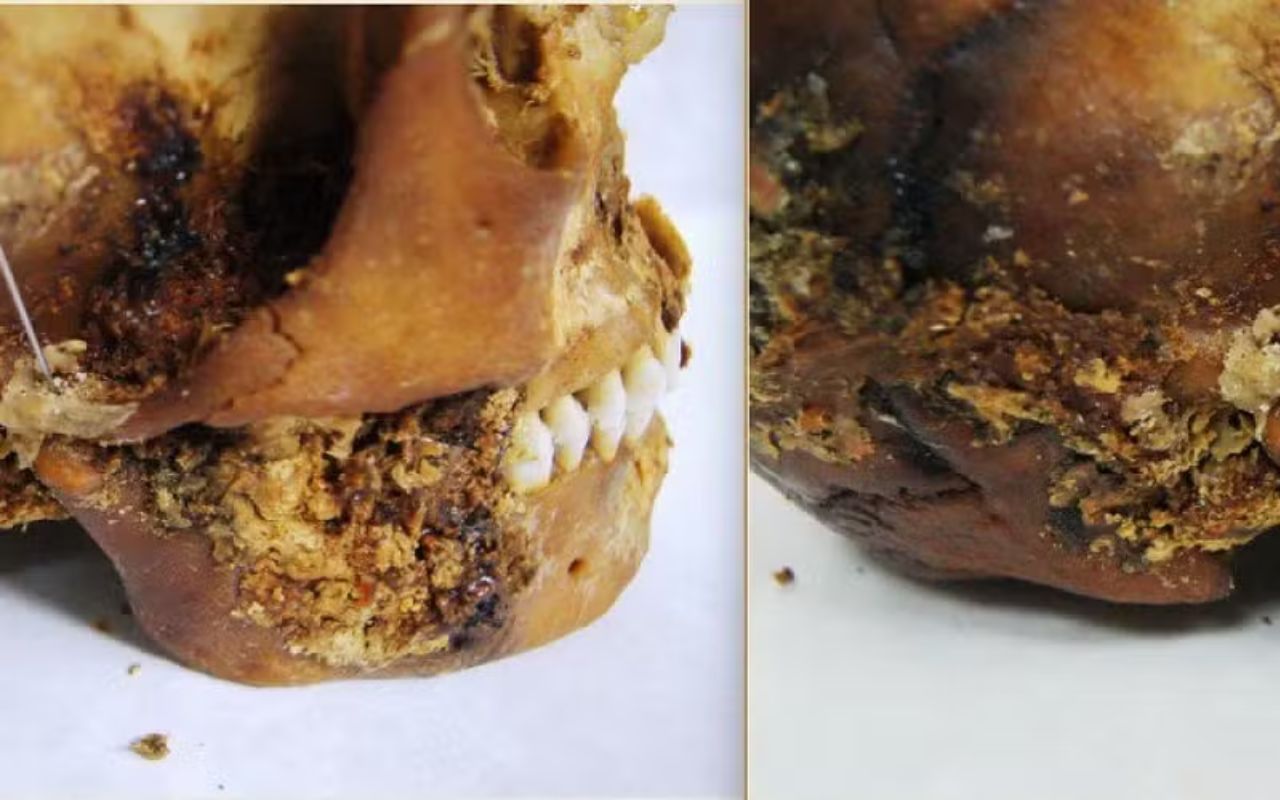
Discovery of Mummy in Siberia Shows Prosthesis in Mouth Installed After Serious Trauma 2,500 Years Ago and Reveals Unexpected Medical Advancement.
A mummy found in Siberia revealed that a young woman from the Iron Age survived a devastating cranial trauma thanks to the installation of a prosthesis in her mouth about 2,500 years ago.
The discovery was made by researchers at Novosibirsk State University after high-tech examinations conducted recently in Russia.
The case occurred in the southern territory that now belongs to Russia, where nomadic peoples developed surprising medical techniques for the time, possibly to save the lives of valued community members.
-
Helicopter Drops 180 Tons of Sand and Gravel on Swedish River to Revive Ecosystem Damaged by Decades of Exploitation

-
Brazilian Company Launches Retro Smartphone with 48 MP Camera, T9 Keyboard, and Privacy Features for Social Media-Free Use

-
Self-Taught Chinese Farmer Builds 5-Ton Submarine from Scrap, Launches It in Anhui River
-
Invisible Induction Technology Enables Wireless Power for Blenders, Coffee Makers, and Air Fryers, Reducing Countertop Cables





Right from the first examinations, the scientists identified clear signs of a complex surgical intervention.
Thus, what initially seemed like just another archaeological find turned into one of the most impressive medical evidence ever recorded in the region.
Mummy in Siberia Underwent Unique Surgery
The detailed analysis of the mummy in Siberia was conducted with the aid of high-resolution computed tomography. The examination allowed for the digital reconstruction of the young woman’s skull without damaging the archaeological material.
According to Vladimir Kanygin, head of the laboratory responsible for the study, the technology functioned as a true “time machine.”
This is because it allowed for the virtual removal of preserved layers and visualization of internal structures with extreme precision.
Hundreds of sequential images were used, which enabled the creation of an exact three-dimensional model of the skull. This way, the team was able to identify injuries and surgical marks impossible to observe with the naked eye.
The Trauma That Almost Killed the Young Woman
The examinations revealed a depression of 6 to 8 millimeters in the right temporal bone. According to the researchers, the injury is consistent with an extremely strong impact, possibly caused by a horse fall.
The trauma destroyed the temporomandibular joint — the structure that connects the jaw to the skull. Without treatment, the young woman would likely have been unable to speak or eat, which could have led to her death in a short time.
However, what caught attention was the presence of two small perforated channels in the bones of the joint. These channels indicated a clear attempt to reconstruct the injured area.
The Surprising Prosthesis in the Mouth Identified in the Mummy from Siberia
Inside these channels, specialists found traces of elastic organic material. The most accepted hypothesis is that horsehair or animal tendon was used as a ligature.
In practice, it was a kind of prosthesis in the mouth, created to stabilize the damaged jaw. The material kept the bone surfaces together, allowing for partial movement of the joint.
According to radiologist Andrey Letyagin from the Russian Academy of Sciences, the joint regained function, although the patient likely felt intense pain when chewing on the affected side.
Furthermore, the bone growth around the perforations confirmed that the procedure was performed while the young woman was still alive. There was healing, which proves that she survived for months or even years after the surgery.
Evidence of Adaptation After the Surgery
Another detail reinforces this conclusion. The molars on the left side of the jaw show significant wear, far greater than on the injured side.
This indicates that the young woman began to chew exclusively on one side, compensating for the limitation caused by the trauma. Therefore, she not only survived the procedure but also managed to adapt her eating habits.
So far, according to the study authors’ research, there are no similar records in the available scientific literature. In other words, it could be the first documented case of such an intervention during that time period.
Where was the Mummy in Siberia Found?
The young woman was discovered at the archaeological site Verkh-Kaldzhin-2, located in the Ukok Plateau, in the Altai Republic. The region is known for frozen tombs that preserve organic tissues with impressive integrity.
The site belongs to the Pazyryk culture, a group related to the Scythians that thrived between the 6th and 3rd centuries BC. These peoples were already known for advanced mummification techniques and for performing trepanations — surgical perforations in the skull.
Archaeologist Natalia Polosmak explained that a fragment of mummified skin in the skull made traditional analyses difficult. However, the opportunity to perform tomography opened the way for new discoveries.
What the Mummy from Siberia Reveals About Ancient Medicine
The presence of the prosthesis in the mouth indicates detailed anatomical knowledge and surprising technical mastery for the Iron Age. It was not just an improvised procedure, but a structured attempt at functional reconstruction.
Experts believe that the experience gained from mummification practices may have contributed to the development of these surgical skills. After all, dissection required precise understanding of human anatomy.
Besides the technical aspect, the discovery also reveals important social values. The decision to perform a complex surgery suggests that the young woman’s life was highly valued within her community.

The analysis of this mummy in Siberia broadens the understanding of the medical knowledge of nomadic peoples in antiquity. For a long time, it was believed that sophisticated surgical techniques were exclusive to more structured urban civilizations.
However, evidence shows that societies considered peripheral also mastered advanced practices. Thus, the discovery challenges historical concepts and reinforces the need to revisit interpretations of ancient medicine.
Meanwhile, researchers continue studying the material in search of new information. Every detail analyzed helps to reconstruct not only the story of the young woman but also the trajectory of medical science over the centuries.
After all, this mummy, preserved in the ice of Siberia, proves that the quest to save lives is a practice that spans millennia — and that human creativity has always found ways, including with an ingenious prosthesis in the mouth.
Source: Revista Galileu





-

-

2 people reacted to this.