






 Portuguese
  Spanish
  3 min of reading
  0 comments


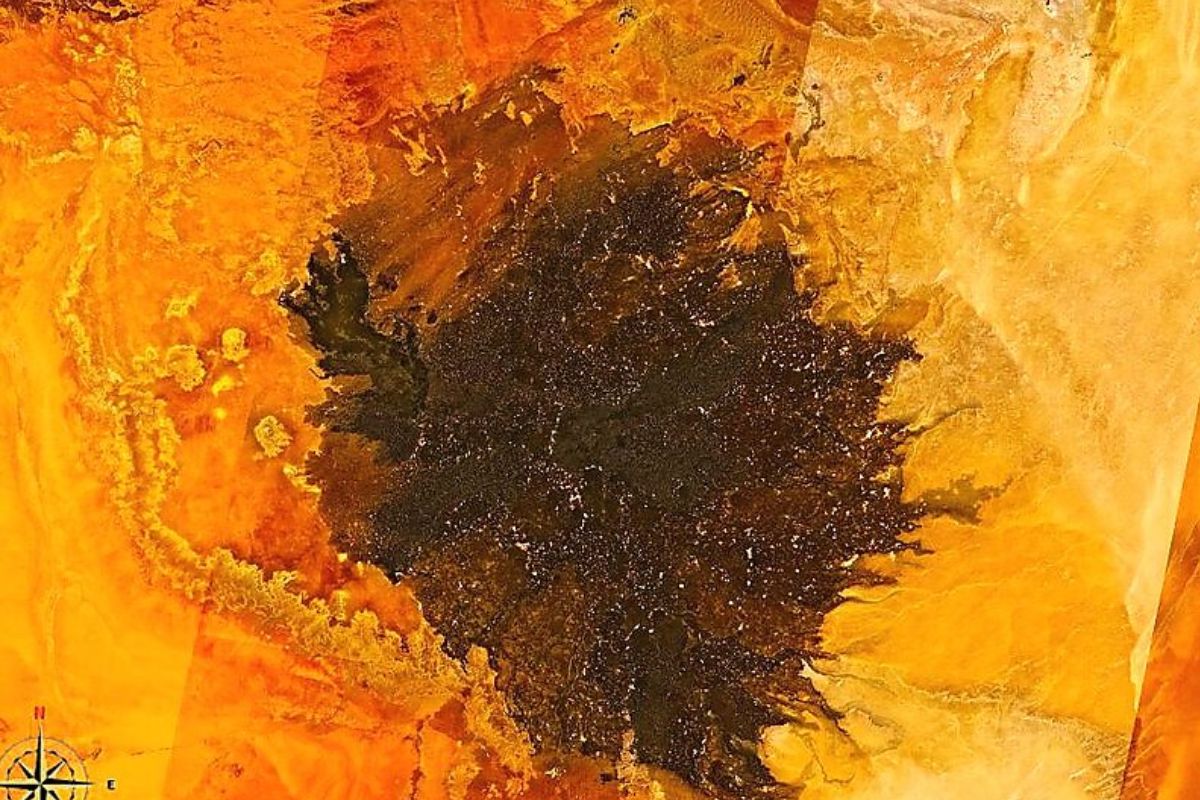
With The Appearance of a Black Hole on Earth, the Mysterious Spot in the Center of Libya Hides 150 Extinct Volcanoes Formed by Mantle Plumes, a Rare Phenomenon Outside of the Earth’s Crust Fault Zones
We live on a planet that continues to be a true oasis amid the vastness of the universe. A wonderful planet that we know quite well, undoubtedly more than any other, but that still manages to surprise us.
A planet to be admired, not only from its surface but also from space, where sometimes surprising phenomena emerge. Like a massive dark spot visible in the middle of the Sahara Desert in Libya.
A Mysterious Dark Spot
Since humanity gained access to images of Earth from space, we have developed a new awareness of the place we live. Nowadays, we have become accustomed to this, and images like those from the Meteosat satellite, which allows us to observe clouds at 36,000 kilometers high, have been part of our routine for years, appearing on television during lunch or dinner. And in recent years, those images have also been at our fingertips, on our phones and computers, whenever we want.
We have a large number of satellites orbiting the Earth, and some still surprise us with impressive images, landscapes that reveal ancient scars left by volcanic activity millions of years ago. But there is one geological phenomenon in particular that has caught the attention of many observers: a vast dark spot that seems to absorb light, located in the heart of the Sahara.
-
Survivor of 1966 SS Daniel J. Morrell Shipwreck in Lake Huron Recounts 38-Hour Ordeal in Extreme Cold

-
The Greatest Hoax in World Cup History? The Film That Denied Brazil’s 1958 Victory and Exposed How Fake Evidence Can Seem Convincing on TV
-
Fake South Korean Online Stores Offer Shopping Thrill Without Spending Money or Receiving Products
-
The War of Jenkins’ Ear: How a Severed Ear Sparked One of the 18th Century’s Most Unusual Conflicts


A Landscape That Looks Like a Black Hole on Earth
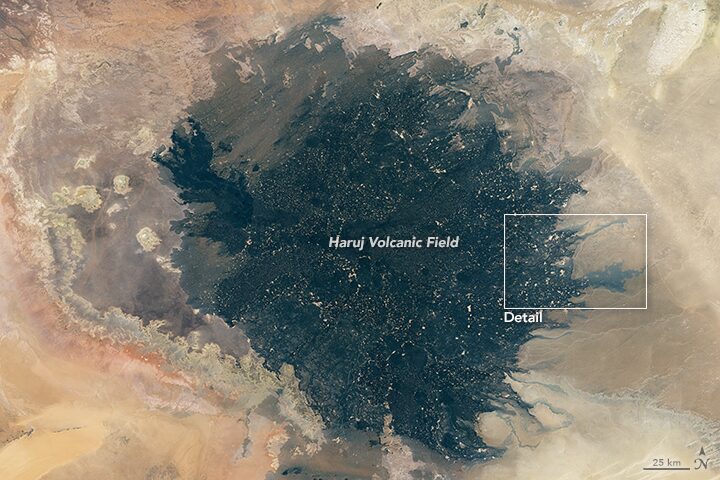
This dark spot, dotted with small golden fragments that shine under the sunlight, is an ancient volcanic landscape located in the center of Libya, known as Haruj. With an estimated area between 42,000 and 45,000 km² (Catalonia has about 32,000 km²), it is one of the largest volcanic regions in all of Africa.
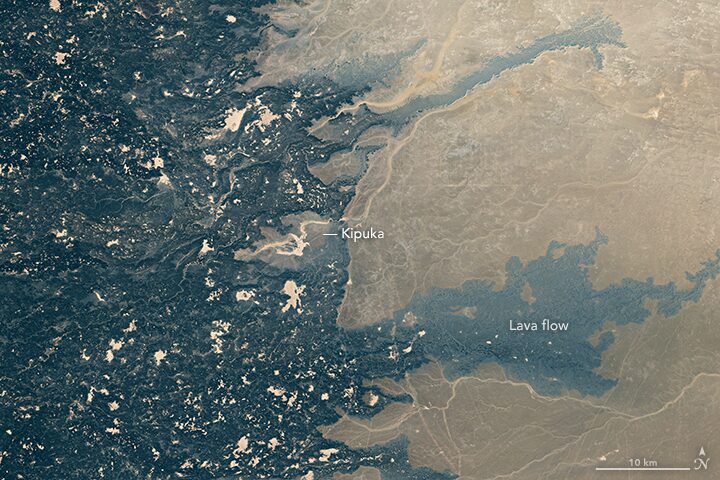
Although many volcanic landscapes are visually homogeneous, Haruj is different: despite appearing flat, the eruptions left remnants of rocks that rise like small cones and volcanic vents over 100 meters high, including both classic-shaped volcanoes and shield volcanoes.
The dark color of Haruj is due to the petrified lava that emerged from beneath the surface and the sand trapped in its fissures, which reflects sunlight and creates a unique shine. This region houses about 150 extinct volcanoes of various sizes.
The oldest formations are about six million years old, while the most recent ones emerged only a few thousand years ago. So, no flatland. In fact, the highest point reaches 1,200 meters in altitude.
A Geological Enigma
The contrast between the golden tone of the sand and the black of the petrified lava creates an extremely impressive visual effect. This volcanic field differs from others because it is not located in a geological fault zone of the Earth’s crust. Instead, its formation is due to a phenomenon known as a “mantle plume,” an upward current of molten rock rising from the depths of the Earth.
In summary, the mysterious dark spot visible from space in Libya is, in fact, a massive field of petrified lava: a true window into the geological past of our planet, revealing an era when volcanoes were the main sculptors of the terrestrial landscape.





Be the first to react!