






 Portuguese
  Spanish


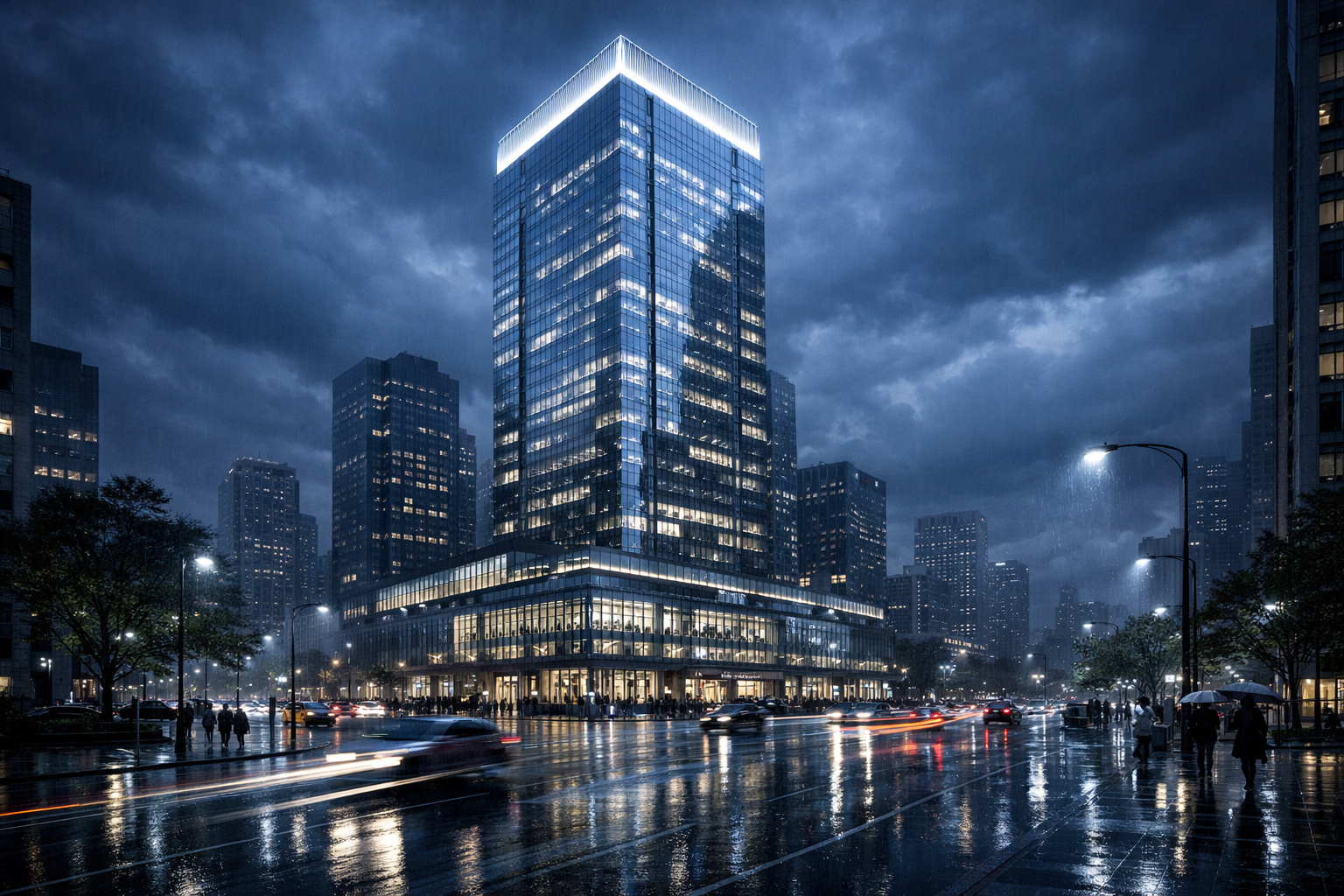

Skyscraper Symphony Place, In The SoBro District, Brings LEED Gold Certification, Low-E Glass, Green Roof, Ground-Floor Retail, And A Lit Crown That Redefines The City’s Nighttime Skyline
Located in the SoBro district of Nashville, the office building known as Symphony Place has become one of the city’s main visual landmarks by combining environmental performance, architectural presence, and direct integration with urban life. With 29 floors and about 127 meters high, the tower stands out not only for its scale but also for the way it interacts with the public space around it.
The information was originally released in reports and urban analyses about downtown Nashville, which highlight Symphony Place as one of the most successful examples of contemporary corporate architecture in the Tennessee capital. According to specialized publications in urbanism and real estate development, the building has established itself as a reference by combining energy efficiency, mixed-use, and pedestrian enhancement.
Since its completion in 2009 and opening to the public in 2010, Symphony Place was designed to meet the growing demand for high-quality office space in a strategic area of the city. At the same time, the project sought to strengthen the urban vitality of the surrounding area, connecting to cultural venues and one of Nashville’s most dynamic business hubs.
-
Scientists warn that melting ice is triggering an alarming chemical transformation in preserved areas, and the first signs are already concerning researchers worldwide.

-
China placed 198 robotic legs under a 7,600-ton school and made the building walk 62 meters in 18 days, rotating the historic structure as if a concrete structure had gained feet to escape demolition.

-
Distributor confirms the premiere of ‘Dark Horse’, Bolsonaro’s film, in 650 cinemas with 99% of copies dubbed.
-
9-year-old boy who could only hold a plank for 6 minutes in physical education class trained alone for 6 months, without needing encouragement from his parents, until he broke the world children’s record with 61 minutes and 5 seconds.


Corporate Architecture That Interacts With Urban Space

Unlike isolated corporate towers removed from the everyday streets, Symphony Place adopts an active podium, where shops, restaurants, and services occupy the lower floors. This architectural solution keeps the sidewalks busy throughout the day, attracting workers, residents, and visitors for constant interaction with the building.
Moreover, the implementation favors pedestrian circulation and reinforces the mixed-use character of the SoBro neighborhood. Proximity to cultural and event centers encourages walking, reducing dependence on cars and strengthening a more integrated urban dynamic.
From a formal standpoint, the tower presents a composition typical of contemporary corporate architecture. Large glass surfaces dominate the office floors, while metal elements and stone cladding mark the levels closer to the street, creating a visual transition between the building and the public space.
Sustainability As A Central Element Of The Project


One of the most relevant aspects of Symphony Place is its commitment to sustainability. The building was the first skyscraper in Nashville to earn LEED Gold certification, the result of a set of strategies focused on energy efficiency and reducing environmental impact.
The high-performance thermal glass (low-E) controls heat entry and maximizes the use of natural light, reducing energy consumption for climate control and artificial lighting. As a consequence, the internal environments offer greater thermal and visual comfort to users.
Another highlight is the presence of a green roof and landscaped areas at elevated levels, which contribute to stormwater absorption and help mitigate the heat island effect. These resources are complemented by efficient systems for rational water use and climate control, solidifying the building as a reference in sustainable architecture in the southeastern United States.
Nighttime Glow And Impact On The Nashville Skyline
During the day, Symphony Place discreetly integrates into the urban fabric. However, it is at night that the building takes on a leading role in the Nashville skyline. The lit crown at the top of the tower enhances its silhouette and makes the skyscraper easily recognizable from long distances.
This scenic lighting serves not only an aesthetic purpose. It contributes to the visual identity of the city and helps to consolidate the downtown area as a lively space even at night, accompanying the economic and cultural growth of Nashville over the decades.
Thus, the building acts as a point of reference both for those moving through the streets and for those observing the city from viewpoints and expressways, reinforcing the symbolic presence of the urban center.
A Model Of Corporate Architecture For Contemporary Cities
More than fifteen years after its inauguration, Symphony Place remains relevant. Its combination of slender tower, active ground floors, environmental efficiency, and urban integration demonstrates how corporate architecture can go beyond strictly business functions.
In Nashville’s urban landscape, the building shows that it is possible to reconcile technical performance, formal elegance, and commitment to life on the sidewalks. In doing so, Symphony Place solidifies itself not only as a corporate skyscraper but also as an active element in building a more vibrant, sustainable, and connected city.





