Portuguese
  Spanish


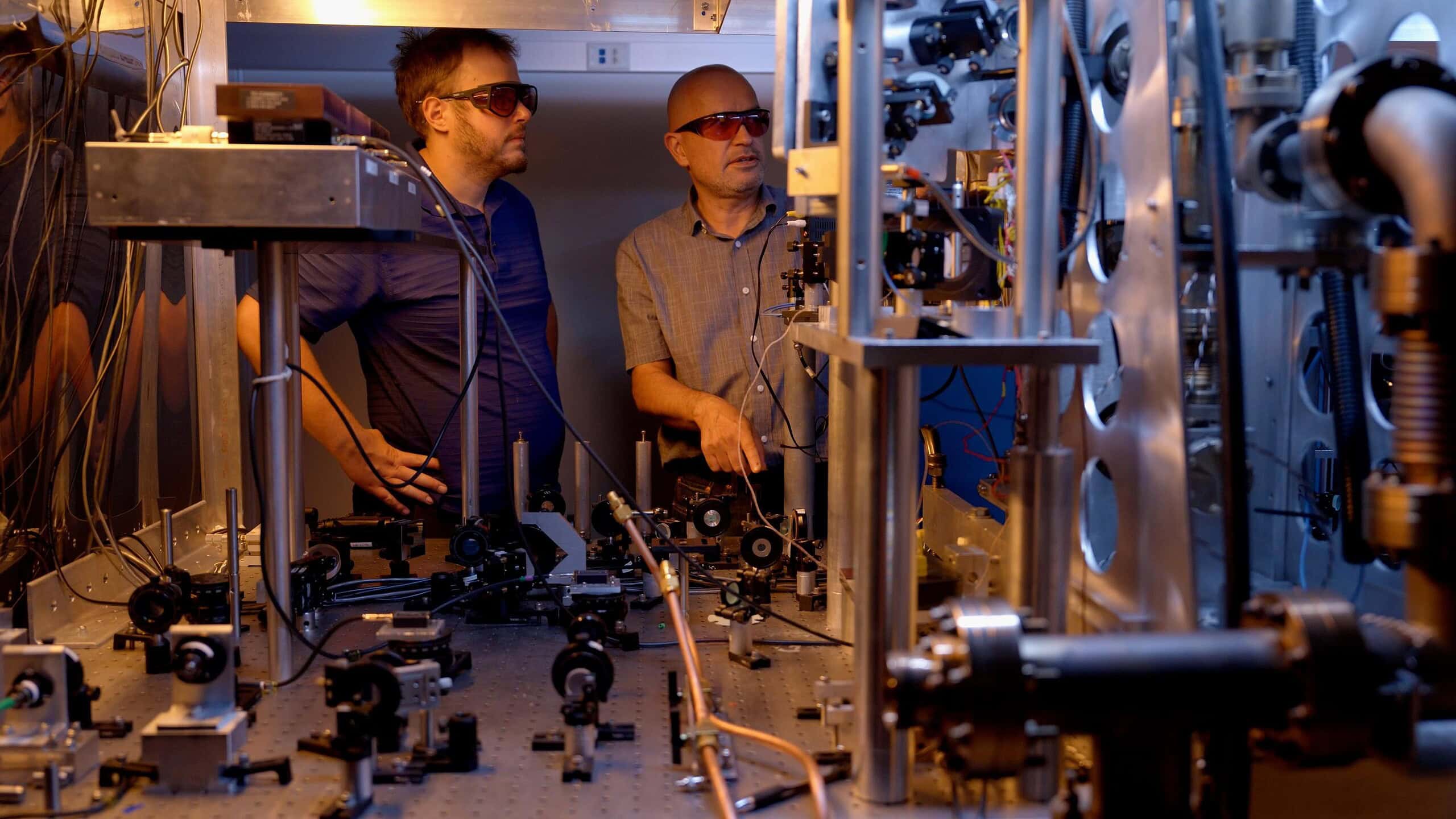


With accuracy capable of erroring less than a second in 140 million years, the new NIST-F4 atomic clock redefines global standards of timing and sustains essential systems such as GPS, electric grids, and financial transactions.
In Boulder, Colorado, a new milestone has been reached in the field of time measurement. The National Institute of Standards and Technology (NIST) has put into operation the NIST-F4, an atomic clock with such high precision that it would take 140 million years to lose just one second.
The NIST-F4 is now part of the exclusive group of the most precise clocks in the world.
Its operation is based on the oscillation of cesium atoms, a reference for defining the second with impressive accuracy.
-
Brazilian Researchers Develop Low-Cost Sensors to Detect Avian Flu in Minutes, Enhancing Global Health Security

-
545 Intact Amphorae Found 370 Meters Deep in Turkey Reveal Ancient Byzantine Trade Routes Connecting the Aegean and Black Sea

-
NASA to Send Astronauts Over 400 km Above Earth for 6.5-Hour Spacewalk to Repair Canadarm2 on the ISS

-
Microsoft Raises Xbox Prices Again Due to Rising Component Costs


A New Time Standard
The NIST-F4 is not just another clock. It serves as a primary frequency standard, establishing the foundation for other time measurements worldwide.
The agency submitted the device to validation by the International Bureau of Weights and Measures (BIPM), responsible for coordinating global timing.
The operation of the NIST-F4 represents a significant update over its predecessor, the NIST-F1, which was decommissioned in 2022.
Although some hardware was reused, there were significant improvements in optical and microwave systems.
The highlight is the new Ramsey copper cavity, essential for measuring frequency with quantum precision.
How The Clock Works
At the heart of the NIST-F4 are thousands of cesium atoms cooled by lasers almost to absolute zero.
These atoms are launched upward in a fountain form, passing twice through a chamber with microwaves.
On the first pass, the atoms are excited to a quantum state that vibrates at a constant frequency.
On the second pass, the frequency of the microwaves is adjusted to match this vibration.
When the adjustment is perfect, the clock counts exactly 9,192,631,770 cycles, a number that defines a second since 1967.
This mechanism, although silent and invisible to the naked eye, regulates the most critical systems of modern society, such as GPS, financial transactions, and communication networks.
Practical Applications of the NIST-F4
The impact of the new clock goes far beyond laboratories.
Its time signals are used in operations that occur billions of times a day. This includes the synchronization of satellites, financial trading, and electric grids.
Donley, a NIST researcher, explained that these signals are essential to ensure that the technological operations of the modern world occur accurately.
Any error can cause major failures, from delays in telecommunications networks to financial losses.
Unprecedented Precision and Stability
The precision of the NIST-F4 is the result of strict control over all factors that can affect time measurement.
NIST scientists considered dozens of physical effects, such as shifts caused by magnetic fields, the influence of ambient radiation, and even the height of the clock above sea level.
They also compensated for subtle quantum phenomena, such as the interaction between cold atoms and variations in the microwave field.
The result was an uncertainty of only 2.2×10⁻¹⁶, corresponding to an error of less than one second in 140 million years.
The stability of the NIST-F4 is also noteworthy. In high-density mode, it achieves a stability of 1.5×10⁻¹³ per square root of τ (tau), representing the measurement time.
This stability is mainly limited by quantum and oscillator noise, which can be reduced with future technologies.
Comparisons and International Validation
To ensure the reliability of the data, NIST compared the NIST-F4 with other international frequency standards.
The comparison included the global average of the standards recognized by the BIPM. The clock passed the test, showing alignment within accepted uncertainty margins.
The results were published in a technical article in the journal Metrology, authored by Vladislav Gerginov and colleagues.
According to the authors, the NIST-F4 now officially contributes to Coordinated Universal Time (UTC), helping to maintain the accuracy of worldwide timekeeping.
A Story of Continuous Evolution
The NIST-F4 is the fourth cesium fountain clock developed by the institute.
The first, NIST-F1, began operation in the late 1990s and served as a standard for over 15 years. After its decommissioning, scientists decided to build a new version from scratch.
Between 2020 and 2025, the team led by Gerginov rebuilt the clock’s main systems, including the microwave cavity, with tolerances smaller than a human hair.
They also redesigned the optical, magnetic, and thermal control systems. The result was a clock stable enough to redefine global standards.
According to Gerginov, this process requires extreme patience.
A small error can affect not only the clock but all systems that depend on it, such as power plants, aviation, and real-time data.
Participation in Official U.S. Time
Today, the NIST-F4 operates alongside the NIST-F3 about 90% of the time.
Together, they help maintain the official time of the United States (UTC NIST) and contribute to the globally coordinated scale managed by the BIPM.
These clocks are essential for maintaining global synchronization, allowing countries and international systems to operate in perfect harmony.
The Future of Time Measurement
Despite its precision, the NIST-F4 does not represent the end of the line. Scientists are already working with optical clocks, which use different atoms and even faster cycles. These devices may redefine the second again in the coming decades.
Even so, cesium clocks like the NIST-F4 will remain essential as references and to maintain compatibility with current systems.
Currently, there are only about 20 active cesium fountain clocks in the world.
All contribute to UTC, which regulates global systems in real time. The NIST-F4, with its unprecedented precision, is now one of the main pillars of this system.
In times of technological high speed, where every millisecond matters, the NIST-F4 is a reminder that even time demands absolute precision.