






 Portuguese
  Spanish


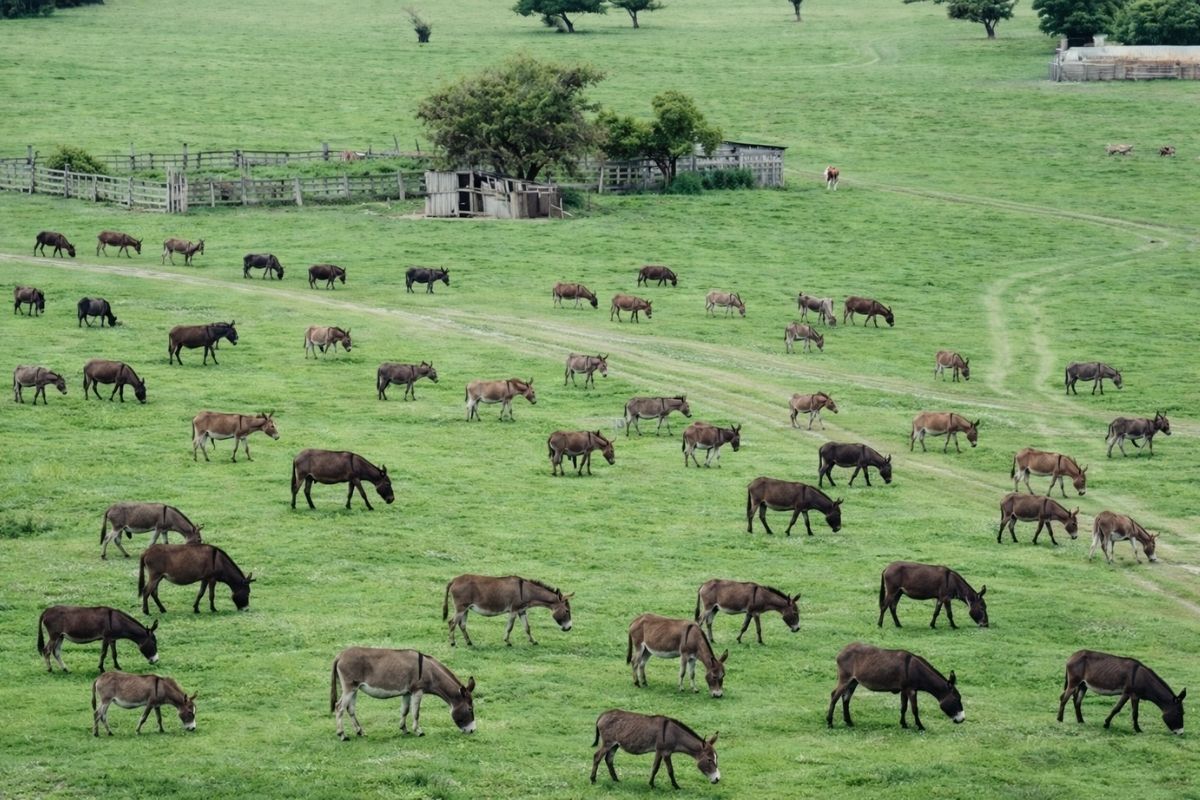


While The Donkey Is Still Seen As A Symbolic Animal Of Rural Brazil, A New And Controversial Market Spreads Across The Country: Specialized Slaughterhouses Slaughter Thousands Of Donkeys Per Week, Export Leather To China, And Raise The Extinction Warning For The Species In A Few Decades If Nothing Changes.
The donkey, which for a long time pulled carts, carried water, and symbolized the resilience of the hinterland worker, is now at the center of a billion-dollar and highly controversial business. There is industrial-scale donkey slaughter in Brazil, with plants in Bahia reaching hundreds and even thousands of animals slaughtered per week, driven by an international chain where the real “gold” is the leather sent to China.
On one hand, this market promises jobs and income in small towns. On the other, there are reports of mistreatment, pressure on the herd, and a real risk of the donkey disappearing in several regions.
Throughout this text, we will understand how these donkey slaughterhouses emerged, why China is at the center of the demand, how the so-called “invisible farms” spread across the countryside operate, and why experts and organizations are already talking about a concrete threat to the survival of the donkey in Brazil.
-
Over a Thousand Nelore Cattle Die Unexpectedly in Brazilian Feedlot, Raising Concerns About Intensive Livestock Farming

-
Researchers Turn Discarded Mango Pits into Hydrogel That Absorbs 400% of Its Weight in Water, Offering Agricultural Solution for Droughts and Waste Reuse

-
Flower strips in Brazilian farms become pest control strategy, attracting predator insects and reducing the need for chemical pesticides.

-
Yara acquires Texas ammonia plant for $1.3 billion, boosting global fertilizer competition with 1.3 million tons annual capacity


More than a curiosity, the story of the donkey reveals a direct clash between economy, tradition, and animal welfare.
How It Came Out Of Oblivion And Became Target Of Slaughterhouses
For decades, the donkey was a common figure in northeastern Brazil. It was a means of transport, a source of traction, a companion in the fields, and a central piece in the routine of thousands of families.
But the world has changed. Motorcycles, cars, and agricultural machines have taken the place of the donkey, and many people simply stopped raising them.
Without a clear function on many properties, the donkey became surplus. Animals were being released onto roads, rural areas, and around cities.
In several municipalities, the donkey ceased to be seen as a heritage and started to be treated as a problem, appearing in reports of accidents on highways, invading crops, and seizing by public agencies.
It is in this context that the donkey returns to the center of the map, but for a totally different reason: the growing interest of slaughterhouses in slaughtering donkeys to utilize meat and, mainly, leather for export.
The Largest Donkey Slaughterhouse In Brazil And The Arrival Of China

Cattle slaughterhouses are part of the Brazilian landscape. However, a donkey slaughterhouse still causes astonishment. In 2017, a slaughterhouse in Bahia gained national attention precisely for this reason.
In the municipality of Amargosa, about 240 kilometers from Salvador, a facility that previously operated with cattle started slaughtering donkeys with a declared focus on exporting meat and by-products.
The company claimed it would generate hundreds of direct and indirect jobs and that it would have high monthly production. Over time, this slaughterhouse consolidated itself as one of the largest in the country in this type of activity.
Reports and surveys indicate that the unit reached operations of around 1,700 slaughtered per week, an enormous volume for an animal that does not have a structured replacement farming industry.
It was not the only case. Reports indicated the existence of another slaughterhouse in Bahia, in Itapetinga, where the activity started more recently.
There, they spoke of around 700 donkeys slaughtered per week, reinforcing the idea that donkeys had indeed entered the route of industrial slaughter.
The detail that ties all this together is simple: the donkey has not become a target only for meat but mainly for leather, which is sent to China and feeds a chain of specific products in the Asian market.
Why Donkey Leather Is So Valuable In China
The economic engine behind donkey slaughter lies in the leather. The skin of the donkey is used in the production of a substance known as ejial, a derivative that enters recipes, teas, sweets, and other products sold with promises of health benefits, energy, and vitality.
This substance is marketed with claims ranging from fighting anemia and insomnia to hormonal issues and fertility.
The problem is that reports and organizations highlight that there is no robust scientific consensus that proves all these effects as advertised to the public, but tradition and consumption sustain a huge market.
When demand is gigantic, the donkey becomes seen as a global raw material, and countries with large populations of donkeys, like Brazil, come onto the export radar. What could be a niche quickly turns into an industry capable of putting significant pressure on local herds.
The Extractive Model And The “Invisible Farms” Of Donkeys
The big difference between the donkey and other slaughter animals lies in the origin of the herd. While cattle, chickens, and pigs have organized chains for breeding, fattening, and replacement, the donkey is largely exploited under an extractive model.
In practice, this means that donkeys are not raised on specific farms for large-scale slaughter.
The animals are purchased, collected, and taken to slaughterhouses from multiple sources: rural areas where they were loose, small properties where they were still used, or even regions where they had been abandoned.
It’s as if there were an “invisible farm” of donkeys spread throughout the Northeast, without defined fences, without breeding planning, and without real stock control.
Instead of being born and fattened for slaughter, the donkey is simply removed from the environment until there are no more animals to be sought. This pattern raises the central question: what happens when the flow of donkeys begins to decline and there is no replacement?
Accelerated Slaughter, Few Calves, And Risk Of Extinction
Reports and articles indicate that, in a period of about six years, Brazil has slaughtered a very large portion of the donkey population, with a significant decline in the national herd. This raised a strong alarm among animal rights defenders, researchers, and environmental organizations.
Unlike species with a fast production cycle, the donkey takes longer to grow and develop; it is not a “quick slaughter” animal like a chicken.
Without reproduction farms on a large scale and without a structured plan to replace what is taken out, what is created is a sinkhole: donkeys come in from everywhere, leather and meat go out, and the population falls.
African and Asian countries have already gone through something similar. The combination of strong external demand, mass slaughter, and lack of control has led to drastic reductions in local herds, with reports of mistreatment and population collapse in certain areas.
The fear is that Brazilian donkeys will follow the same path if the slaughter pace continues without a clear protection and replacement strategy.
Bahia At The Center: Donkeys, Closed Trucks, And Reports Of Mistreatment
Bahia repeatedly appears as a central point on this map. It is in this state that slaughterhouses authorized to slaughter donkeys are concentrated, including the one considered the largest in Brazil. This means that a large part of the flow of animals passes through roads and municipalities in Bahia, coming from different regions.
Closed trucks, long journeys, intense heat, thin donkeys, weakened and often already in precarious condition even before boarding.
Reports indicate animals arriving injured or even dead, in addition to issues like inadequate confinement, lack of water, absence of food, and diseases.
These reports add to questions about inspection, animal welfare, and transparency in the chain. When the donkey ceases to be merely a symbol of the Northeast and becomes just another number in the slaughter line, the ethical debate becomes impossible to ignore.
The Donkey Among Jobs, Income, And Legal Battles
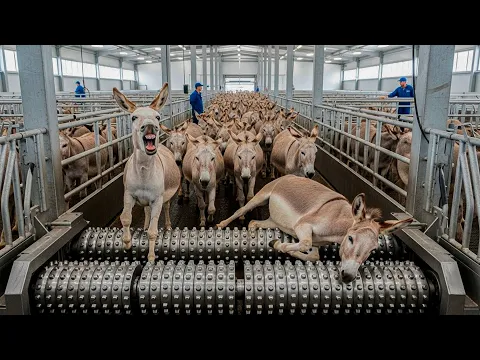

On the other side of the discussion is the economic argument. In small towns, a donkey slaughterhouse can become one of the largest local employers, helping to drive trade, tax collection, and services. Families depend directly on the payroll of these companies.
In Amargosa, for example, reports indicate that the donkey slaughterhouse has become one of the major employment pillars in the region.
This creates a cruel dilemma: many people do not agree with the mass slaughter of donkeys, but depend on the salary that comes from this same market.
This conflict reached the judiciary. There are decisions suspending slaughters, subsequent resumptions, legal disputes, and appeals in different instances.
On one side, those who defend the right to work, generate income, and take advantage of a growing international market. On the other, those who warn of the risk of extinction of the donkey, the mistreatment, and the irreversible pressure on a symbolic species of Brazil.
What Is At Stake For The Future Of The Donkey In Brazil
In the end, the recent history of the donkey in Brazil is a perfect picture of how an animal can go from an emotional symbol to a target of a global consumption chain.
The donkey has ceased to be merely the “plow donkey” and has come to be viewed as a strategic resource to meet the leather demand of other countries, especially China.
The issue is that this movement occurred on a fragile foundation. There is no organized donkey farming for large-scale slaughter, the model is extractive, the donkey’s life cycle is slower, and reports of mistreatment and accelerated population decline are already documented.
If nothing is adjusted, the risk is clear: turning the donkey into “gold” today and having no donkeys tomorrow.
In a country that has always associated the donkey with the history of the hinterland, family farming, and the resistance of the northeastern people, the question remains whether it is worth trading this living heritage for a quick profit window based on leather export.
And you, in light of this scenario of slaughterhouses, leather export, and extinction risk, do you think Brazil should limit or even ban the slaughter of donkeys to meet external demand, or do you see space for a controlled model with stricter rules?








Sou contra o abate desses animais mas lendo essa reportagem, vejo que não se pode ignorar os empregos que podem continuar oferecendo. devia-se criar ou adaptar legislação para a criação, com cuidados aos animais, controle de ambiente, controle sanitário e seguir pra que não seja o ouro, que voltou para o “filão” que não o aceitou mais.
Estão votando também….infelizmente !!!
O único problema que vejo na extinção do **** é a falta de materia prima para estes frigoríficos. Aqui no Nordeste mesmo não tem mais serventia, não tem mais uso e a parte sua importância histórica hoje é um problema. Que seja preservado por questões afetivas mas como **** de trabalho não é necessário, como o cavalo já não o é para mais de 90% dos nordestino, substituídos pelas motos como transporte e trabalho tb.