Portuguese
  Spanish


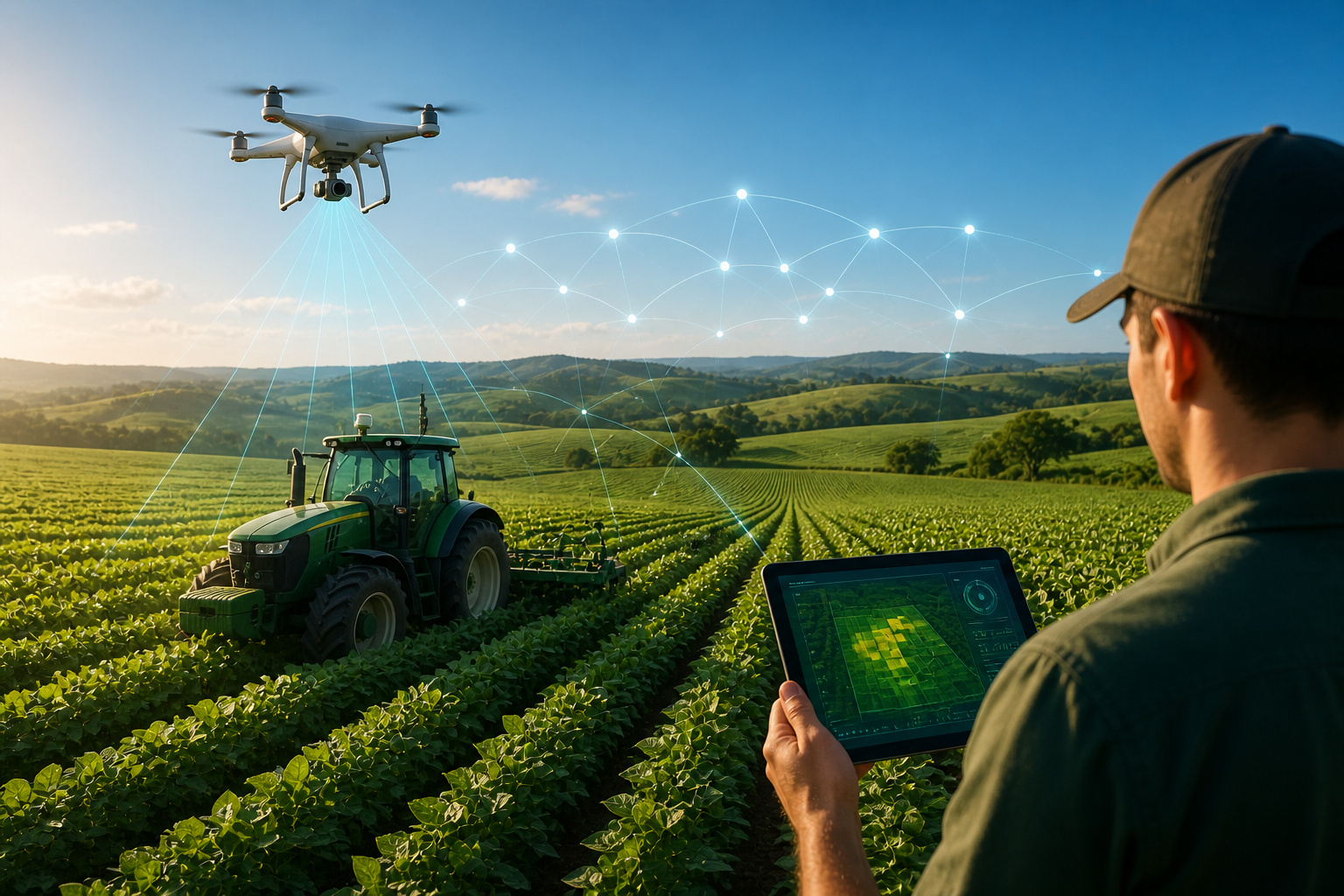

The adoption of AI in Brazilian agribusiness has been accelerating significantly, and the state of Paraná stands out as one of the main hubs of this transformation. With the growing use of drones, smart sensors, and data analysis systems, rural producers are changing the way they plant, monitor, and harvest their crops.
This advancement occurs at a time when the sector seeks greater efficiency to face challenges such as climate change, rising costs, and the need for productivity. In this scenario, AI emerges as a strategic tool capable of optimizing processes and reducing losses, placing the agricultural sector on a new technological level.
AI enables faster and more precise decisions in the field
One of the main advantages of AI in agribusiness is the ability to transform data into practical decisions. Through sensors installed in the soil, drones, and satellite images, producers can monitor crop conditions in real-time.
-
Brazilian Family’s Cheese, Started with One Cow in 1984, Named Best in the World, Beating 2,700 Competitors from 30 Countries

-
Brazilian Ranchers Use Satellites to Optimize Pasture Management and Prevent Feed Loss in Cattle Farms

-
Russia Follows China in Recognizing Brazil as Free from Foot-and-Mouth Disease Without Vaccination, Boosting Meat Exports and Agribusiness Potential

-
23-Year-Old Brazilian Turns Beekeeping into College Tuition, Harvesting Honey Twice a Year from 50 Hives


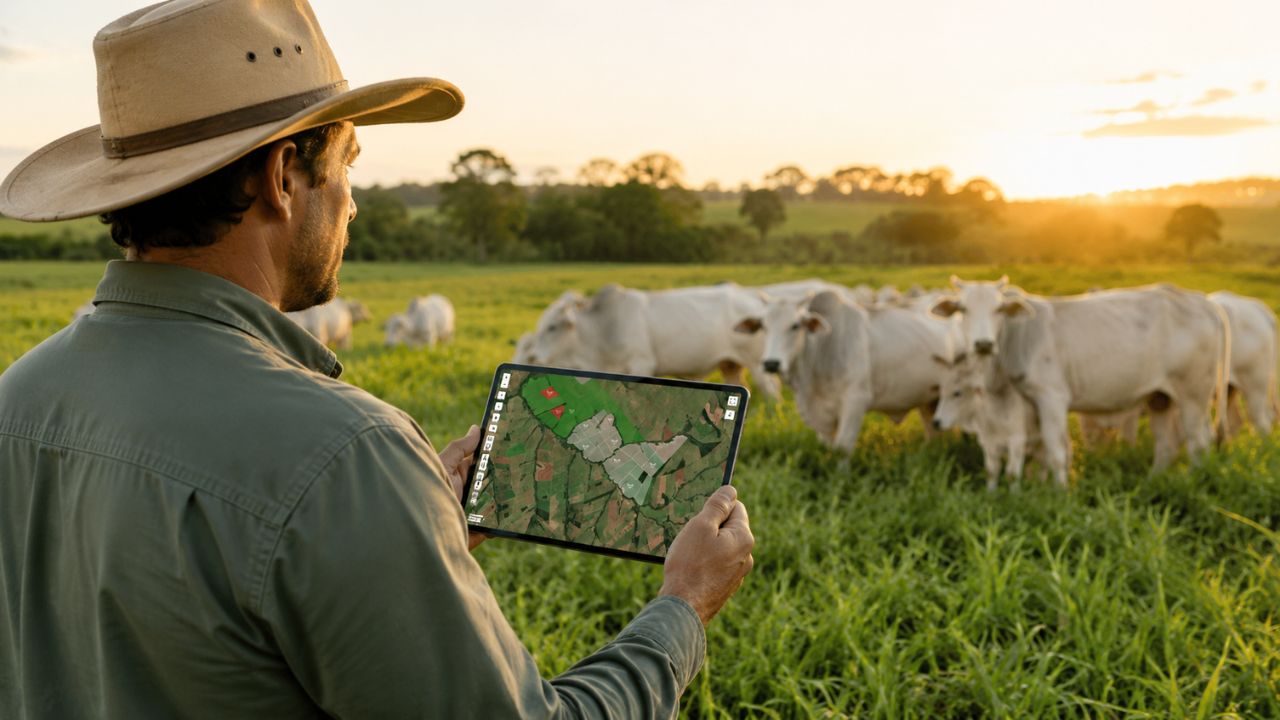


This information is processed by intelligent systems that indicate, for example, the ideal time for irrigation, fertilizer application, or pest control. As a result, decision-making is no longer based solely on experience and now relies on precise analyses.
In practice, this reduces waste and increases operational efficiency, allowing producers to use resources more strategically.

Drones and robots automate activities and reduce costs
The use of drones is one of the most visible applications of AI in the field. Equipped with advanced cameras and sensors, these devices can map large areas in minutes, identifying planting failures, diseases, and variations in crop development.
Furthermore, agricultural robots are starting to gain ground in repetitive activities such as spraying and monitoring. This automation reduces the need for manual labor in operational tasks and increases the precision of actions in the field.
Combined with AI, these devices can learn from collected data, continuously improving their performance and bringing productivity gains over time.
AI increases productivity and reduces crop losses
Another direct impact of AI is on increased productivity. By identifying problems before they become critical, systems allow for faster and more efficient interventions.
For example, areas with nutritional deficiencies can be treated locally, avoiding waste of inputs. Similarly, pest control becomes more assertive, reducing damage to production.
This precision agriculture model represents a significant change from traditional practices, where many decisions were made in a generalized way.
Real-time data usage revolutionizes agribusiness
The integration of different technologies allows producers to have a complete view of their property. Climatic data, soil conditions, plant growth, and even market forecasts can be analyzed simultaneously.
AI cross-references this information and generates recommendations that help maximize results. This transforms the field into a highly connected environment, where every decision is based on concrete data.
This level of control not only increases productivity but also predictability, allowing for more efficient planning of harvests.

Paraná stands out as a reference in agricultural innovation
The state of Paraná has consolidated itself as a reference in the adoption of AI in agribusiness. With a strong presence of cooperatives and technologically advanced producers, the region has invested in innovative solutions to increase competitiveness.
Research institutions and technology companies also play an important role in this advancement, developing tools adapted to the reality of Brazilian agriculture.
This ecosystem favors the dissemination of AI, making the state an example of how technology can transform the agricultural sector.
AI also contributes to sustainability in agribusiness
In addition to economic gains, AI has a direct impact on sustainability. The more efficient use of inputs reduces waste and minimizes environmental impacts.
The localized application of fertilizers and pesticides, for example, avoids an excess of chemical products in the soil and water. This contributes to more responsible agricultural practices aligned with environmental requirements.
With increasing pressure for sustainable production, AI becomes an important ally for balancing productivity and preservation.
Challenges still limit AI advancement in the field
Despite advances, the adoption of AI still faces challenges. The high initial cost of some technologies can hinder access for small producers.
Furthermore, connectivity in rural areas is still limited in some regions, which compromises the use of real-time data-based systems.
Another point is the need for training. The efficient use of AI requires technical knowledge, which demands training and adaptation on the part of producers.

The future of agribusiness will be increasingly digital
The trend is for AI to continue advancing in agribusiness, becoming increasingly accessible and integrated into field operations. New technologies are expected to further expand analysis and automation capabilities.
As a result, rural producers will act more strategically, using data and technology to maximize results. The field ceases to be merely operational and becomes a highly technological environment.
This movement follows a global trend of digitalization of agriculture, driven by the need to produce more with fewer resources.

AI redefines the role of the rural producer
With the arrival of AI, the role of the producer is also changing. More than executing tasks, they now manage information and make data-driven decisions.
This transformation requires new skills but also opens opportunities for gains in productivity and profitability.
At the same time, technology allows greater control over production, reducing risks and increasing operational safety.
AI consolidates itself as a key piece in the new Brazilian agriculture
The advancement of AI in Paraná shows that technology is already a reality in Brazilian agriculture. More than a trend, it has become an essential tool for facing the challenges of the sector.
With gains in productivity, cost reduction, and greater sustainability, AI consolidates itself as a key piece in building a more efficient and competitive agriculture.
The scenario indicates that, in the coming years, the presence of AI in agribusiness will be even more intense, completely redefining how the field operates and develops.