






 Portuguese
  Spanish


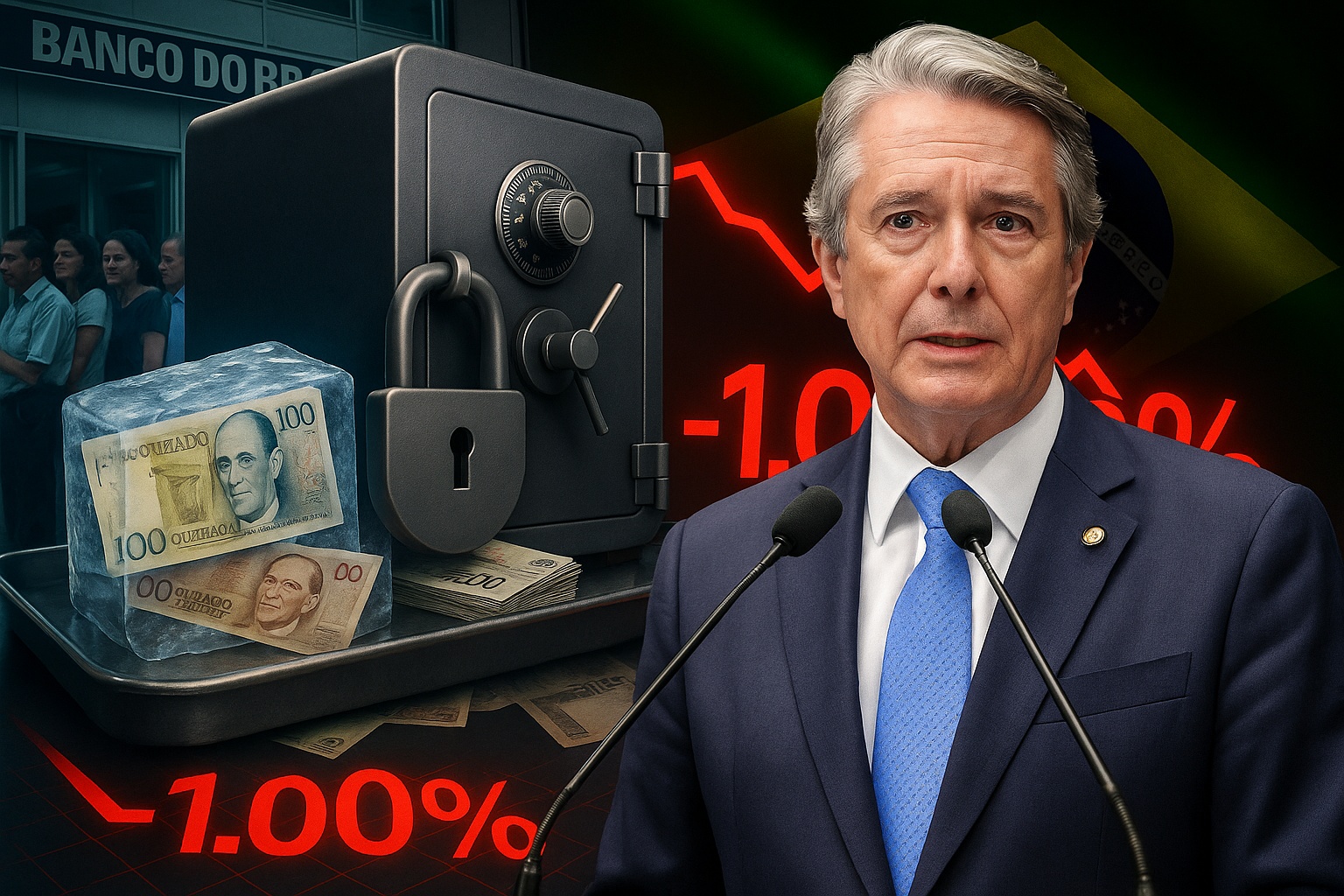


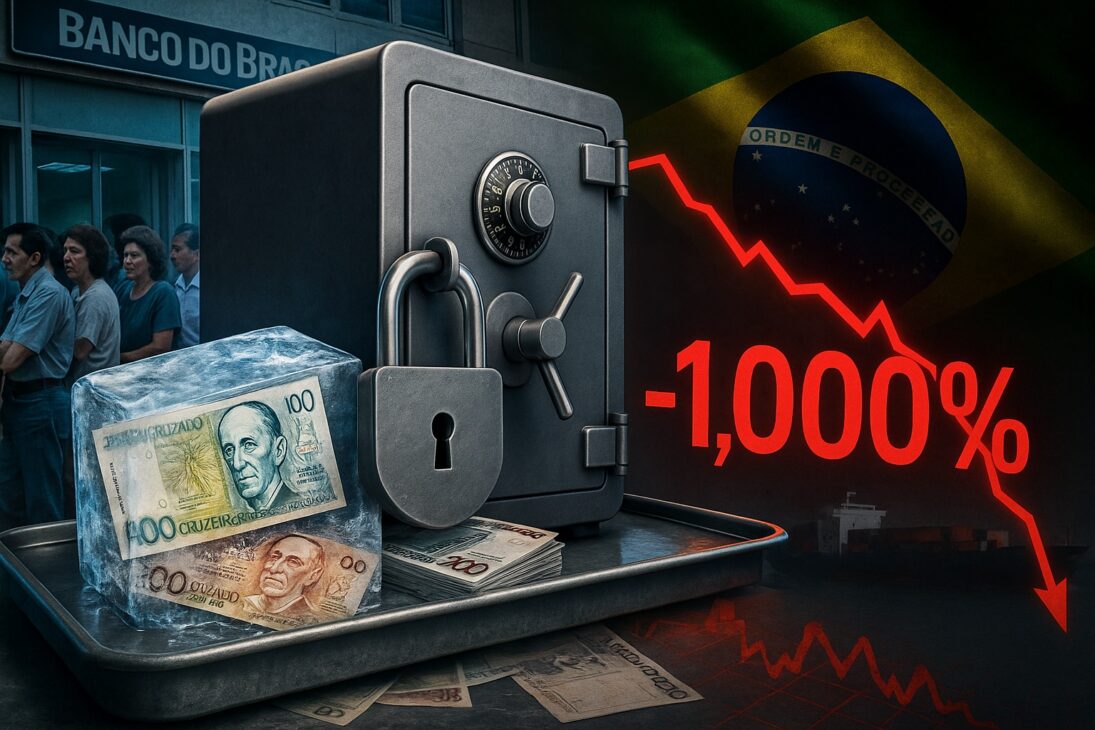
Collor Blocked Savings In 1990, Millions Lost Access To Money, And Only The Real Plan Ended 15 Years Of Hyperinflation Above 1,000% Per Year.
On March 16, 1990, Brazil woke up to an announcement that would forever change the population’s relationship with money. The newly inaugurated president Fernando Collor de Mello ordered the immediate blocking of savings accounts and bank deposits above 50,000 new cruzados — equivalent to just over US$ 1,200 at the time. In an instant, millions of Brazilians saw their savings disappear, transformed into papers blocked by the government.
It was the most traumatic point of a 15-year trajectory of hyperinflation, marked by rates exceeding 1,000% per year, successive currency changes, and the complete erosion of purchasing power.
Brazil Immersed In Hyperinflation
Since the mid-1980s, Brazil had been facing one of the longest hyperinflations ever recorded in the modern world. Between 1980 and 1994, the average monthly inflation exceeded 16%.
-
Facing Labor Shortage, Japan Plans to Invest $34 Million to Attract Foreign Workers in Construction, Healthcare, Industry, and Commerce

-
Brazilian City Makes Remarkable Leap, Becomes 4th Wealthiest in the Country with GDP of R$ 134.1 Billion

-
Controversial 6-day Workweek Elimination in Brazil Faces Economic Criticism Over Productivity Claims
-
Itaú to Refund Customers After 14 Years of Unauthorized Credit Card Charges; Agreement Includes No Interest or Adjustments, Deadline by 2028, with Potential Impact of Up to $6.5 Billion





This meant that within a few days, a worker’s salary no longer held the same value at the supermarket. Basic products changed prices several times a day, and the habit of rushing to spend right after payday became routine.
There were five different currencies during this period: cruzado, new cruzado, cruzeiro, real cruzeiro, and finally, the real. Each change sought to tame the inflationary dragon, but without addressing the structural causes — fiscal imbalance, lack of control over public accounts, and widespread indexing of the economy.
The Collor Plan And The Confiscation Of Savings


In 1990, Collor took office promising to “end the marajás” and stabilize the economy. His main bet was the Collor Plan I, a combination of price freezing, spending cuts, and, mainly, the blocking of savings. The justification was to remove excess currency from circulation, curbing the inflationary spiral.
The impact was devastating: over US$ 100 billion at the time was held back. Families that saved money to buy homes, start businesses, or secure retirement saw everything turned to nothing. Companies that depended on daily cash flow went bankrupt overnight. Credit evaporated, and confidence in the financial system suffered a historic blow.
Social Trauma And Collapse Of Confidence
The blocking of savings left deep scars. Many Brazilians never returned to investing in savings accounts or fully trusting banks.
Small merchants and medium-sized business owners went bankrupt. The trauma led to legal proceedings that dragged on for decades, with partial compensations paid by the government only years later.
From a social perspective, the plan was devastating for the middle class, which saw its wealth frozen. For the poorest, the economic collapse meant unemployment, reduced consumption, and increased inequality.
Hyperinflation Persists
Even with the shock of the Collor Plan, hyperinflation was not tamed. In 1993, the annual rate still exceeded 2,000%.
The amount seemed indestructible, fueled by decades of public deficits and monetary disorganization. Collor would ultimately suffer impeachment in 1992, leaving behind a country in recession, traumatized, and still imprisoned by inflation.
The Birth Of The Real And The Historical Turning Point
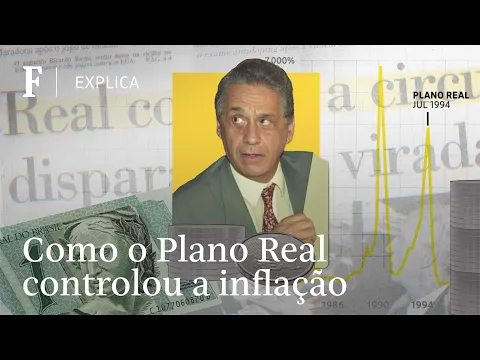
It was only in 1994, under the government of Itamar Franco and the leadership of then-minister Fernando Henrique Cardoso, that Brazil found a definitive way out. The Real Plan introduced the Real Unit of Value (URV), which served as a virtual transitional currency, indexed to the dollar, breaking the logic of inertial inflation.
In July 1994, the real was created, the fifth currency in eight years, but the first to endure over time. Inflation, which had been above 1,000% per year for more than a decade, fell to around 20% in the first year and below 10% in subsequent years. The country finally entered a new era of monetary stability.
The Legacy Of The Confiscation And Hyperinflation
More than three decades later, the confiscation of savings continues to be remembered as one of the greatest economic traumas in Brazil’s history. The episode symbolizes the risks of radical solutions in crisis contexts and left a permanent scar on the relationship between Brazilians and financial institutions.
The hyperinflation, due to its unprecedented duration, made its way into the history books as a phenomenon that destroyed fortunes, eroded workers’ income, and reduced Brazil to a laboratory of plans that were destroyed.
The Real Plan, by contrast, became a symbol of redemption: more than just a currency, it represented the reconquest of predictability, trust, and the ability to plan for the future.
The blocking of savings in 1990 was the peak of a cycle of despair that marked Brazil for 15 years. Entire families lost everything overnight, and hyperinflation eroded the social and economic fabric of the country.
But from that trauma emerged the awareness of the need for fiscal discipline, planning, and structural reforms. The Real Plan not only brought down inflation but also returned to Brazilians a good that seemed lost: the hope that money would regain its value.







Este fladaputa mim roubou meu dinheiro todo perde tudo
E tá perigando esse desgraçado desse LADRÃO aí fazer o mesmo!
Desgraçado foi o **** **** covarde anterior e seu posto Ipiranga picareta comparsa, dos amigos ricos da “Farinha Lima” e inimigo dos pobres e da classe média. O primeiro e seus **** vão ser condenados e presos. O segundo que fez fortuna primeiro lesando as previdências privadas estatais e depois fazendo uma política que produziu ainda mais desigualdade social, enquanto dobrava sua fortuna em paraíso fiscal, esse escapou porque autoridades fizeram vista grossa e passaram pano para as denúncias do MPF durante o governo passado. Leia, pesquise em mídias independentes sérias, ao invés dos zaps do rebanho e grandes mídias.
Pagar os processos judiciais os bancos nao querem! Só enrolam e oferecem miséria!
Qual diferença de hoje em dia ? Com essas imundícias de governos tirando tudo de nós com taxa e impostos , e vem aí a taxa da qualidade do ar respirável se preparem