Portuguese
  Spanish


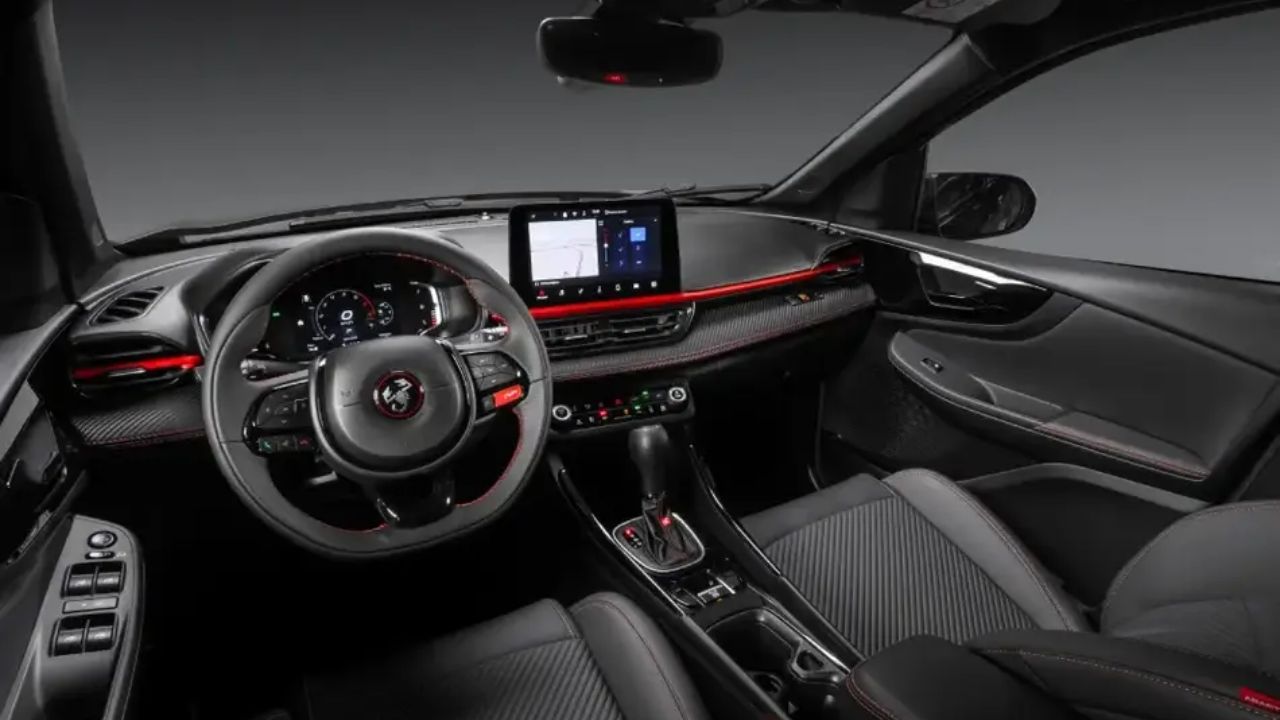


In Evaluation, The Fiat Pulse Abarth 2026 Shows A 1.3 Turbo Engine With 185 Hp Unmatched For The Price, But Still Insists On Drum Brakes And Lack Of Curtain Airbags, Points Out The Car Chief.
The Fiat Pulse Abarth 2026 arrives on the market with an aggressive promise: to be the fastest combustion car in its price range, leaving behind direct competitors like the VW Nivus GTS. Equipped with a more powerful engine and a new list of features, the updated model aims to solidify the scorpion as the best choice for those seeking performance without spending a fortune.
However, a deep analysis from the Car Chief reveals a classic dilemma: to deliver so much speed for a price significantly lower than the rival (around R$ 158 thousand), Fiat’s sports car maintains savings considered “unacceptable” in crucial safety points, repeating past mistakes that may weigh on the consumer’s decision.
The Heart Of The Scorpion: Performance That Outperforms Rivals
The standout feature of the Fiat Pulse Abarth 2026 is undoubtedly its mechanical setup. Under the hood is the well-known 1.3 Turbo (T270) four-cylinder engine with direct injection, delivering 185 hp on ethanol (180 hp on gasoline) and a robust torque of 27.5 kgf·m at just 1,750 rpm. These figures are higher than those of the Nivus GTS, and the difference in power and torque is felt in practice, especially at low revs.
-
Does a Flag on Your Car’s Hood Overheat the Engine? Expert Reveals the Overlooked Danger for Drivers

-
How to Identify and Remove Superficial Scratches Before Spending on Car Bodywork

-
Electric Car with Extended Range: Company Patents Hybrid Transmission System Using Gasoline Engine for Backup
-
GM Developed the Chevette to Rival the Beetle, Launched it in Brazil Before Europe, Sold 1.6 Million Units, and Left a Generation with Gas Station Trauma


Unlike the rest of the Pulse lineup, which uses a CVT, the Abarth comes with a six-speed automatic transmission, providing a sportier driving experience. According to Car Chief, this combination results in a weight-to-power ratio of 6.9 kg/hp for a vehicle weighing 1,293 kg. In tests conducted by the source, the model clocked 0 to 100 km/h in 7.5 seconds (with gasoline), beating Fiat’s own claimed time (7.6s) and leaving VW’s competitor behind.
The Bill Of R$ 158 Thousand: Where Did Fiat Save?

The proposal of the Fiat Pulse Abarth 2026 becomes clear when comparing prices. Priced at R$ 158,000, it is significantly cheaper than the Nivus GTS, priced at around R$ 183,500. However, the analysis by Car Chief indicates that this savings of over R$ 25,000 has a visible cost, particularly in terms of safety. The portal itself questions the absence of features that would be expected in this price range.
The most criticized point is the insistence on drum brakes at the rear. The Car Chief evaluator classifies the choice as “worthy of a Chevette” and questions why a car with a sports proposal and a top speed of 215 km/h lacks disc brakes on all four wheels, a feature found in older and lighter models of the brand itself, such as the Fiat 500 Abarth, which weakens the justification of being a “light car.”
Safety And Technology: The Absences That Matter
Besides the brakes, the second major flaw pointed out by Car Chief is in passive safety. The Fiat Pulse Abarth 2026 still lacks curtain airbags, relying only on front and side airbags. The source considers this absence “unacceptable” for a vehicle in this price range with a sports appeal, highlighting that the rival Nivus offers the complete airbag package, a critical point for protection in side impacts.
The list of savings continues in driver assistance technology. While the Pulse Abarth offers lane-keeping assist and automatic emergency braking, it does not come with adaptive cruise control (ACC), a feature present in the Nivus GTS. Fiat’s model also falls short with the blind-spot alert, an increasingly common active safety feature, which has been classified as a shortcoming, as the car has other semi-autonomous technologies.
Updated Interior: More Equipped, But With Old Friends
Not everything is criticism. The interior of the 2026 model received improvements aimed at enhancing the feeling of sportiness and comfort. Among the highlights are the new seats with the Abarth branding and good side supports, the electronic handbrake (absent in the rival), and the addition of a sunroof with sunshade. The evaluator praised the steering wheel, which has the “Poison” button (Sport Mode) well positioned and paddle shifters.
The multimedia system, considered fast and efficient, and the retention of physical controls for the air conditioning were also praised by Car Chief. However, the predominance of hard plastic in the interior finish and the retention of details like the hood support rod, instead of pantographic arms, remind us that despite the price, this is still a vehicle that requires some compromises in build quality and materials.
Is It Worth Buying The Sports Car?
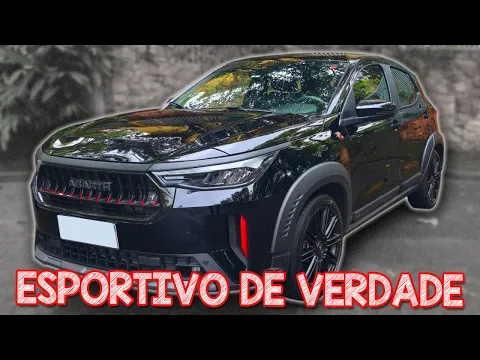

The verdict from the source is that the Fiat Pulse Abarth 2026 is indeed the most fun and fastest car (among combustion models) that can be bought for R$ 158 thousand. The roar of the exhaust, the agility of the T270 engine, and the six-speed transmission deliver the promised sportiness. The fuel consumption is also reasonable, with urban averages of 6.5 km/l (ethanol) and 10 km/l (gasoline).
However, Car Chief reiterates that the criticisms are constructive and aim to push the automaker to deliver a more complete product, stating that a consumer paying this price deserves the most safety possible. The final choice, therefore, boils down to a trade-off: unmatched performance for a low price in exchange for serious compromises in safety and driver assistance technology compared to direct rivals.
Did Fiat get it right by focusing 100% on performance to ensure an aggressive price, or did the R$ 158 thousand demand, at the very least, disc brakes on all four wheels and the complete airbag package?
As a consumer, would you trade disc brakes and curtain airbags for 25 thousand reais less than the rival? Leave your opinion in the comments, we want to hear what you think about this dilemma of performance vs. safety.