






 Portuguese
  Spanish


Ötzi’s mummy led researchers to cultivate yeast used in artisanal bread, while the microbiota preserved in the ice suggested changes in the modern body, possible action against phenol, and a crucial question: did these ancient fungi belong to the alpine hunter or could they reflect later contaminations still debated by current international science?
Ötzi’s mummy, naturally preserved for about 5,300 years in the Alps, returned to the center of scientific investigation after researchers isolated fungi found in his digestive system and cultivated yeast used in artisanal bread production. The experiment was described in studies linked to the Microbiome journal and gained prominence for uniting archaeology, biology, ancestral food, and microbiota.
According to Exame, the case involves Ötzi, known as the Iceman, found by mountaineers in 1991 in a glacier in the region between Italy and Austria. Kept under controlled conditions at the Bolzano museum in Italy, the body preserved at low temperature allowed new analyses of ancient microorganisms, possible adaptations to cold, and profound changes in the relationship between humans, diet, and microbiota.
Yeast extracted from the mummy became bread after months of cultivation
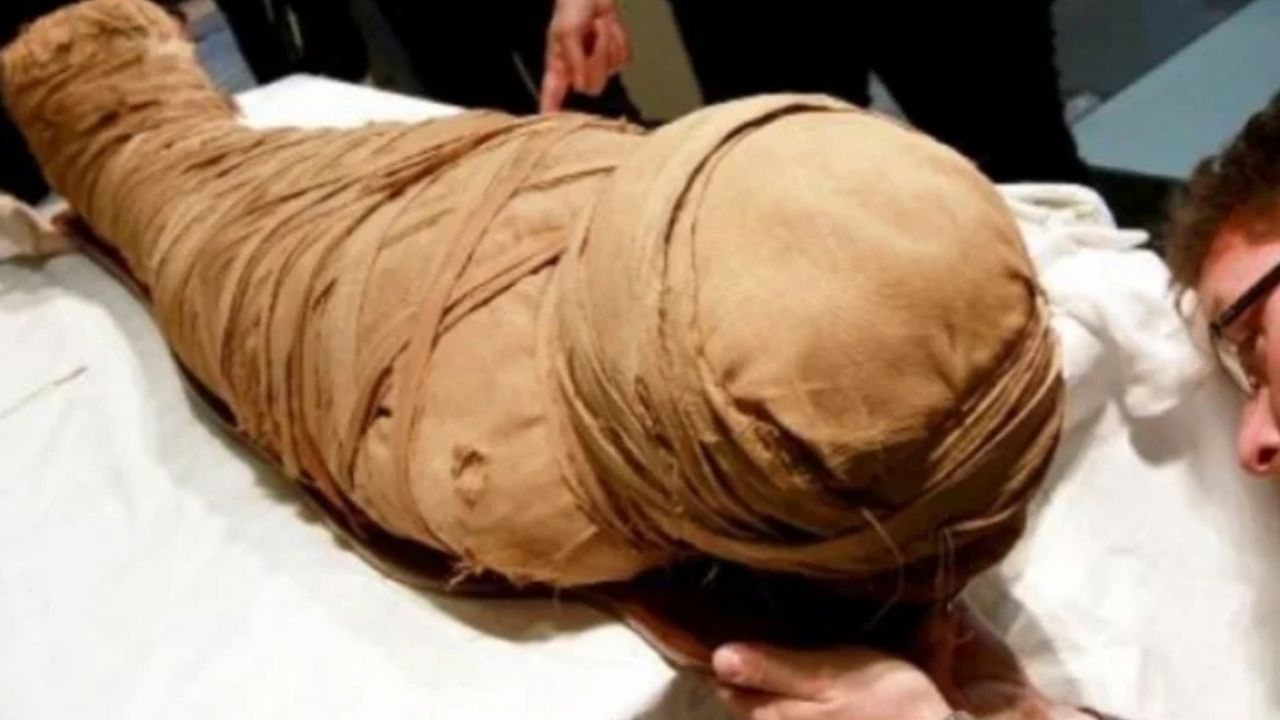
The discovery attracted attention because scientists managed to recover microorganisms associated with Ötzi’s body and transform part of this material into a natural fermentation culture. The yeast extracted from the mummy seems like a gastronomic curiosity, but the process required isolation, temperature control, and successive tests in the laboratory.
-
14-Year-Old Invents Eco-Friendly Water Pump Using Recycled Materials to Aid Communities Without Water Access

-
Pigeons Trained to Detect Cancerous Changes in Medical Images Astonish Scientific Community

-
Plastic Waste from Beaches and Poor Communities in Kenya Transformed into School Desks, Replacing Wood in Classrooms and Turning Marine Litter into Durable Study Tables

-
Your Old Gmail Address Might Be Obsolete Soon: Google Introduces Feature Changing Account Usage.


According to the information released about the study, the first attempts to activate the yeast were unsuccessful. The team needed to cultivate and stabilize the yeast for about three months in cold conditions until they obtained a culture capable of acting as a sourdough starter and participating in the production of an artisanal bread.
What the preserved mummy revealed about ancient fungi
The analyses indicated the presence of microscopic fungi in samples related to the skin, bodily fluids, and intestines of the mummy. Some of these organisms showed characteristics compatible with cold environments, which reinforced scientific interest in the survival of microorganisms in extreme conditions.
The most sensitive point of the study is the origin of these fungi. Genetic tests pointed to signs of wear in the DNA, compatible with ancient organisms, but external researchers urge caution. There is still the possibility that some of the microorganisms are related to later contaminations, accumulated after the body’s exposure to the glacial environment.
Aggressive chemical compound opened another line of investigation
Besides the bread, the yeast drew attention for another behavior: its ability to handle phenol, a chemical substance used after the discovery of the body to reduce the proliferation of modern fungi. This detail made the mummy not just an archaeological object but also part of a discussion on environmental biotechnology.
The ability to break down molecules of this aggressive compound may indicate paths for future studies on the decomposition of pollutants in contaminated soils and waters. However, this possibility is still in the realm of scientific investigation. Turning a laboratory discovery into a real environmental application requires testing, validation, and a lot of caution.
Ötzi’s microbiota reignites debate about the modern body
The study also raised a question that goes beyond archaeology: what has changed in the human body since Ötzi’s life? The microbiota associated with the mummy presented microorganisms that are now rare or almost absent in urban and industrialized populations.
This difference is associated by researchers with lifestyle changes, especially in diet. Ancient diets, with a higher presence of fibers, whole grains, and minimally processed foods, may have favored microbial communities different from those found in the modern body. The mummy, in this sense, functions as a biological capsule of a vanished way of life.
Discovery impresses, but still divides scientists
The strength of discovery lies precisely in the balance between fascination and caution. On one hand, the possibility of producing artisanal bread with a yeast associated with a 5,300-year-old body creates an immediate impact. On the other hand, science needs to confirm to what extent these microorganisms truly belonged to Ötzi’s original ecosystem.
This doubt does not diminish the importance of the find, but it prevents hasty conclusions. The mummy remains one of the most valuable human records for understanding diet, death, natural preservation, and ancient microorganisms. At the same time, it shows that even an apparently simple discovery, like an ancestral bread, can open debates about contamination, pollution, and the evolution of the human body.
Do you think that yeast taken from a 5,300-year-old mummy can really help to understand the modern human body, or does this type of discovery still need much more caution before becoming a scientific conclusion? Leave your opinion in the comments.


