





 Portuguese
  English
  Spanish
  3 min of reading


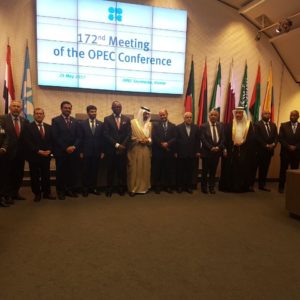
World Stocks Rise Despite U.S. Sanctions Against Iran and Venezuela, Cuts May Be Needed in Production During the Second Half of 2019, Says Saudi Arabia.
The Organization of the Petroleum Exporting Countries (OPEC) and a group of ten other producing nations, led by Russia, have deepened their production cuts but remain divided on whether this reduction should remain in effect until the end of the year. Futures contracts for crude oil remained virtually stable during Tuesday morning’s trading in Asia after the OPEC meeting left the market with little clarity on whether the OPEC-led cuts would extend beyond the second half of 2019.
The U.S. has significantly increased its own oil exports in recent months while imposing sanctions on Venezuela and Iran to reduce adversaries’ exports to global markets. Washington’s policies have introduced a new level of uncertainty for OPEC as the organization struggles to forecast the global balance between supply and demand.
-
Taller than the Statue of Liberty, thousands of wind turbines are being planted in the middle of U.S. fields, creating two-story farms where corn and soybeans grow below while the wind turns into electricity above.
-
Volkswagen trucks hit the track in a comparison between the Meteor 29.530, designed for operations up to 74 tons, and the Constellation 20.480, which relies on 480 horsepower for those seeking robustness in a 4×2 tractor unit.
-
Volkswagen trucks hit the track in a comparison between the Meteor 29.530, designed for operations up to 74 tons, and the Constellation 20.480, which relies on 480 horsepower for those seeking robustness in a 4×2 tractor unit.
-
Lula government releases R$ 1.16 billion through the New PAC to renew public transportation in Brazil with 727 buses in cities of São Paulo, Pernambuco, Minas, Rio, and other states, including electric and less polluting models.
The next meeting of the Organization of the Petroleum Exporting Countries to decide production policies will be in April and June. Based on this statement, Russian Energy Minister Alexander Novak said that Russia is close to cutting production by 140,000 barrels per day, and the reduction in its production may last until June, when Washington’s plans regarding Iran and Venezuela become clear.
Novak also stated that it is difficult for Moscow and OPEC to plan due to U.S. sanctions. He mentioned that there will be little additional information until the April meeting, as Washington will not have announced its new policies on Iranian oil yet, and more negotiations will be necessary in May.
“These sanctions are creating negative trends in the market and completely distorting supply and demand. They are imposed to help sell goods from the country that is imposing them, and they create uncertainties,” he stated.
The Saudi Energy Minister, Khalid alFalih, said that Saudi exports will remain below 7 million barrels per day in April and March.
“My assessment is that the work remains ahead of us. We are still seeing increases in stocks. We need to stay on track certainly until June,” Falih said.
“We want to be ready to continue monitoring supply and demand and do what we have to do in the second half,” Al Falih said during a meeting of some OPEC ministers in the Azerbaijani capital, Baku.
OPEC and its allies have cut production by 1.2 million barrels per day—or 1.2 percent of global demand—since January to rebalance the global oil market and raise prices.
The U.S. has imposed tough sanctions on Iran, the third-largest producer in OPEC, but has granted some waivers for buyers of Iranian oil until May.
Washington is also trying to overthrow the current president of Venezuela, Nicolás Maduro, and has imposed sanctions on the South American nation’s oil.
EQUINOR AND AÇU SIGN CONTRACT, CLICK HERE TO STAY ON TOP OF EVERYTHING!




Be the first to react!