






 Portuguese
  Spanish


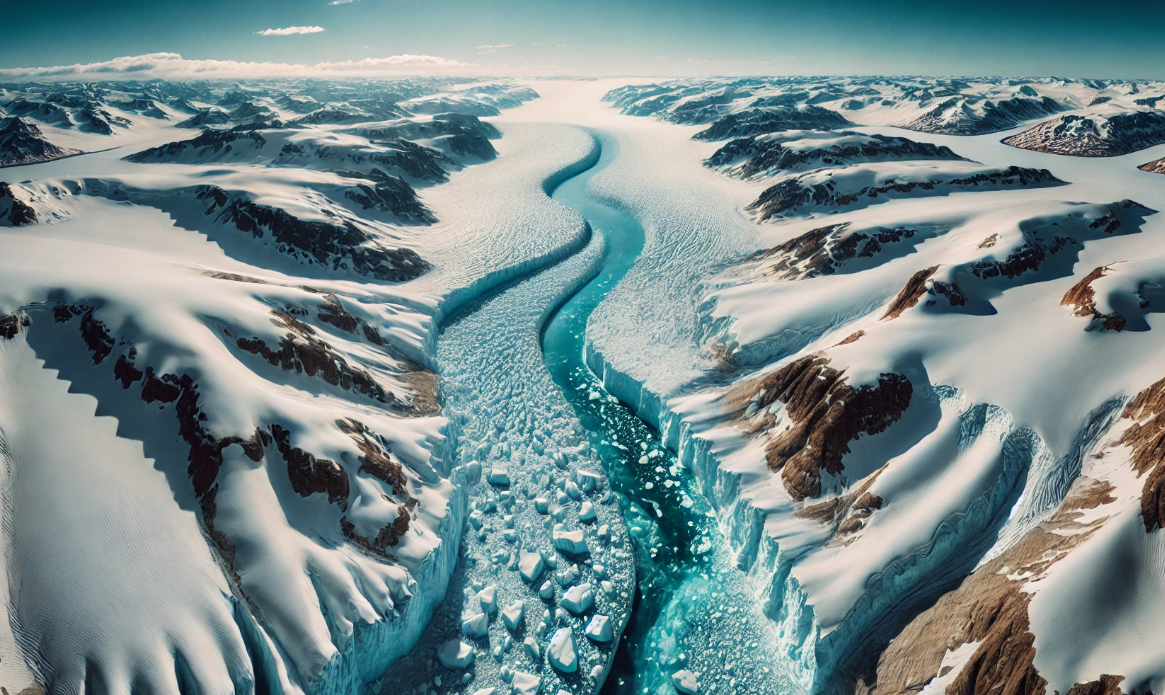

Study Reveals That Greenland Ice Sheet Is Close To A Critical Point, With Possible Consequences For Sea Level And Global Climate Change
The Greenland ice sheet, the second largest in the world, may be on the verge of reaching a concerning point. A new study warns that an increase of just 2 °C in global temperature would be sufficient to trigger the collapse of this massive structure, raising sea levels by up to 7 meters.
The consequences would be devastating for global ecosystems and for billions of people living in coastal regions.
Accelerated Decline Of The Ice Sheet
Scientists have been monitoring the melting of the Greenland ice sheet for years, which has been losing about 33 million tons of ice every hour.
-
ChatGPT Alerts FBI to Prevent Planned Murder of 8-Year-Old in Brazil’s Espírito Santo

-
Scientists Discover 125-Million-Year-Old “Pregnant Fossil” with Preserved Embryos and Microscopic Larvae Inside Mollusk in England

-
17-Year-Old Justin Bernstein Develops Bacteria to Produce Glass on Arctic Ice to Reflect Sunlight, Wins $50,000 U.S. Scholarship

-
The 19-Meter Rocket-Helicopter: A Private Industry Prototype That Challenged Space Race Logic




Despite these significant losses, researchers had not yet explained when irreversible collapse might occur.
Now, the study published on January 9 in the journal The Cryosphere reveals an alarming finding: this critical point could be reached by the end of this century if the worst warming estimates materialize.
Freshwater Reserves At Risk
Greenland is home to one of only two permanent ice sheets on the planet — the other is in Antarctica.
It covers approximately 1.7 million square kilometers, nearly three times the size of Texas. Together, the ice sheets of Greenland and Antarctica account for over 70% of Earth’s freshwater reserves.
Since 1994, these ice sheets have lost a total of 6.9 trillion tons of ice, according to a 2021 study.
The losses are attributed to climate change caused by human activity. However, experts point out that irreversible collapse can still be avoided if drastic measures are taken to reduce carbon emissions.
When Will The Tipping Point Be Reached?
To understand when the ice sheet might reach a critical state, scientists conducted a climate model. This model simulated the mass balance of the ice sheet’s surface, analyzing the difference between snow accumulation and melting under different warming scenarios.
The results are concerning. The tipping point will occur if an ice sheet loses about 230 gigatons of ice in a single year — representing a reduction of 60% from the pre-industrial balance of the ice sheet.
This scenario is associated with a 3.4 °C increase in global temperature compared to pre-industrial levels. Currently, the planet is 1.47 °C warmer than at the end of the 19th century. However, projections indicate that the temperature could reach 3.4 °C by 2100.
Devastating Impacts On Sea Level
If the Greenland ice sheet were to melt completely, sea levels could rise by up to 7 meters. This increase would affect billions of people living in low-lying areas.
Moreover, elevated temperatures could compromise the ocean currents surrounding the Atlantic, further exacerbating environmental issues.
The situation in Greenland reflects a global trend. Between 2000 and 2019, Earth’s glaciers lost an average of 294 billion tons of mass per year, representing 21% of the sea level rise during that period.
An additional study, also published in 2021, estimates that the planet loses enough ice each year to cover an area equivalent to Lake Superior.
With information from Live Science.


