Portuguese
  Spanish


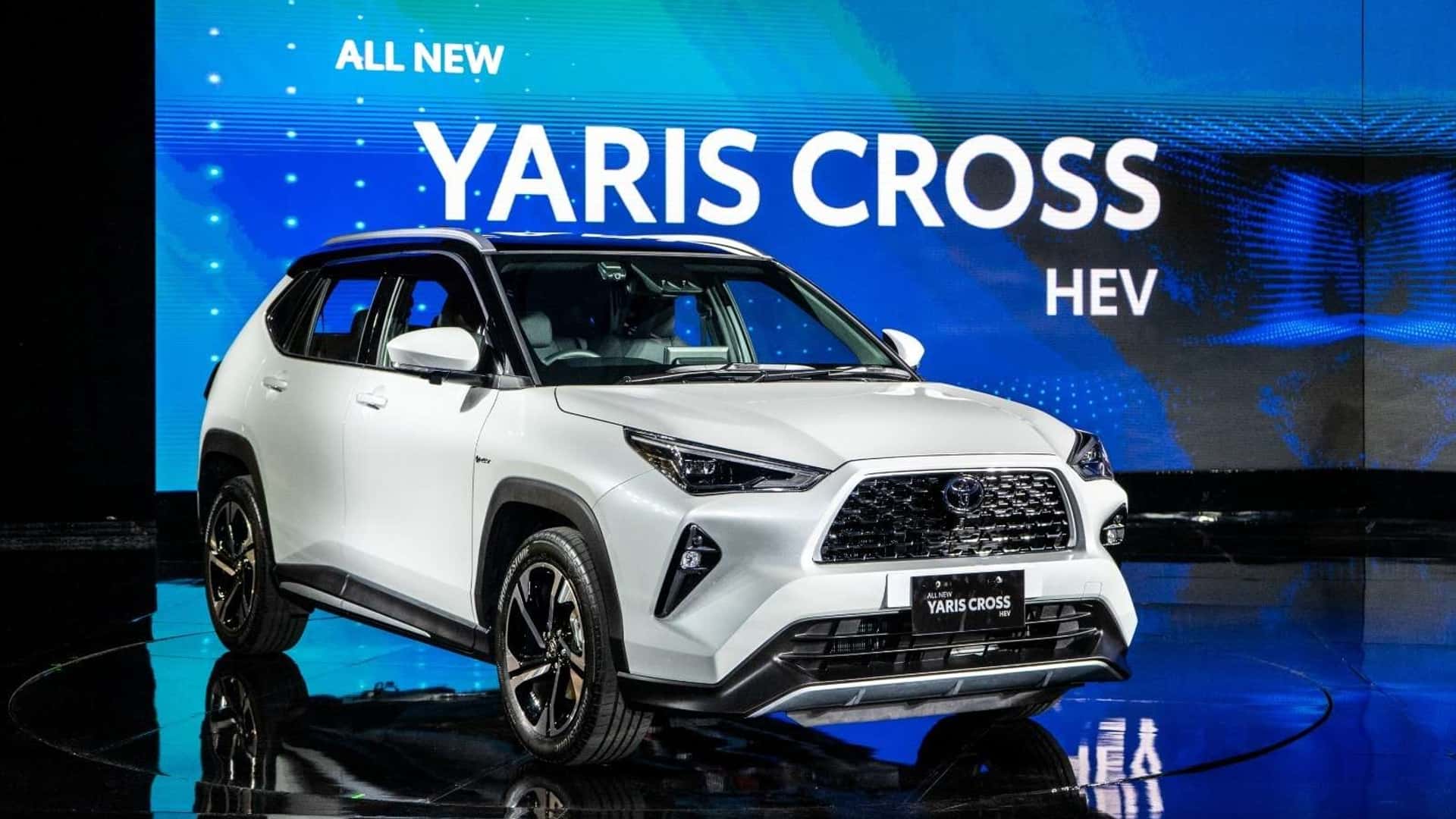


Yaris Cross flex hybrid arrives in Brazil with up to 17.9 km/l, prices starting from R$ 149 thousand, and a focus on economy and reliability.
In 2026, Toyota do Brasil will place the Toyota Yaris Cross in Brazilian dealerships with a direct strategy: to bring full flex hybrid technology to the core of the compact SUV segment, currently one of the most competitive segments in the national market. According to a Toyota statement published on November 19, 2025, the model was announced in four versions, XRE, XRE Hybrid, XRX, and XRX Hybrid, with delivery to the first customers scheduled for February 2026; on January 14, 2026, the brand also confirmed the XR version, initially aimed at the PCD public, with a special launch price of R$ 149,990.
The data supporting the technical appeal of the launch is straightforward: the Yaris Cross Hybrid achieves up to 17.9 km/l in the city and 15.3 km/l on the highway with gasoline, according to the Brazilian Labeling Program of Inmetro cited by Toyota itself. In a statement on April 15, 2026, the automaker also informed that it inaugurated a Battery Technical Center in Sorocaba, in the interior of São Paulo, with an approximate annual capacity of 50 thousand sets, initially 100% dedicated to the Yaris Cross Hybrid.
Flex hybrid system combines combustion engine with electric motor to reduce consumption and emissions
The Yaris Cross flex hybrid uses a system that combines a combustion engine with an electric motor, allowing it to operate in different modes depending on the usage situation. At low speeds and in urban traffic, the car can run solely on the electric motor, reducing consumption and noise.
-
1983 Chevrolet Runs Over 100,000 km Without Gasoline, Powered by Wood Chips, Reaches 125 km/h in Airport Test

-
Workshop Converts Giant Tractor Tire Tricycle into a Three-Wheel Drive Hybrid with 36,000-Watt Electric Motor Capable of Climbing Hills

-
Sales of Brazil’s Cheapest Electric Car Halted Before First Deliveries: E-Motors Suspends Emova Easy Due to Import Tax Increase and Rising Freight Costs

-
Nissan Discontinues Qashqai SUV Amid Cost-Cutting, Chinese Competition, and Product Line Review





During accelerations or higher speeds, the combustion engine kicks in, working in conjunction with the electric system to optimize performance and efficiency. The system also recovers energy during braking and decelerations, automatically recharging the battery.
This type of technology eliminates the need for external charging, as energy is generated by the vehicle itself during use.
High city fuel economy reinforces positioning as an economical SUV
The main argument for the Yaris Cross lies in its fuel consumption. The model was designed to maximize efficiency in urban environments, where the hybrid system can operate more frequently in electric mode.
With up to 17.9 km/l with gasoline, the SUV positions itself among the most economical in its category, surpassing many combustion-only models. Even with ethanol, a widely used fuel in Brazil, consumption remains competitive.
This efficiency directly translates into a lower cost per kilometer, a decisive factor for consumers who use their car daily.
Platform and dimensions place model at the center of the compact SUV segment
The Yaris Cross was developed to compete with models such as Volkswagen T-Cross, Hyundai Creta, and Chevrolet Tracker. Its dimensions balance interior space and ease of urban use.
The model offers a higher driving position, a valued characteristic in the segment, in addition to a competitive trunk for the category.

This combination allows the vehicle to cater to both urban use and travel, maintaining versatility as one of its main selling points.
Toyota’s strategy bets on accessible electrification to expand technology reach
Toyota already has consolidated experience with hybrid vehicles in Brazil, especially with the Corolla and Corolla Cross. The Yaris Cross represents an important step to bring this technology to a wider audience.
By positioning the model below these vehicles, the brand aims to reduce the entry barrier for consumers interested in electrification.
The idea is not to compete directly with pure electric vehicles, but to offer a practical alternative without the need for charging infrastructure.
Versions with conventional engines expand reach for different consumer profiles
In addition to the hybrid versions, the Yaris Cross also arrives with configurations equipped only with an internal combustion engine. This strategy allows reaching consumers who are not yet ready to migrate to electrified systems.
These versions tend to have a more accessible price, serving as an entry point to the model. At the same time, they maintain the proposal of a compact SUV with a good level of comfort and technology.

With prices between R$ 149,990 and R$ 189,990, the Yaris Cross enters an intermediate market segment. It is not the cheapest in the segment, but it also does not reach the highest prices of medium SUVs.
This positioning allows it to compete with well-established models, offering the hybrid system as its main differential.
Consumers begin to evaluate not only the initial price, but also the cost of ownership over time, where the model can have an advantage.
Brazilian market pressures for efficiency amidst expensive fuels
The launch of the Yaris Cross occurs at a time when fuel costs directly influence purchasing decisions. Models that offer better consumption tend to gain market share.
In this scenario, mild and hybrid electrification becomes an intermediate solution between traditional and electric vehicles, allowing for savings without requiring changes in user behavior.
Flex hybrid SUV represents a new phase of electrification in Brazil
The introduction of a compact flex hybrid SUV indicates an evolution in the national market. Electrification is no longer restricted to more expensive models and is beginning to appear in more accessible price ranges.
This movement can accelerate the adoption of more efficient technologies and reduce emissions in the long term. The Yaris Cross positions itself as part of this transition, connecting the traditional fuel-use model with more modern solutions.

Now the direct question is: with high fuel efficiency, a flex hybrid system, and a competitive price within the segment, does the Yaris Cross have the power to change the Brazilian consumer’s choice pattern, or will the appeal of conventional SUVs still be stronger in the short term?