





 Portuguese
  English
  Spanish
  4 min of reading
  0 comments


Paleontologists have unearthed in Argentina the bones of a new giant dinosaur that lived during the Jurassic period, a find that helps tell the story of how these long-necked titans grew so large that they became the largest animals to ever walk the Earth.
From time to time, the ground of Argentina delivers to the world another giant that has been asleep for millions of years. This happened again with the discovery of a new large dinosaur from the Jurassic period, one of those enormous herbivores with long necks and tails that dominated the planet long before any human existed.
More than just an impressive skeleton, the find is a valuable piece of a puzzle that scientists have been trying to assemble for a long time: how these animals managed to become so absurdly large. Each new fossil found in the southern hemisphere helps to better understand the evolution of these colossi and the lost world in which they lived.
Why Argentina is a mine of giants
It’s no coincidence that so many enormous dinosaurs appear in Argentina. The country holds, in its rocks, exceptional records of millions of years of Earth’s history, formed under ideal conditions to preserve ancient bones. Patagonia, in particular, has become one of the richest places on the planet for fossils of large dinosaurs.
-
15-year-old Nigerian teenager uses cassava peels, banana leaves, and corn husks to create biodegradable pads that tackle menstrual poverty, plastic waste, and social taboos while competing for a global environmental innovation award.

-
France challenges the diesel-powered giants: new 136-meter freighter uses 3,000 m² of rigid sails, promises to cut emissions by up to 80%, and is already crossing the Atlantic carrying cars, containers, and heavy cargo between Europe and America.

-
China develops an engine whose parts will equip the new Renault priced below 20,000 with a range of 263 km and an 82 hp engine, in a project that plans for the production of 120,000 units annually in France.
-
Scientists try to “cut” a photon in half and end up with an absurd result: instead of two smaller parts, the calculation points to infinite photons emerging from the quantum vacuum.


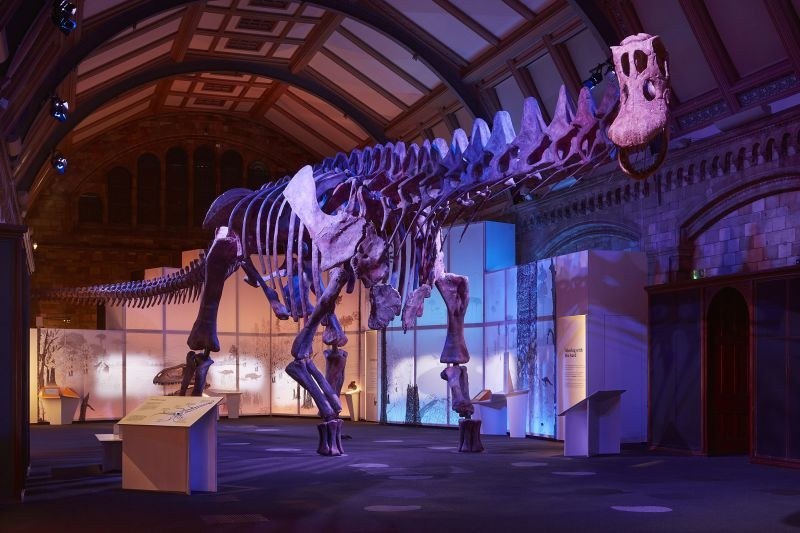
It was there that some of the largest known land animals appeared, creatures that weighed tens of tons and measured more than a tennis court. I confess it’s hard to even imagine the size of these creatures walking through the landscape. Each new discovery in the region reinforces Argentina‘s reputation as a true mine of giants from the past.
The mystery of how they got so big
One of the biggest questions surrounding these dinosaurs is precisely how they reached such monstrous sizes. No land animal today comes close to this size, and there are physical limits that make it difficult for a living being to become so large without its bones and heart simply giving out. And yet they managed.
Scientists believe that a combination of factors explains the phenomenon, such as long necks that allowed them to reach a lot of food without expending energy walking, an efficient way of breathing, and accelerated growth when young. Each new fossil, like the one that has just appeared in Argentina, helps to test these ideas and understand at what point in evolution these animals began to become so immense.
The period in which this dinosaur lived also matters a lot. The Jurassic was an era when the continents had different shapes than today and the climate was generally warmer and more humid, with lush forests. Understanding what kind of giant lived in the southern hemisphere at that time helps scientists map how different groups of dinosaurs spread and evolved across the planet, each following its own path toward colossal size.
What an ancient bone can tell
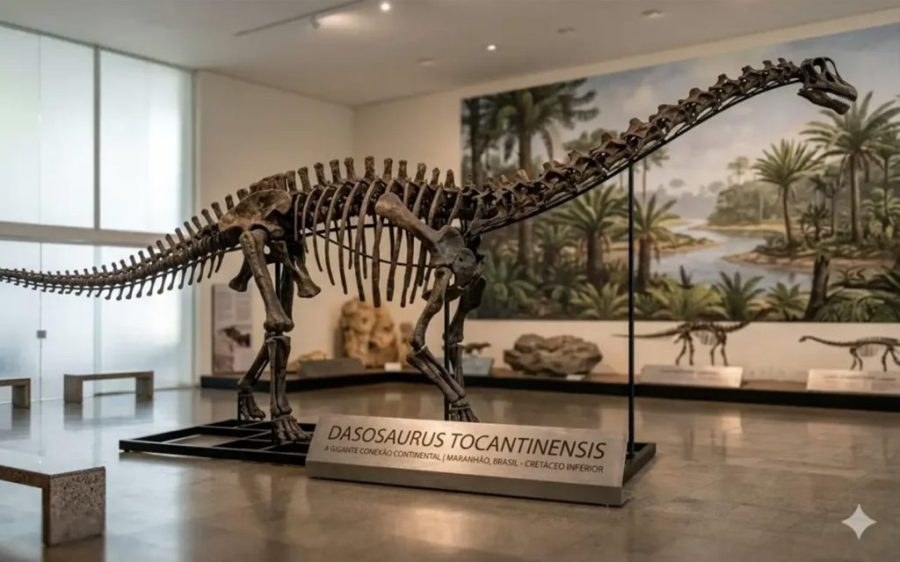
It may seem that a bunch of old bones says little, but for paleontologists, each fragment is a page of a book written millions of years ago. From the shape and size of the bones, it’s possible to estimate the animal’s weight and height, how it moved, what it ate, and even which other dinosaurs it was related to. It’s almost like detective work in deep time.
Discovering a new species means adding a new character to this ancient story. The new giant from Argentina takes its place in the tree of life, helping to explain how the large dinosaurs diversified. And the more species we know, the clearer the picture becomes of a world dominated by creatures that today seem straight out of a dream.
It’s worth remembering that Brazil is also a neighbor to this story. Our lands hold important fossils and have already revealed some of the planet’s earliest dinosaurs, and the ancient landscape that existed here was connected to that of Argentina at a time when the continents had a different shape. Therefore, each giant unearthed on the other side of the border also helps to understand which creatures walked on Brazilian soil millions of years ago, in a shared past that science is piecing together bone by bone.
Giants that still have much to reveal
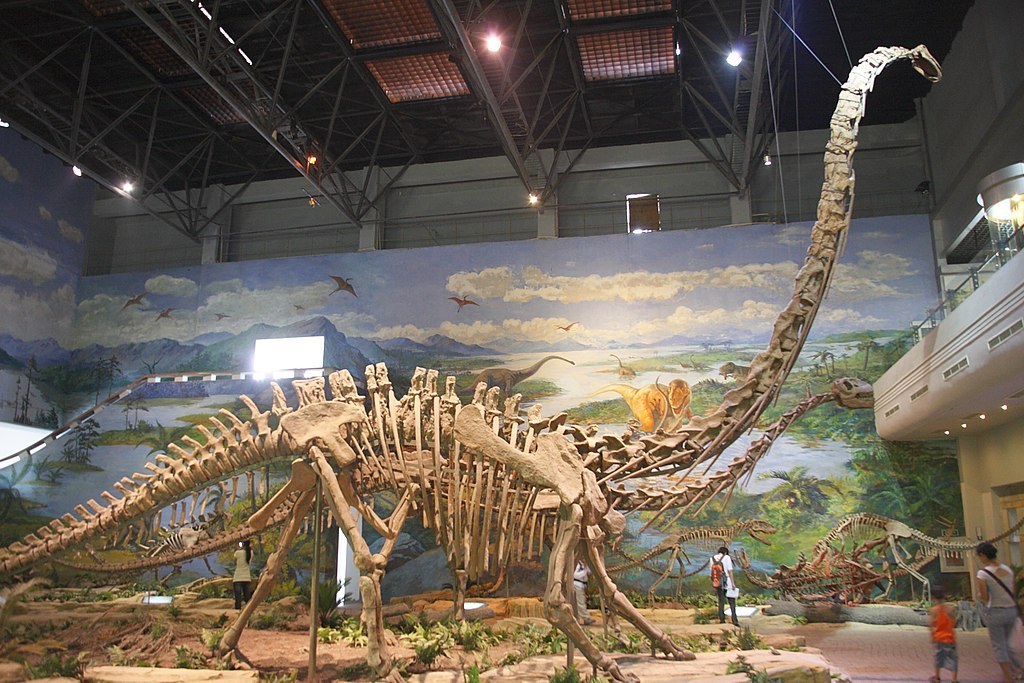
I imagine how many other colossi are still there, asleep beneath the soil of Argentina, waiting for erosion, construction, or an attentive paleontologist to bring them back to light after so long. With each discovery, it becomes clear that Earth’s past still holds enormous surprises, in the literal sense of the word.
The new Jurassic dinosaur is another piece of this story being recovered. It reinforces Argentina‘s role as one of the great addresses of world paleontology and reminds us that life on Earth once had spectacular forms, long before us. Understanding how these giants emerged and thrived is also a way of looking at our own place in the long history of the planet.
If you could, would you go back in time just to see one of these giants walking the Earth up close?


Be the first to react!