Portuguese
  Spanish


South Korea has unveiled a missile capable of flying at hypersonic speed and sinking ships hundreds of kilometers away, launched from a fighter jet, a leap that puts the country in a global race so far dominated by very few powers.
There is a silent arms race that has been changing the balance of power in the world, the race for hypersonic weapons. These are missiles so fast that they fly at more than five times the speed of sound, too difficult to intercept. Now, South Korea has shown that it has fully entered this game by unveiling a hypersonic anti-ship missile that can be launched from the air.
The project is linked to the Hycore program, which develops vehicles powered by a special engine called a scramjet, capable of operating at absurd speeds. The idea is to have a weapon that flies too fast to be stopped and that threatens enemy ships at great distances, giving South Korea a powerful card to defend itself at sea.
What makes a hypersonic missile so feared
A common missile, even if fast, usually follows a more or less predictable trajectory, which gives defenses a chance to calculate where it will pass and try to shoot it down. A hypersonic missile, on the other hand, flies so fast, and often so maneuverably, that defense systems simply do not have time to react. By the time the radar detects the threat, it is practically on top of the target.
-
Indonesia Recovers Underwater Spy Drone, Sparking Debate: Is It a Machine or a Warship?

-
UK, Italy, and Japan Collaborate to Build Stealth Fighter Jet Set to Dominate Skies by 2035
-
South Korea Surpasses Germany, Its Former Submarine Mentor, by Advancing to Nuclear Submarines
-
Australia, UK, and US Seal Combat Submarine Drone Pact to Accelerate Attack Fleet


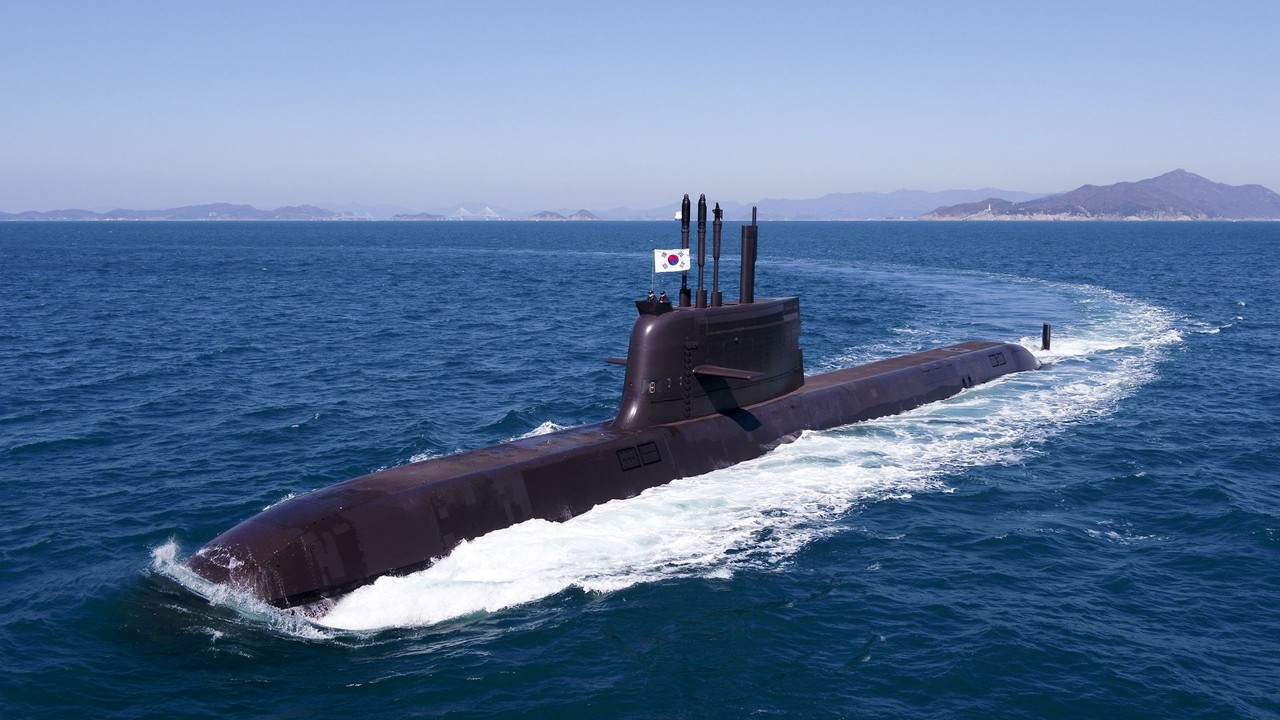

I confess it is a bit frightening to think about the speed of these weapons. Flying at more than five times the speed of sound means crossing hundreds of kilometers in a few minutes, generating so much heat from air friction that the missile needs special materials to avoid melting. It is precisely this mastery over extreme speed that makes hypersonics the most coveted weapons of the moment.
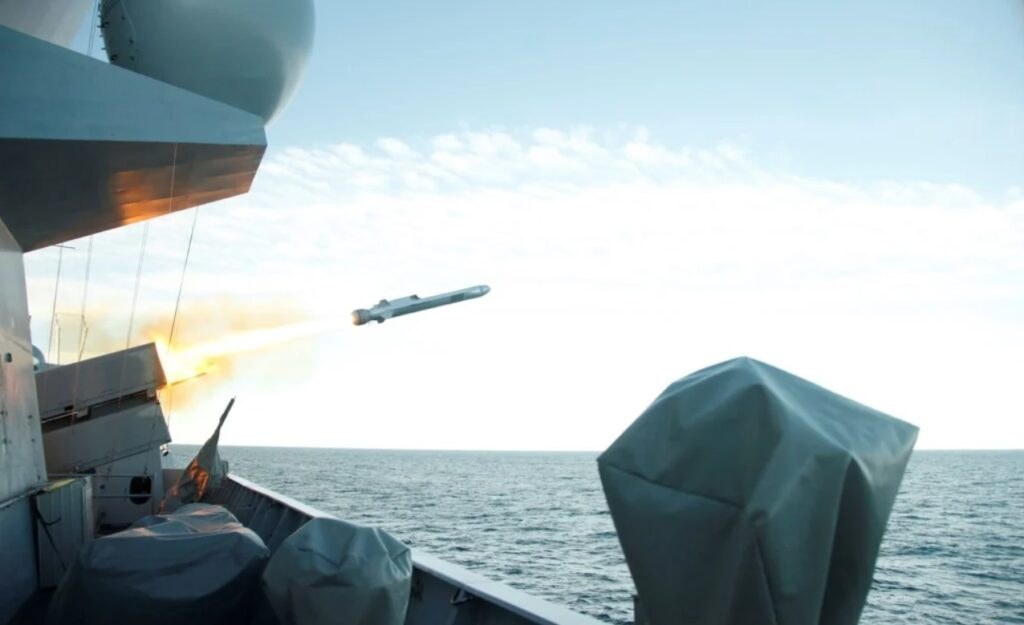
A fighter jet that becomes a ship hunter
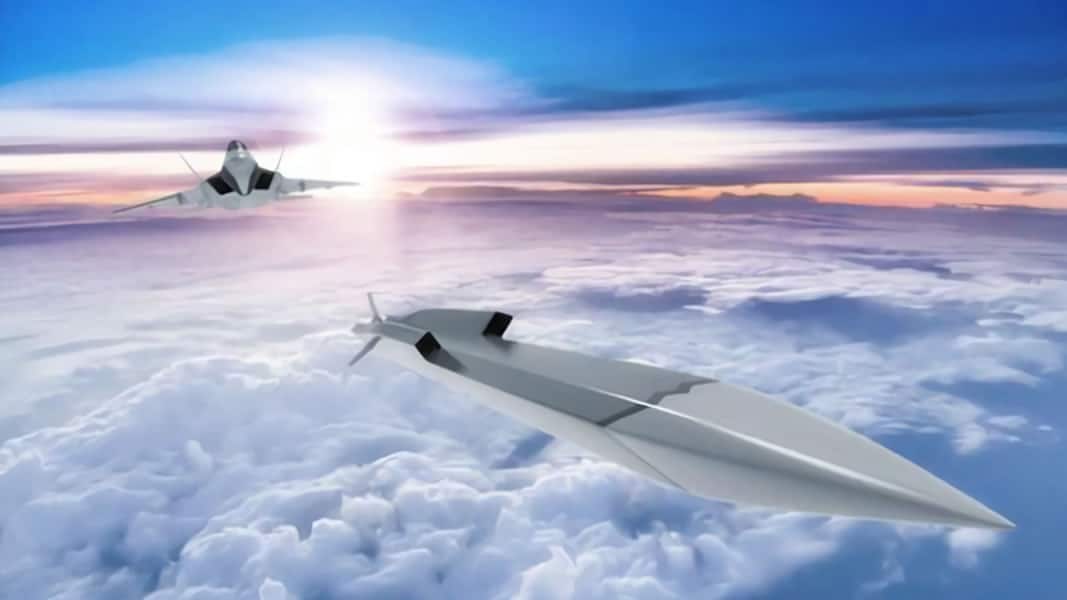
The detail of the missile being launched from the air changes the calculations significantly. Instead of departing from a fixed base on land or a ship, it is carried by a fighter jet, which can take off, fly to an advantageous position, and fire the weapon from where it is most difficult for the enemy to predict. This gives South Korea enormous flexibility when it comes to threatening a fleet.
In practice, it turns a fighter jet into a long-range ship hunter. The aircraft does not need to get close to the target or expose itself to danger, because the hypersonic missile does the heavy lifting, covering the distance at extremely high speed. For a country surrounded by strategic seas and powerful neighbors, having this capability is a way of saying that any fleet approaching will be at risk.
It is worth understanding why South Korea invests so heavily in this type of weapon. The country lives in a tense region, surrounded by powerful navies, and has long been committed to developing its own military technology instead of relying solely on buying weapons from abroad. Mastering the manufacture of a hypersonic missile at home means not being at the mercy of foreign suppliers at a critical moment, as well as placing the Korean industry in a select group capable of producing weapons that few countries in the world can make.
The race that drives the great powers
The Korean revelation enters a fierce global competition. The United States, China, and Russia have been racing for years to develop and deploy hypersonic weapons, and each new country that masters this technology shifts the global board a little. Seeing South Korea unveil such a missile is a sign that the hypersonic club is growing.
This advancement also has a deterrent side. Having a weapon capable of sinking ships at great distances makes any adversary think twice before provoking. It is not necessarily about wanting war, but about showing that you have enough strength to respond to a threat. It is the old logic that sometimes the best way to avoid conflict is to make it clear that you are prepared for it.
There is also a cascading effect that usually accompanies these announcements. When a country reveals a new and powerful weapon, neighbors feel the need to respond with something equivalent, which accelerates everyone’s investments in the same direction. Therefore, each hypersonic missile that appears not only changes the position of the manufacturer but pushes an entire region to catch up, in a cycle that is difficult to stop once it starts. The revelation from South Korea enters precisely into this mirror game, where no one wants to be the last to master the technology of the moment.
Speed as the new currency of power
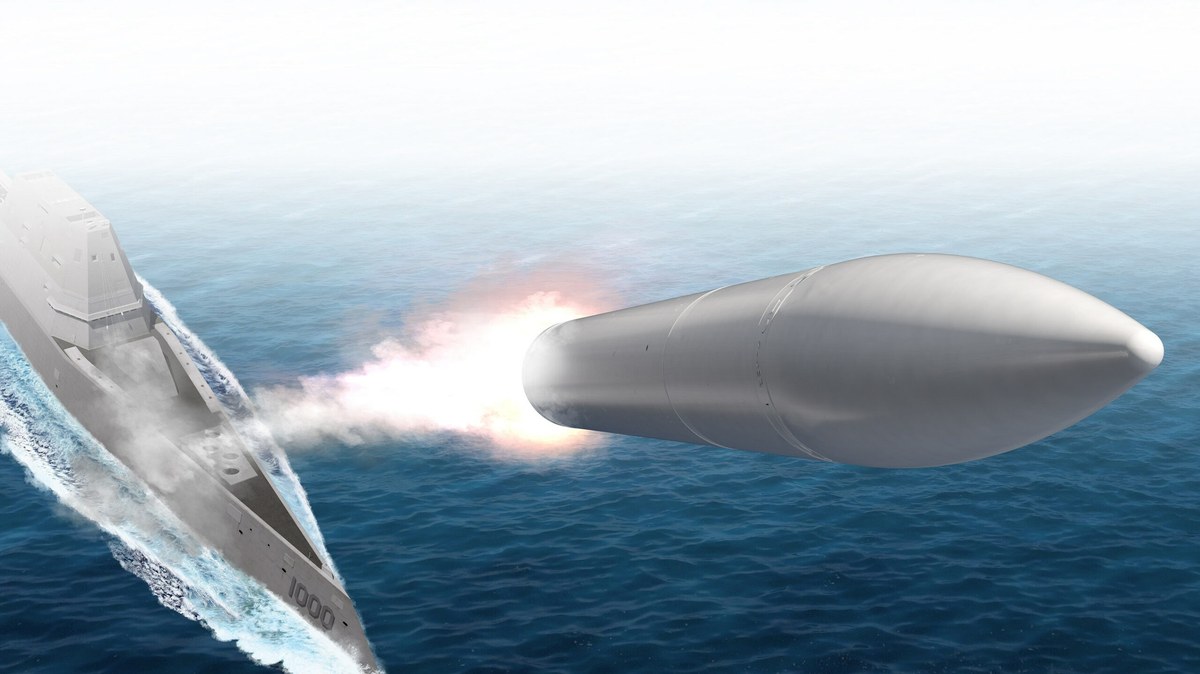
I imagine the magnitude of the technical effort behind such a weapon, capable of flying so fast that the air around it turns to fire, and yet hitting a ship hundreds of kilometers away. It is the kind of technology that defines a country’s place in the world, separating those who depend on others from those who can defend themselves.
By unveiling its hypersonic anti-ship missile, South Korea sends a clear message that it wants to be on the side of those who control their own military destiny. In a time when speed has become a new currency of power, having weapons that fly faster than any defense can keep up with is increasingly a matter of sovereignty. And the race, it seems, is just heating up.
Do you think such fast weapons make the world safer through fear, or just more dangerous?