






 Portuguese
  Spanish


In the freezing cold of the Baltic Sea, a Turkish drone took off from the deck of a warship, flew over the waves, and hit targets in the sea with guided munitions, showing the world how the aircraft carriers of the future might operate without any pilots on board the aircraft.
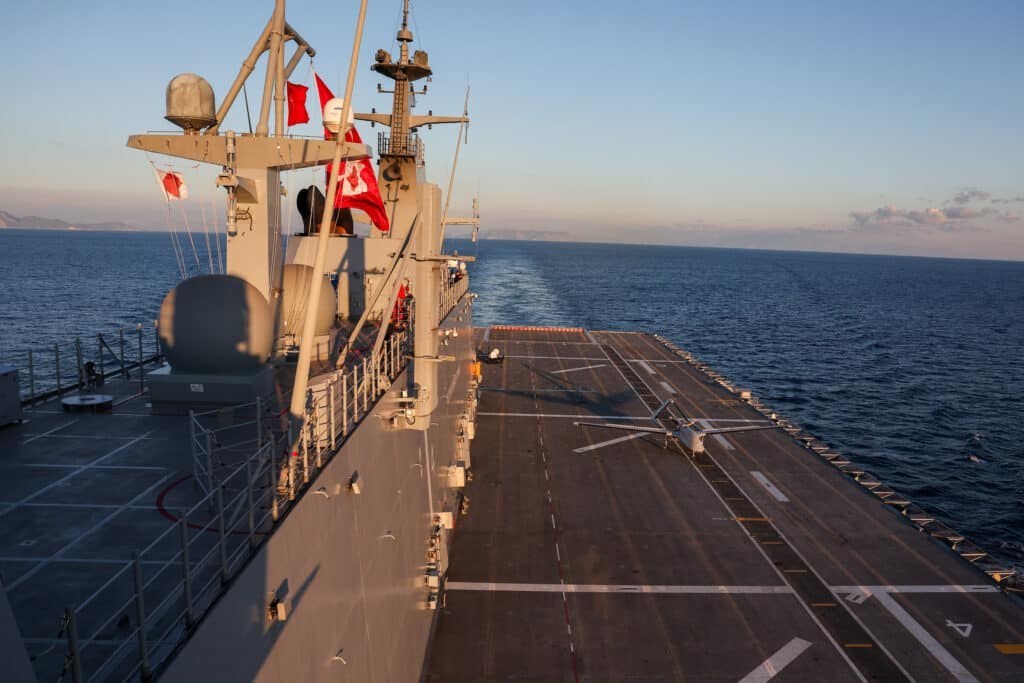
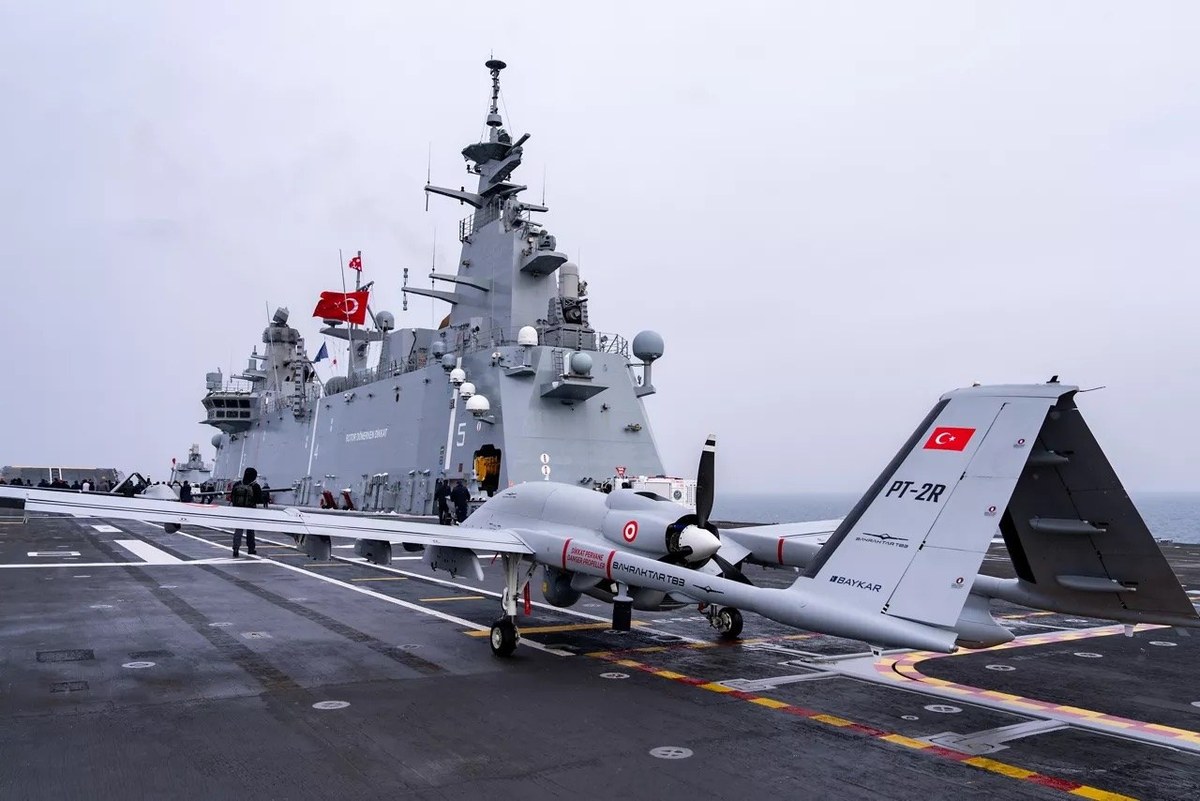
Warfare at sea is changing, and Turkey has just demonstrated this. During a NATO exercise in the Baltic Sea, the Bayraktar TB3 drone took off and landed on the deck of an assault ship, operated amidst strong winds, snow, and freezing temperatures, and still hit targets in the water using guided munitions. All this without a pilot inside the aircraft.
It’s the idea of transforming a ship into a floating drone base, capable of launching and retrieving unmanned vehicles as if sending birds into the sky. For a country that just a few years ago had almost no defense industry of its own, seeing a national drone do this far from home, in the cold sea of northern Europe, is quite a leap.
A drone that takes off from a ship
The great achievement of the TB3 is precisely being able to take off and land in a very short space, on the rocking deck of a ship at sea. Regular aircraft need long and firm runways; a ship offers the opposite, a small, unstable platform surrounded by water on all sides. Making a drone operate under these conditions is a huge engineering challenge.
-
Poland’s Massive Tank and Artillery Purchases Make It Europe’s Largest Land Army Overnight

-
Indonesia Recovers Underwater Spy Drone, Sparking Debate: Is It a Machine or a Warship?
-
UK, Italy, and Japan Collaborate to Build Stealth Fighter Jet Set to Dominate Skies by 2035
-
South Korea Surpasses Germany, Its Former Submarine Mentor, by Advancing to Nuclear Submarines


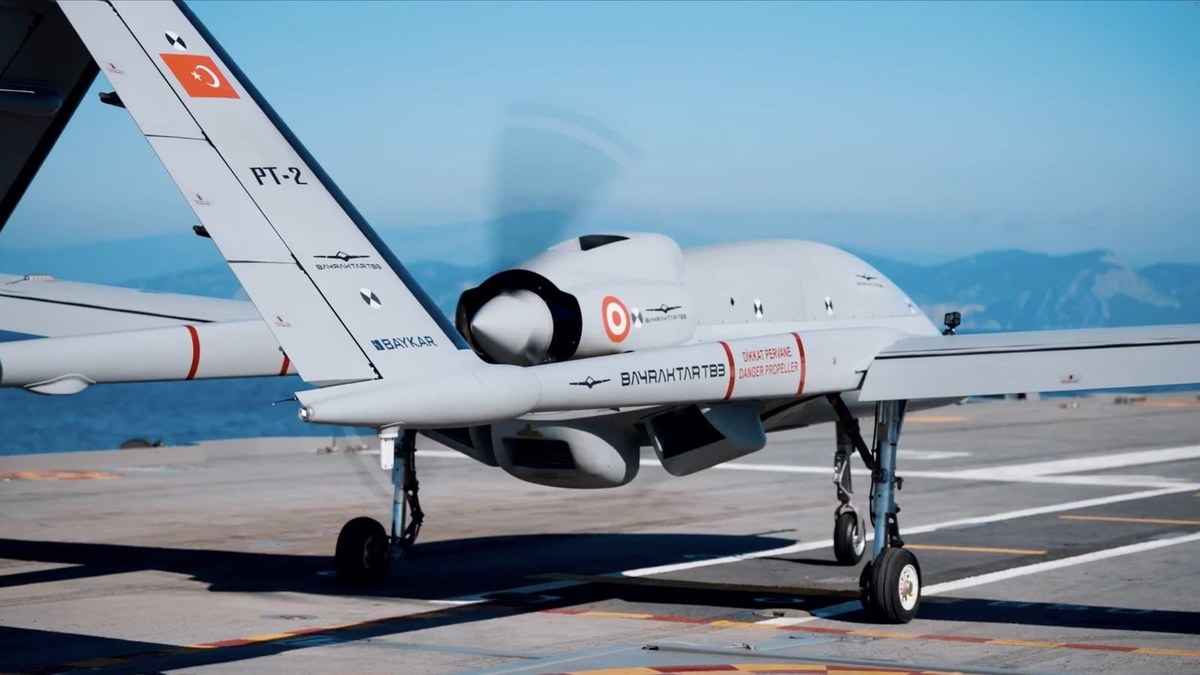
For this, the Bayraktar TB3 has foldable wings, to take up less space when stored, and was designed to take off in a much shorter distance than a traditional fighter jet. I confess that I find it impressive the idea of a pilotless aircraft managing on its own in this hostile environment, taking off from a slippery deck and returning to land exactly in the same place after the mission.
Why this changes warfare at sea
Having drones that operate from ships changes the military game significantly. Until recently, only major powers, with their huge and expensive aircraft carriers and highly trained pilots, could bring air power to the middle of the ocean. With onboard drones, smaller and cheaper ships can carry flying eyes and weapons, without risking the life of any pilot.
This democratizes, in a way, power at sea. A medium-sized country like Turkey can suddenly project force over great distances, monitoring routes, patrolling regions, and attacking targets without needing a gigantic fleet. We are witnessing the birth of a new type of naval warfare, where the number of drones and onboard intelligence can be as valuable as the size of the ships.
There is also a very significant factor in this equation, which is cost. A modern manned fighter jet costs a fortune, requires years to train a pilot, and if shot down, represents a huge human and financial loss. A drone like the TB3, although sophisticated, is much cheaper and more disposable in this sense, allowing it to be used in risky missions that no one would dare with people on board. It is this combination of low cost and low risk that is making navies worldwide look at onboard drones with such interest.
Turkey becoming a defense power
The flight of the TB3 in the Baltic is also a symbol of Turkey‘s rise as a defense power. In just over a decade, the country went from almost nothing to becoming one of the largest exporters of drones in the world, selling its devices to dozens of nations. Turkish drones have already appeared in real conflicts and gained a reputation for being efficient and relatively cheap.
Showing this drone operating from a ship during a NATO exercise, far from home, is a way of telling the world that the Turkish industry has reached a new level. It’s no longer just about manufacturing drones that fly from land runways, but mastering the complex technology of operating them from the sea, a closed club that until now very few countries were part of.
This advancement also has enormous commercial weight. Turkish drones have become one of the country’s main export products, and each demonstration of new capability usually results in orders from other interested nations. By proving that its drone operates from ships in extreme conditions, Turkey opens the doors to selling this technology to navies that dream of having air power at sea without having to afford a traditional aircraft carrier, which is very expensive and within reach of very few countries in the world.
The future flying over the waves
I imagine what this type of demonstration heralds for the coming years, with ships increasingly filled with drones taking off and landing on their own, monitoring the seas, and responding to threats without putting a single human life in the air. It’s a future that mixes fascination and a certain discomfort because it shows how much warfare is becoming automated.
The Bayraktar TB3 flying over the frozen Baltic Sea is an image of this new era. It shows that power at sea no longer depends solely on gigantic aircraft carriers and squadrons of pilots, but also on the ability to make intelligent machines operate on their own in the most challenging environment on the planet. And it suggests that, from now on, many countries will want to have their own swarms flying over the waves.
Do you think drones will end up replacing real pilots in sea wars?


