






 Portuguese
  Spanish
  3 min of reading
  61 comments


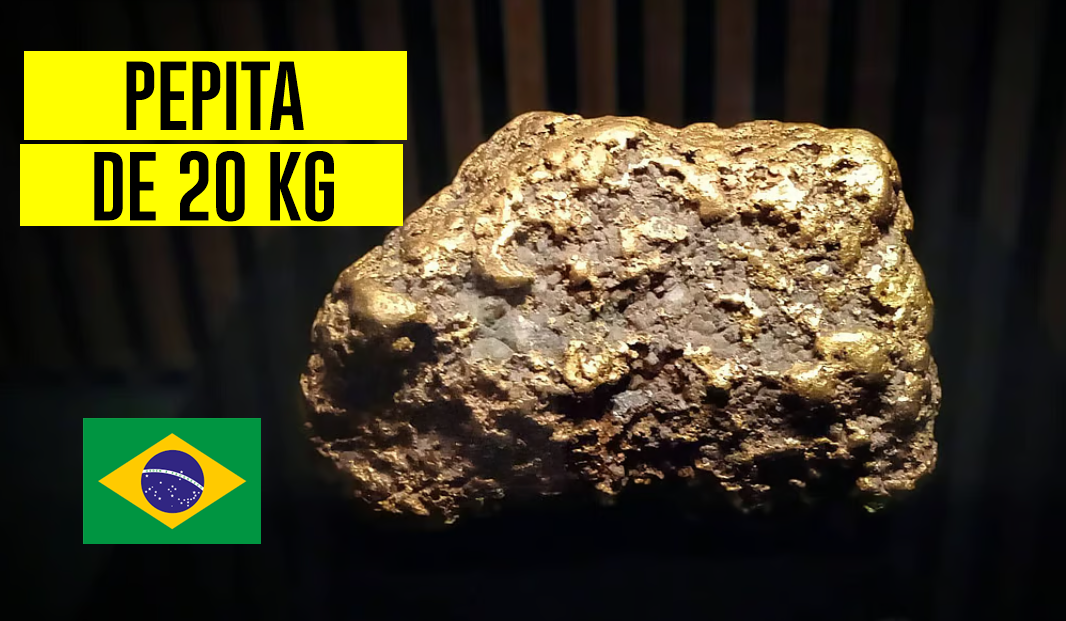


One of the Largest Gold Nuggets in the World, Weighing an Impressive 20 kg, Was Extracted in Brazil and Is Currently on Display in Portugal.
At the Royal Treasure Museum in Lisbon, one piece draws the attention of visitors: a 20 kg gold nugget, the second largest in the world.
Extracted from Brazil during the colonial period, this jewel is not only a symbol of Brazil’s mineral wealth but also a testament to how Brazil’s riches helped boost Portugal’s economy over the centuries.
20 kg Gold Nugget – A Treasure from Brazil
The Royal Treasure Museum houses a vast collection of jewelry and relics from the Portuguese monarchy. Among the highlights is the 20 kg gold nugget, extracted in Minas Gerais during the 18th century.
-
Asian battery manufacturer becomes a partner in a rare earth and niobium project in Minas Gerais, with estimated reserves of 70 million tons and operations expected to start in 2027.

-
While other countries compete for clean energy minerals, the USA looks to Brazil and promises to seek financing for projects involving rare earths, lithium, nickel, and graphite.
-
The mining company was drilling hundreds of meters below the already mapped area in Pará when it discovered new copper and gold zones in Furnas, a project that could operate for 24 years alongside Vale.
-
Rare earths, million-dollar compensation, and a farm in Goiás: understand the case in which a rural producer accuses Serra Verde of occupying his property while the legal dispute drags on for years


This period was marked by the peak of mining in Brazil, with tons of gold being sent to Portugal, boosting the metropolis’s economy and financing the opulence of European royalty.
In addition to the nugget, the museum displays a rough diamond weighing 138.5 carats, also originating from Minas Gerais. These pieces highlight the importance of Brazil’s natural resources in the formation of the Portuguese royal treasury, emphasizing the impact of colonial exploitation on the history of both countries.
The Royal Treasure Museum
The Royal Treasure Museum, inaugurated in 2022, combines tradition and modernity. Located in the National Palace of Ajuda in Lisbon, it features one of the largest vaults in the world and a sophisticated security system.
The space was designed to preserve and display a collection of over a thousand historical pieces, including crowns, jewelry, and insignia that belonged to the Portuguese royalty.
The restoration of the building and the curation of the collection seek to enhance the connection between Portugal and its former territories. The exploration of the natural resources from its former territories should be prominently featured.

The Debate on the Restitution of Cultural Assets
The presence of the gold nugget and the rough diamond in the museum rekindles a debate about the return of historical artifacts to their countries of origin.
In various parts of the world, there is growing pressure for European museums to return artifacts acquired during periods of colonization.
In the Brazilian case, there are many arguments in favor of the restitution of these pieces. Some argue that restitution would be a form of historical reparation, allowing these treasures to be displayed in Brazil and tell their story from a national perspective.
In June 2023, the “Porto Declaration: Repairing the Unrepairable” was launched in Portugal, with 20 demands. Among them are the recognition of colonialism, the criminalization of racism, policies against racial inequality, decolonization of school materials and the anthem, exemption from tuition for students from former colonies, and restitution of objects removed from these territories.
With information from TanaEuropa, dn.pt, and tesouroreal.pt.




O brasil nem existia. Era terra portuguesa. É nosso! Nao roubamos o que é nosso! O brasil deve a portugal e nao o contrário! Nunca aceitaremos. É nosso ate depois da nossa morte¡ a história começa a ser mostrada e o brasil pagará caro! Devem-nos tudo!
Tinha que ser Portugal
Esses portugueses são grandes canalhas,gostam de pegar as riquezas do Brasil mas os brasileiros não podem ir para Portugal