






 Portuguese
  Spanish
  4 min of reading
  0 comments


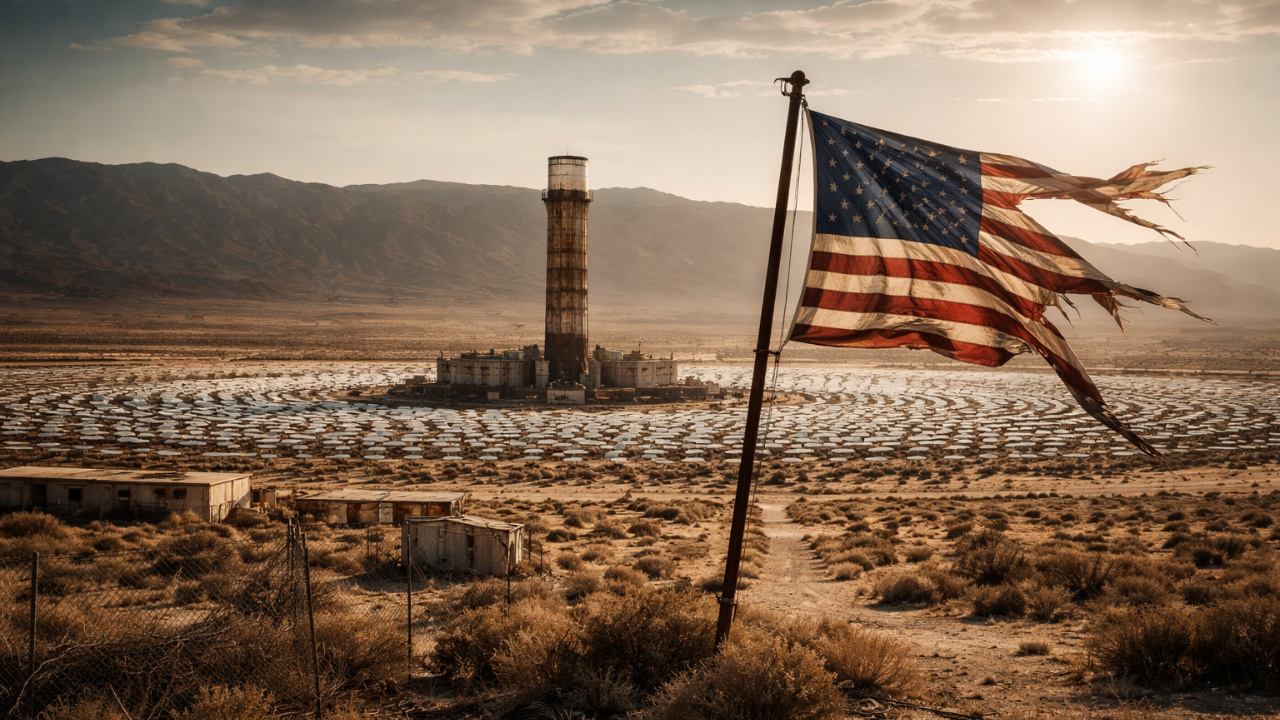
Built As A Global Reference In Concentrated Solar Power, The Crescent Dunes Plant In Nevada Cost US$ 1 Billion, Failed To Reach Its Promised Output And Ended Up Being Decommissioned A Few Years After Commencing Operations.
Before becoming an example of industrial failure, the Crescent Dunes plant was presented as a landmark of global solar energy. The project emerged in 2011, when the U.S. government announced the construction of one of the largest concentrated solar power plants on the planet, in the Nevada desert, near the town of Tonopah.
At that moment, expectations were high. The proposal aimed to generate enough clean energy to power more than 100,000 people. In addition, the venture was treated as a symbol of innovation, energy transition, and American technological leadership in the solar energy sector.
The investment also reflected this ambition. The total cost reached US$ 1 billion, with funding coming from private companies, the U.S. Department of Energy, and large institutional investors.
-
Solar energy can increase property value by up to 10% and become a selling point.

-
Solar and wind energy surpass natural gas for the first time in the world and accelerate energy revolution

-
Africa has about 500,000 cell towers and most still burn diesel to operate, while companies rush to cover antennas with solar energy and avoid signal blackouts.
-
Farmers swapped diesel for solar panels in Pakistan, powered irrigation pumps almost cost-free, expanded rice fields, and now groundwater has become a red alert in the countryside.




Robust Financing Gathered Government, Companies And Global Investors
The Crescent Dunes only came to fruition thanks to a broad financial consortium. Among the investors were NV Energy, SolarReserve, and Citigroup. The project also had direct support from the federal government and the indirect participation of high-profile figures from the financial market, such as Warren Buffett.
At the time, the then-senator from Nevada, Harry Reid, authorized the construction of the plant on public lands in the middle of the desert. The initiative was defended as strategic for the country’s energy future. Kevin Smith, CEO of SolarReserve, even stated that the project was positive “for winning the future.”
The projections were bold. The plant was expected to produce about 500,000 megawatt-hours (MWh) per year over 25 years of continuous operation.
Complex Structure Differentiated Concentrated Solar Energy
Unlike photovoltaic solar energy, which converts sunlight directly into electricity, the Crescent Dunes utilized concentrated solar technology, also known as heliothermal. The system relied on the concentrated heat of the sun to generate energy.
In total, about 10,347 mirrors, known as heliostats, were installed in a spiral pattern over an area of approximately three kilometers. These mirrors tracked the sun’s movement and reflected light to a central tower 200 meters tall.
At the top of the tower, heat was used to warm a mixture of molten salts, stored in large tanks. This heat would be used to produce steam and drive turbines, allowing electricity generation even at night or during periods without direct sunlight.
Operational Delays And Technical Failures Compromised Performance
Despite its grandeur, problems arose early on. Although construction was completed in 2013, the plant only began effective operations in mid-2015. Shortly thereafter, in 2016, a leak in a molten salt tank forced the near-total shutdown of activities for about a year.
Production data never met expectations. In 2018, Crescent Dunes was able to deliver only about 40% of the energy forecasted in its contract. In light of this, NV Energy filed a lawsuit against SolarReserve, claiming breach of contract.
In April 2019, the plant ceased operations. The following year, in 2020, the company in charge declared bankruptcy, and the asset was ultimately expropriated by the U.S. government.
Legal Disputes And Blame Shifting Marred The End Of The Project
After the shutdown, the case became marked by prolonged legal disputes. NV Energy and SolarReserve engaged in litigation for years, debating responsibilities related to project management and technical failures.
The co-founder of SolarReserve, Bill Gould, attributed part of the failure to the Spanish company ACS Cobra. According to him, the company was responsible for the faulty design of the thermal storage reservoir, a key component for the plant’s operation.
At the same time, the high operational costs of the technology began to be pointed out as a decisive factor for the venture’s unfeasibility.
Concentrated Solar Energy Lost Ground To The Photovoltaic Model
When Crescent Dunes commenced operations, the solar energy landscape had already changed. In 2015, concentrated solar technology began to be considered obsolete in the face of the rapid advancement of photovoltaic solar energy.
The main issue was economic. Each megawatt-hour generated by Crescent Dunes cost about US$ 135. In contrast, photovoltaic plants were already operating at costs close to US$ 30 per MWh.
Additionally, the heliothermal system required complex maintenance and heavy infrastructure. As a result, it quickly lost competitiveness in an increasingly efficiency-driven and cost-cutting market.
Today, the structure of Crescent Dunes remains in the Nevada desert as a large “white elephant.” The promise of an energy revolution has given way to an impressive landscape only for those flying over the region, while the project has become a warning about technological risks, strategic choices, and the paths of solar energy in the world.








Be the first to react!