Portuguese
  Spanish


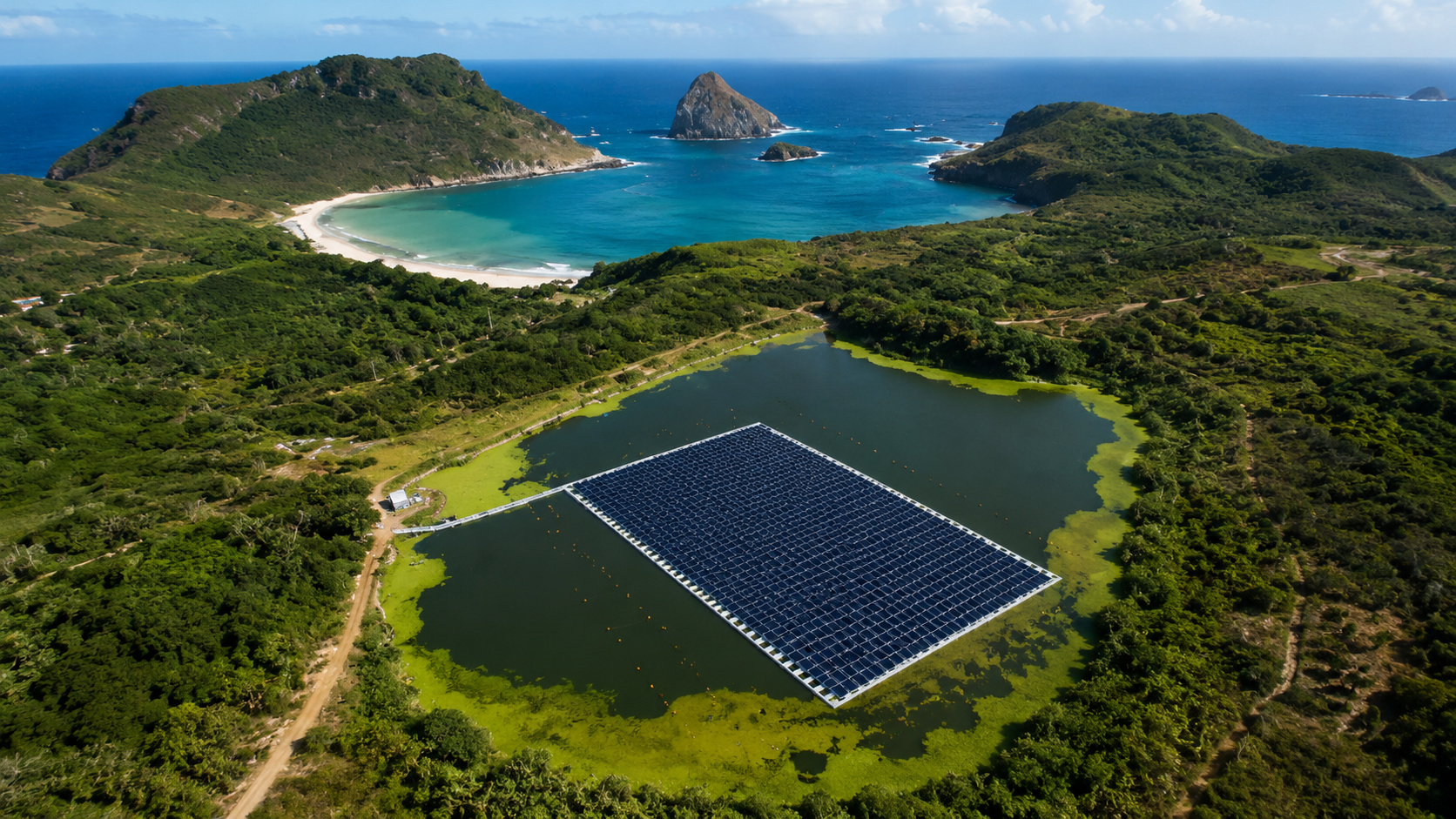

Billion-dollar clean energy project begins to change the reality of Fernando de Noronha with the installation of thousands of solar panels and a promise to drastically reduce diesel use in the Pernambuco archipelago
Fernando de Noronha took a historic step towards energy sustainability last Friday, May 15, 2026, by starting tests of the first phase of the Noronha Verde project, an initiative led by Neoenergia that aims to gradually replace diesel-powered energy generation with renewable sources by 2027.
According to information released by Folha de S.Paulo on May 18, 2026, the first phase of the solar plant began operation with 4,800 photovoltaic panels already installed and connected to the island’s power grid. The complete project foresees an investment of R$ 350 million and the implementation of more than 30,000 solar panels integrated with battery storage systems.
The information was presented during a ceremony held in Fernando de Noronha, with the presence of the governor of Pernambuco, Raquel Lyra, as well as the president of Neoenergia Pernambuco, Saulo Cabral, parliamentarians, state representatives, and island residents.
-
Over 60 Tractors Take to the Streets in Lopera as Solar Parks Compete with Olive Groves, Affecting 13,000 to 100,000 Trees According to Conflicting Reports

-
Green Hydrogen Projects in Northeastern Brazil Stalled for 18 Months Awaiting Government Decree, Delaying Billions in Investments
-
Brazil Concludes Largest Energy Auction in History, Secures 18.97 GW and Mobilizes $12.8 Billion to Ensure Supply Until 2031
-
How Norway Produces More Energy Than It Consumes with Nearly 1,800 Hydropower Plants and Over 1,100 Reservoirs


First phase already represents 15% of the total planned capacity
The new phase of the Noronha Verde project marks the beginning of the energy transition of the archipelago, considered one of Brazil’s main tourist destinations and also one of the country’s most environmentally sensitive areas.
According to the report published by Folha de S.Paulo, the inaugurated phase represents about 15% of the total planned capacity for the future Noronha Verde Solar Plant. Once completed, the structure will have an installed capacity of 22 MWp (megawatt-peak), in addition to a battery system with 49 MWh (megawatt-hour) storage.
In practice, the projected energy volume will be enough to supply approximately 9,000 homes on the mainland, a significant number for an insular territory like Fernando de Noronha.
Additionally, the system will allow for greater energy stability, reduced carbon emissions, and less dependence on fossil fuels transported to the island.
Diesel consumption impresses and accelerates sustainability debate
Currently, most of the energy consumed in Fernando de Noronha still depends on the Tubarão Plant, which predominantly uses biodiesel and diesel oil to maintain the electricity supply.
According to Governor Raquel Lyra, the archipelago consumes about 900,000 liters of diesel oil per month, a figure that underscores the urgency of energy decarbonization in the region.
“Today marks the progress in the energy transition and decarbonization of Fernando de Noronha. The Noronha Verde Plant aligns with the Government of Pernambuco’s purpose of sustainability, encouraging the generation of clean energy,” stated the governor during the event.
Meanwhile, experts point out that projects like this gain global relevance amid international pressure for emission reductions and the expansion of renewable sources.
In this sense, Fernando de Noronha can become a Brazilian model of energy sustainability in isolated areas.
Neoenergia promises full supply of the island with renewable energy
According to Neoenergia Pernambuco’s CEO, Saulo Cabral, the project’s goal is to ensure clean energy autonomy for Fernando de Noronha for the coming years.
“The decarbonization of energy generation on the Island of Fernando de Noronha was a commitment made by Neoenergia with the entire society. The delivery of the first phase of the Noronha Verde Plant, within the agreed timeframe with the federal and state governments, reiterates the company’s commitment to sustainability and environmental preservation. This plant will last at least 20 years,” he declared.
The project was originally launched in November 2025 and involves a partnership between Neoenergia, the Government of Pernambuco, and the Federal Government.
In addition to solar energy generation, Noronha Verde also plans structural improvements on the island. Announced actions include access recovery, modernization of electrical networks, and works related to the Açude da Ema and the traditional Casa de Farinha.
The environmental licensing was conducted by CPRH (State Environmental Agency of Pernambuco), with authorization and consent from ICMBio (Chico Mendes Institute for Biodiversity Conservation).
Fernando de Noronha Airport also undergoes million-dollar expansion
During the official agenda on the archipelago, Governor Raquel Lyra also inaugurated the new passenger terminal at the Governor Carlos Wilson Airport.
The project received an investment of R$ 63 million and significantly expanded the airport’s operational structure. According to the Government of Pernambuco, the terminal increased from 1,055 m² to 2,805 m², allowing capacity to serve up to 500 passengers per hour.
The expansion occurs amid the continuous growth of tourism in Fernando de Noronha, a destination internationally known for its preserved beaches, marine biodiversity, and strict environmental policies.
With this, the archipelago combines tourist expansion and sustainable modernization at a moment considered strategic for the island’s economic and environmental future.
As published by Folha de S.Paulo during coverage conducted in Fernando de Noronha on May 18, 2026, the expectation is that the next phases of the plant will progress gradually until the total completion scheduled for 2027.