






 Portuguese
  Spanish
  5 min of reading
  0 comments


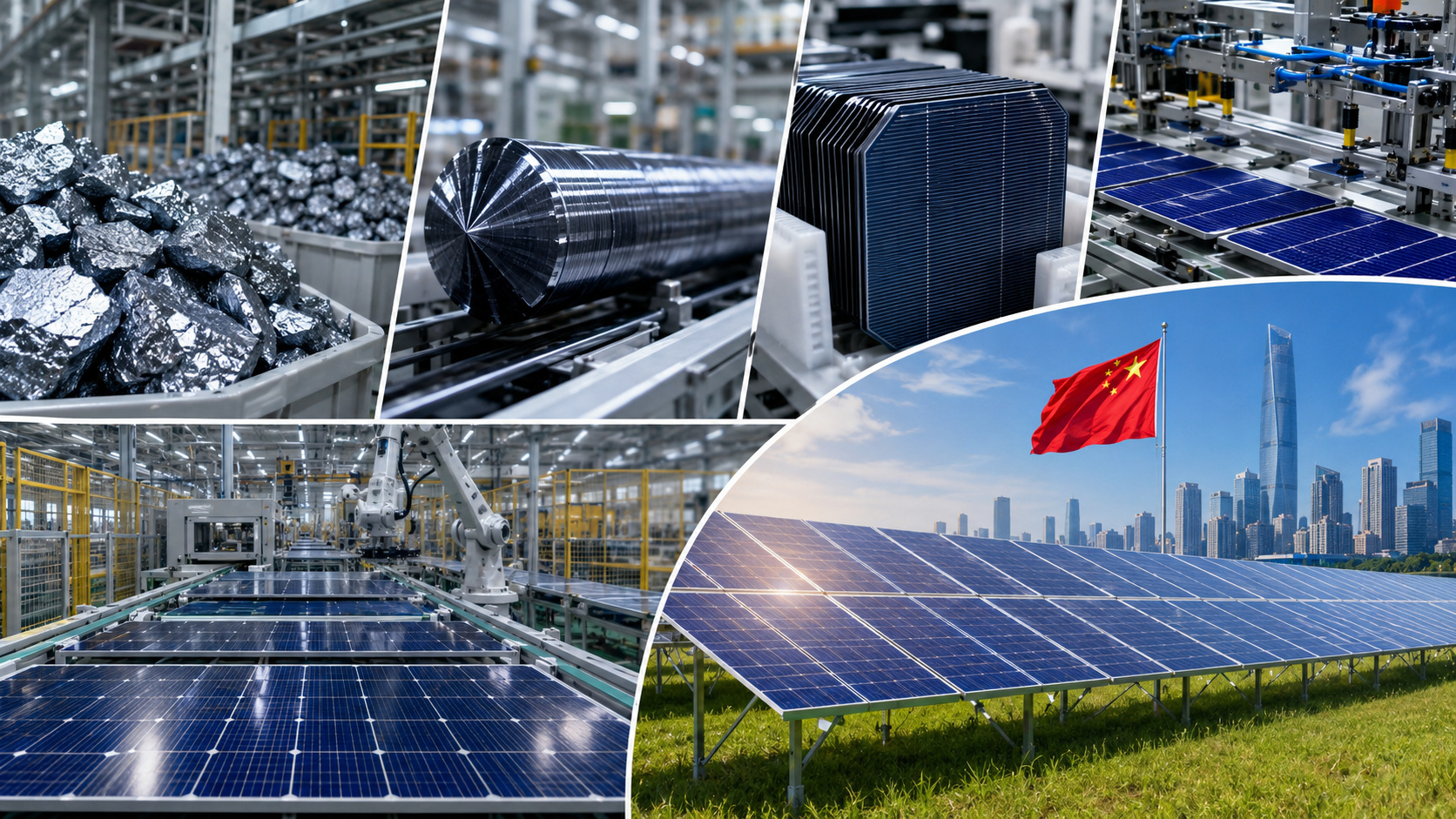
China dominates more than 80% of global solar panel manufacturing and controls critical stages such as polysilicon, wafers, cells, and modules.
Solar energy has become one of the world’s major bets to reduce emissions, lower electricity costs, and accelerate the energy transition. But behind the panels installed on rooftops, plants, and solar farms, there is an industrial chain concentrated on an extreme scale: China has come to control more than 80% of the main global stages of solar panel manufacturing.
This data comes from the International Energy Agency, which points to Chinese dominance in phases such as polysilicon, ingots, wafers, cells, and photovoltaic modules. This means that, even when a solar plant is installed in the United States, Europe, Brazil, or India, an essential part of the technology likely passed through the Chinese industry before reaching the final consumer.
China not only dominates the final assembly of solar panels but almost the entire chain that comes before
The manufacturing of a solar panel begins long before the plate appears ready for installation. First comes the polysilicon, a high-purity material used as the base for solar cells. Then come the ingots, which are cut into very thin wafers, transformed into photovoltaic cells, and only then assembled into the modules seen on rooftops and plants.
-
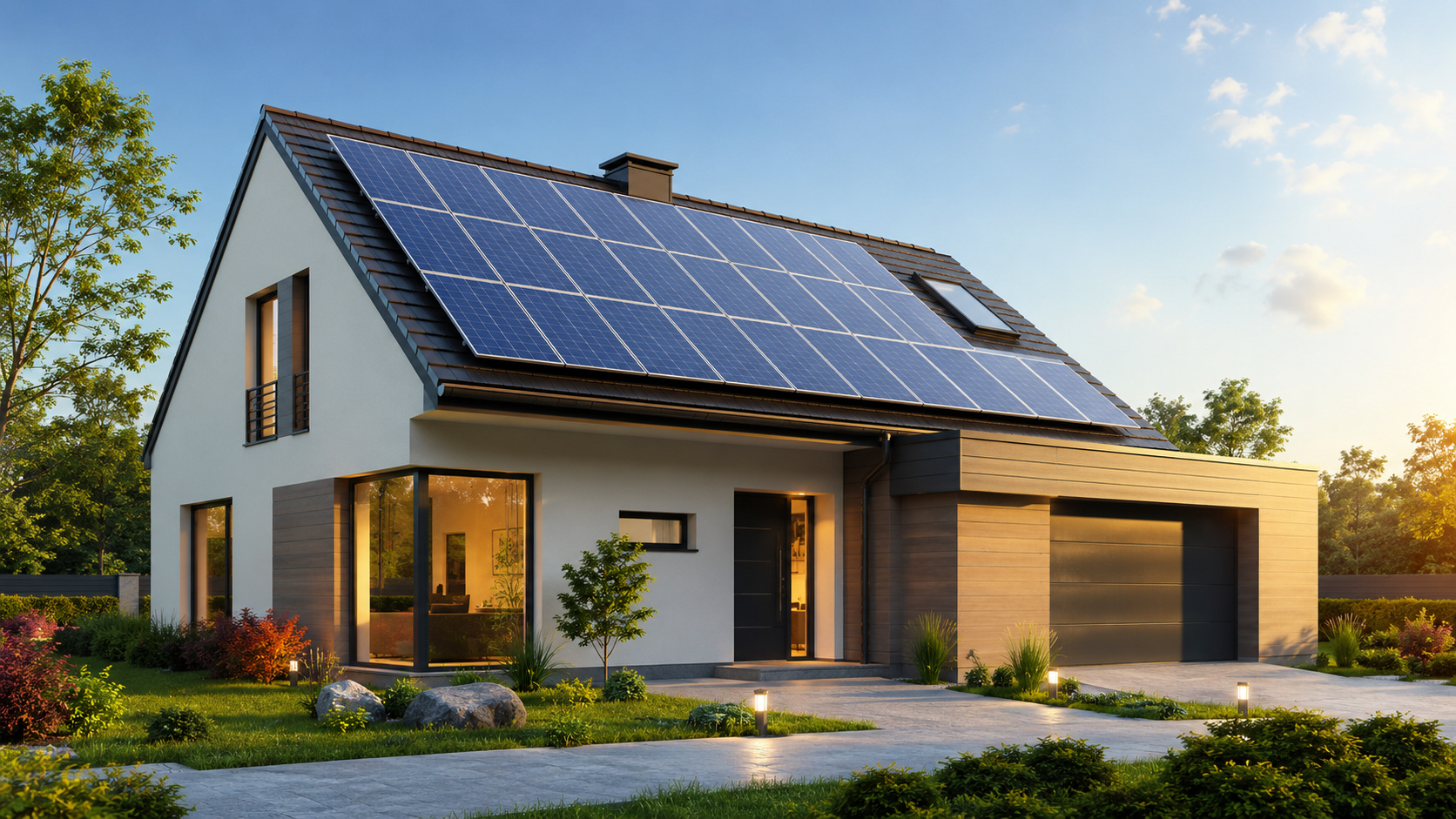
Solar energy can increase property value by up to 10% and become a selling point.

-
Solar and wind energy surpass natural gas for the first time in the world and accelerate energy revolution

-
Africa has about 500,000 cell towers and most still burn diesel to operate, while companies rush to cover antennas with solar energy and avoid signal blackouts.
-
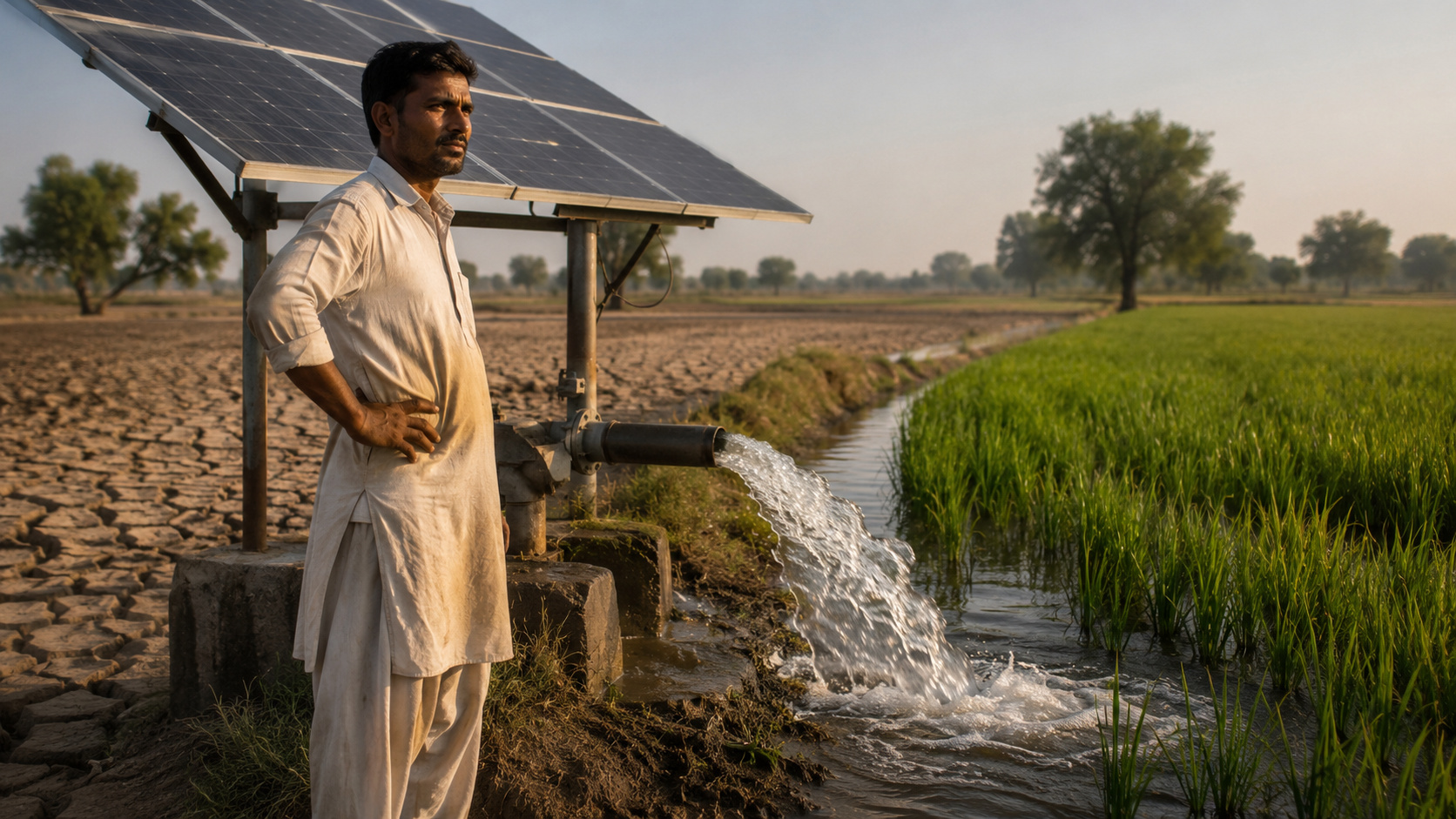
Farmers swapped diesel for solar panels in Pakistan, powered irrigation pumps almost cost-free, expanded rice fields, and now groundwater has become a red alert in the countryside.




According to the International Energy Agency, the Chinese share in all these stages exceeds 80%. This data is decisive because it shows that the dominance is not only in the final product but in the entire mechanism that allows solar energy to be manufactured on a global scale.
In even more critical segments, the concentration is greater. Recent reports from the IEA itself indicate that China accounts for about 85% of the solar chain capacity and could reach 95% in photovoltaic wafers, an essential step for transforming silicon into usable solar cells.
Chinese dominance was born from heavy investment, industrial scale, and vertical integration
China’s advantage did not arise by chance. Since 2011, the country has invested more than $50 billion in new photovoltaic production capacity, about ten times more than Europe in the same period, according to the International Energy Agency.
This investment created giant factories, integrated suppliers, specialized labor, proprietary industrial equipment, and a verticalized chain where various production stages are concentrated in the same economic ecosystem. The result was a dramatic drop in costs and a production capacity difficult to quickly replicate outside of Asia.
By controlling everything from basic inputs to machines used in manufacturing, China reduced internal bottlenecks and accelerated production. For Western competitors, the challenge is not just to open a module factory, but to rebuild a complete chain that involves industrial chemistry, metallurgy, semiconductors, logistics, cheap energy, and suppliers at scale.
The world gained cheaper solar panels but became dependent on a single industrial hub
The Chinese expansion helped make solar energy much more accessible. Mass production reduced prices, accelerated installations, and allowed developing countries to also expand photovoltaic projects at a faster pace.

The problem is that this cost reduction came with strategic dependence. Today, many countries want to use solar energy to reduce dependence on oil, gas, and coal, but end up depending on China to buy the equipment that makes this transition possible.
This concentration worries governments because any trade shock, geopolitical dispute, export restriction, tariff, or logistical crisis can affect solar projects on several continents. The energy generated is local, but the industrial base that makes this generation possible is heavily concentrated on the other side of the world.
United States and Europe try to react, but the scale difference remains gigantic
The United States and the European Union have started to encourage local factories for panels, cells, and solar components. The goal is to reduce vulnerabilities and recover part of the production lost in recent decades to Asia.
Even so, the scale difference is still huge. China not only dominates current production but also suppliers, equipment, costs, manufacturing knowledge, and expansion capacity. This combination allows for expanding production at a much faster pace than regions still trying to rebuild their industrial base.
Recent studies on the solar chain indicate that even with new industrial policies, China is expected to remain the dominant supplier until 2030, especially in lower value-added components and highly scalable stages.
The control of wafers shows why dependence is so difficult to break
Among all the stages of the solar chain, wafers clearly show the size of the Chinese advantage. They are ultra-thin silicon slices cut from ingots and used as a base to manufacture photovoltaic cells.

The International Energy Agency points out that the Chinese share in this stage reaches about 95% of global capacity. This creates a critical bottleneck: even if another country sets up module factories, it may still depend on wafers produced in China to keep the line running.
This point explains why “manufacturing solar panels” does not necessarily mean controlling the chain. A country can assemble the final product locally but continue to depend on previous stages, where the most strategic materials and part of the industrial knowledge hardest to replace are located.
The solar dispute has ceased to be merely environmental and has become a silent industrial war
Solar energy is often presented as a climate solution, but the panel chain has also become a dispute for industrial power. Whoever controls manufacturing controls price, scale, supply, expansion pace, and part of the energy security of other countries.
The Chinese dominance places Beijing in a strategic position within the green economy. Just as oil and gas shaped the geopolitics of the 20th century, solar panels, batteries, critical minerals, and power grids have begun to shape the economic dispute of the 21st century.
The difference is that now, the dependency does not appear in barrels of oil or visible pipelines. It is embedded in wafers, solar cells, photovoltaic modules, industrial machines, and supply contracts that support entire plants.
The Chinese advance shows that the energy transition also depends on factories, logistics, and technological dominance
The race for clean energy will not be won only by those who install more solar panels. It will also be won by those who can manufacture, export, finance, and control the equipment that fuels this global expansion.
China understood this logic before many competitors and built an industrial structure capable of turning the Sun into a mass export product. The country does not just sell panels but an entire production chain that goes from refined silicon to the installed module.
While Europe and the United States try to reduce dependency and rebuild part of the industry, Beijing already starts from an advantage that is difficult to reach. The world wants to accelerate solar energy, but the mechanism that drives this acceleration remains concentrated in a country that has turned the energy transition into industrial power.








-

1 person reacted to this.