






 Portuguese
  Spanish


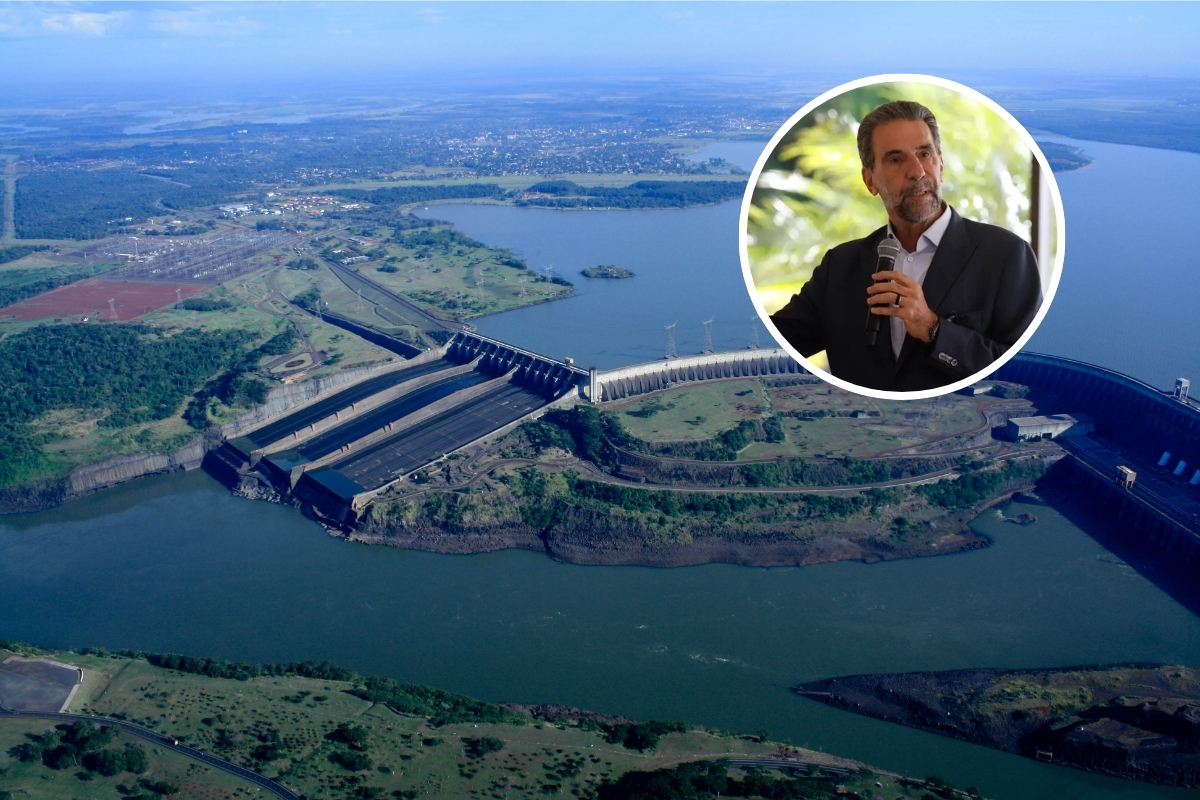

Brazilian General Director of Itaipu, Enio Verri, states in Paraná that the tariff will be lower in 2027 after a review between Brazil and Paraguay, with a promise of cheaper energy for consumers
The center of the discussion about Itaipu has become the statement from Enio Verri, Brazilian General Director of Itaipu. Amid negotiations between Brazil and Paraguay, he stated that the plant should reach 2027 with the lowest tariff in the country.
The statement elevates the tariff review to a new level. What was previously limited to negotiations between the two sides of the binational now has a direct impact on electricity bills and the cost of energy for millions of Brazilians.
Enio Verri places the tariff at the center of the dispute
Commenting on the ongoing negotiation, the Brazilian General Director of Itaipu said that the expectation is to announce by December 2026 the tariff for the following year or even for the coming years, depending on the final format of the agreement.
-
Brazilian Energy Auction Secures $4.6 Billion in Projects to Enhance Power Grid and Prevent System Bottlenecks, Achieving an Average Discount of 51.58%

-
Gas-powered generator reignites emergency energy debate in Brazil, offering night and rain operation without open roof, as solar with battery can exceed $7,500 installed.

-
Itaipu Dam Stuns Visitors with First Spillway Opening in 2026, Showcasing the Power of Water Once Again
-
USP researcher creates thesis to attract international funds for the country’s electric energy sector


The strongest statement came next. For Verri, one thing is already defined in the direction of the negotiation: starting in 2027, Itaipu should operate with the lowest tariff in the country.

Director’s statement reinforces promise of cheaper energy
The statement has an immediate practical effect on the public debate. When the Brazilian General Director of Itaipu links the review of the agreement to a decrease in the tariff, the focus shifts from the diplomatic table to the consumer’s pocket.
This point helps explain why the statement gained relevance. It is not just an internal change at the plant, but a promise of cheaper energy for families, workers, and productive sectors.
Current tariff still operates with an injection of US$ 285 million
Between 2024 and 2026, the unit cost of electricity services from Itaipu was set at US$ 19.28 per kilowatt per month. Nevertheless, the tariff sold on the Brazilian side remained at US$ 17.66, supported by an additional injection of US$ 285 million.
According to Agência Brasil, this structure is valid until the end of December, when Brazil and Paraguay will have to conclude the new modeling. It is at this point that Verri’s statement connects directly with what will be charged in the coming years.
Brazil wants to reduce price and Paraguay tries to increase revenue
The revision of Annex C exposes different interests between the two countries. Brazil seeks to lower the price of energy for the domestic market, while Paraguay tries to increase the revenue obtained from its share of generation.
As the neighboring country does not consume its entire quota of 50%, interest is growing in valuing this surplus. One of the possibilities under analysis is to allow the sale of this energy in the Brazilian free market.
Weight of Itaipu expands scope of declaration

Itaipu does not play a secondary role in the electrical system. The plant operates with 20 generating units of 700 megawatts each, totaling 14,000 megawatts of installed capacity.
Today, it accounts for about 8% of the demand in the Brazilian market and 78% of the Paraguayan market. Therefore, when the Brazilian general director of the plant speaks of a lower tariff, the potential effect goes beyond rhetoric and reaches the entire region.
Modernization until 2035 follows new moment of the plant
The hydroelectric plant is also undergoing a technological upgrade process that began in May 2022. The plan provides for 14 years of execution and about US$ 900 million in investments.
The changes affect electronic systems, computational systems, control center, substation, and storage areas. At the same time, the company is still exploring ways to increase generation with productivity gains and the eventual installation of new turbines.
The statement by Enio Verri, as the Brazilian general director of Itaipu, repositions the discussion about the plant around a simple and direct point: the price of energy. The promise of a lower tariff in 2027 has become the main axis of negotiation.
If this projection is confirmed, Itaipu enters a new cycle with a direct impact on consumption, transfer, and competitiveness. This pressures the region and changes the strategic reading of Latin America.


