






 Portuguese
  Spanish
  5 min of reading
  0 comments


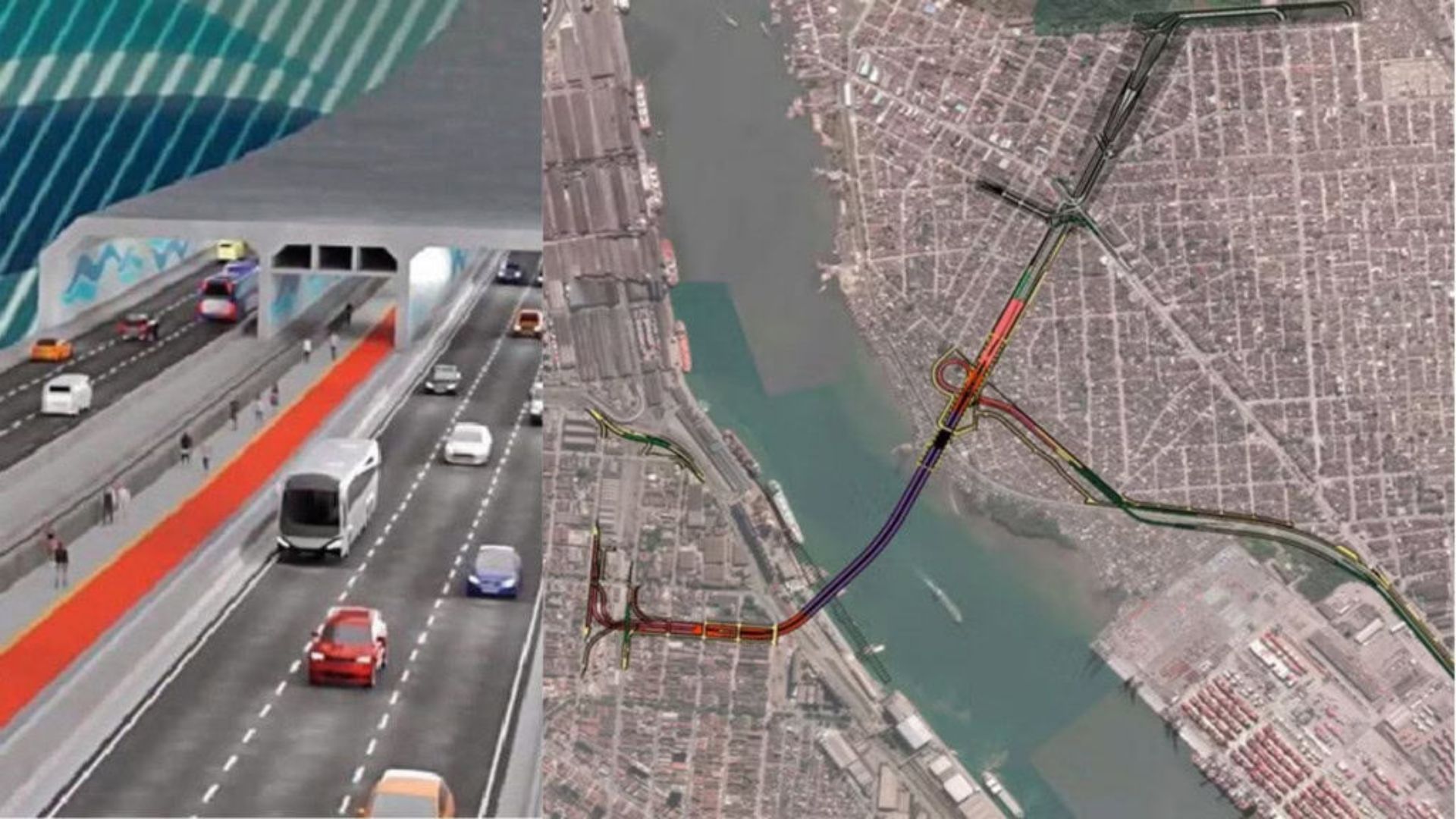
The Tunnel Between Santos and Guarujá Will Use an Unprecedented Technique in Brazil, with Floating Concrete Blocks That Are Later Sunk. The Project Promises to Shorten the Trip Between the Two Cities and Relieve Traffic at the Port of Santos.
The project that promises to shorten the crossing between Santos and Guarujá to about 2 to 3 minutes takes a decisive step this Friday (05), when B3 holds the auction that will define who will build and operate the first submerged tunnel in Brazil.
Two foreign groups are competing for the contract: Acciona (Spain) and Mota-Engil (Portugal), the latter with capital from the Chinese CCCC, responsible for the tunnel under Lake Taihu in China.
How The Immersed Tunnel Works
Instead of excavating the estuary’s bed, the project will adopt the immersed tunnel method. According to information from the newspaper Folha de S. Paulo, the reinforced concrete elements are built in a dry dock, receive temporary sealing, and begin to float.
-
Survivor of 1966 SS Daniel J. Morrell Shipwreck in Lake Huron Recounts 38-Hour Ordeal in Extreme Cold

-
The Greatest Hoax in World Cup History? The Film That Denied Brazil’s 1958 Victory and Exposed How Fake Evidence Can Seem Convincing on TV
-
Fake South Korean Online Stores Offer Shopping Thrill Without Spending Money or Receiving Products
-
The War of Jenkins’ Ear: How a Severed Ear Sparked One of the 18th Century’s Most Unusual Conflicts


Towed to the defined point in the channel, they are then sunk through controlled ballasting and aligned on the previously prepared bed.
Subsequently, the joints are connected with the aid of hydraulic jacks, the internal seals are removed, and finishing begins. Finally, the entire set is covered with stones for protection.
Auction and Concession Model
The bidding process provides for a public-private partnership, with a 30-year concession for construction, operation, and maintenance.
The winner will offer the largest discount on the public compensation throughout the contract and may charge tolls from vehicles.
The notice was restructured throughout 2025 to enhance attractiveness and consolidate the schedule.
Trace and Capacity of the Tunnel
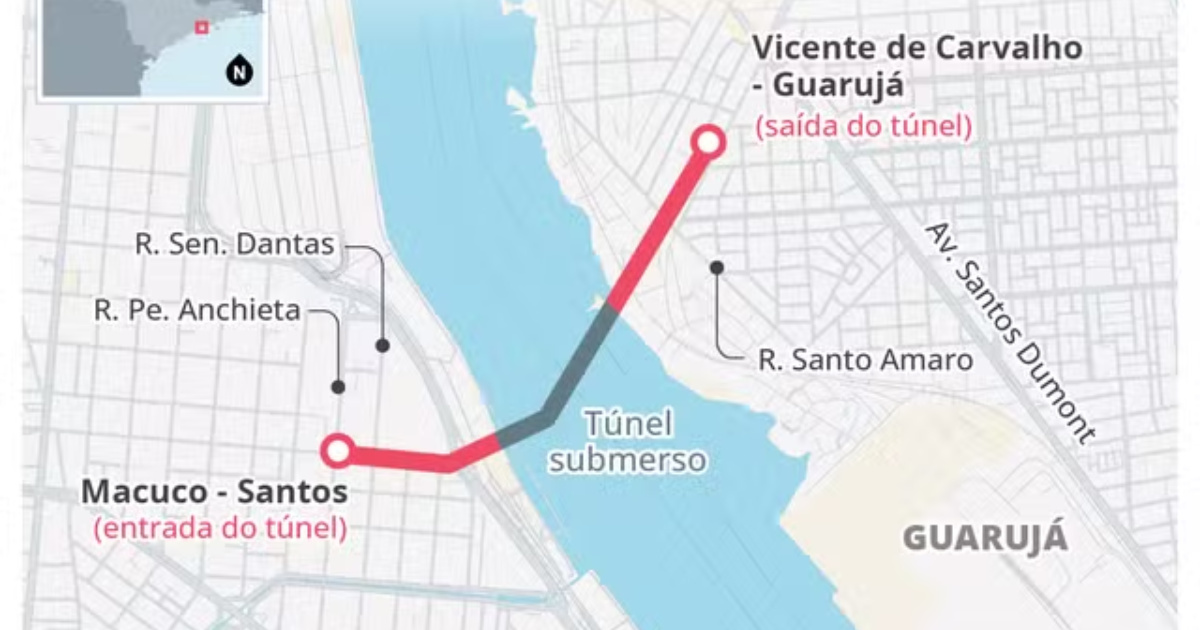
The connection will be 1.5 kilometers long, of which 870 meters corresponds to the submerged section under the estuary.
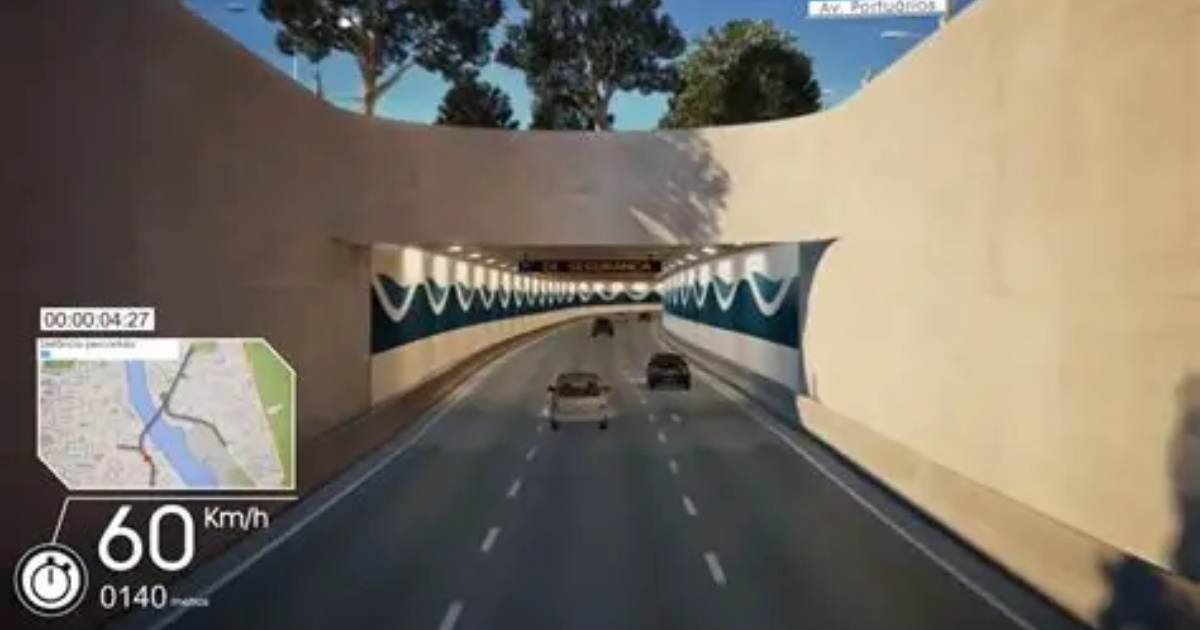
The current design foresees two lanes in each direction for vehicles, a exclusive corridor for the VLT, and access for pedestrians and cyclists.
The crossing, currently done by ferries competing for space with cargo ships from the Port of Santos, will take place in a few minutes, reducing queues and freeing the channel for commercial navigation.
Why Tunnel and Not Bridge
Geotechnical studies indicate subsoil instability in the region for a large-diameter excavated tunnel.
The hypothesis of a bridge was dismissed due to aviation restrictions from the Santos Air Base and the height of ships using the channel, which would require spans and clearances incompatible with port operations.
The immersed method allows for maintaining the operational depth and reducing interference with maritime logistics.
Costs and Timeline of The Work
The reference value of the project has been updated to R$ 6.8 billion. Of the total, up to R$ 5.1 billion will come from public funding divided equally between the Union and the Government of São Paulo.
The remainder will be the responsibility of the future concessionaire.
The official forecast is to start the works in 2026 and conclude the execution in about five years, counted from the beginning of the work, conditioned to the contracting and the stages of licensing and detailed engineering.
Technical Visits for Knowledge Transfer
Since the technology has never been applied in Brazil, authorities have sought references in projects abroad.
The Minister of Ports and Airports, Silvio Costa Filho, and the Governor Tarcísio de Freitas made visits in Europe to learn about the processes of manufacturing the elements, towing logistics, and immersion.
Costa Filho stated that the same technology will be employed in Santos.
Tarcísio described the visit as an example to be followed to deliver a high-standard solution to the Baixada Santista.
In May, a second delegation with lawmakers and authorities — including Mayor Rogério Santos and TCU Minister Walton Alencar — returned to the construction sites to observe the element factory model and quality protocols.
Current Situation of The Crossing
Today, those relying on the crossing by ferry face 18 minutes of travel time just on the water, not counting any queues.
By land, the nearest alternative totals about 43 km, with time often reaching an hour.
With the tunnel, the projection is to shorten the trip to 2 to 3 minutes, with predictability for residents, port workers, and service providers.
Assembly Stages
The tunnel will be assembled from six elements in concrete, produced at a site near the estuary. After the dry dock is flooded, the blocks, still floating, are towed to the channel.
The immersion occurs by gradually filling internal pools, controlled for millimetric positioning in the berth prepared on the bed.
The connections are sealed, the set receives a protective coating with rockfill, and the work advances to internal installations, ventilation, drainage, and safety systems.
International Reference: Fehmarnbelt Tunnel
The main technical inspiration is the Fehmarnbelt Tunnel in Europe, currently the largest construction site on the continent.
On June 17, 2024, King Frederik X inaugurated the first element of the project.
In total, there will be 89 elements — 79 standard with 217 meters in length and about 73 thousand tons, plus 10 special to house systems.
When completed, the tunnel will have 18.1 km, with two lanes in each direction and rail lines, connecting Rødby (Denmark) to Puttgarden (Germany).
The Denmark finances most of the work, estimated at 7.4 billion euros with its connections, and Germany invests in road and rail integration within its territory.
The opening is scheduled for 2029, with an estimated toll for cars around 70 euros.
Other International Experiences
Companies interested in the Brazilian auction have experience with similar projects. Mota-Engil has a partnership with CCCC, the builder of the Taihu Tunnel (10.8 km) in China. Acciona has a history in large maritime and underground infrastructures.
The presence of groups that master the method is considered essential to mitigate risks of design, manufacturing, and installation of the elements.





-

-

-

-

-

-

14 people reacted to this.