Portuguese
  Spanish


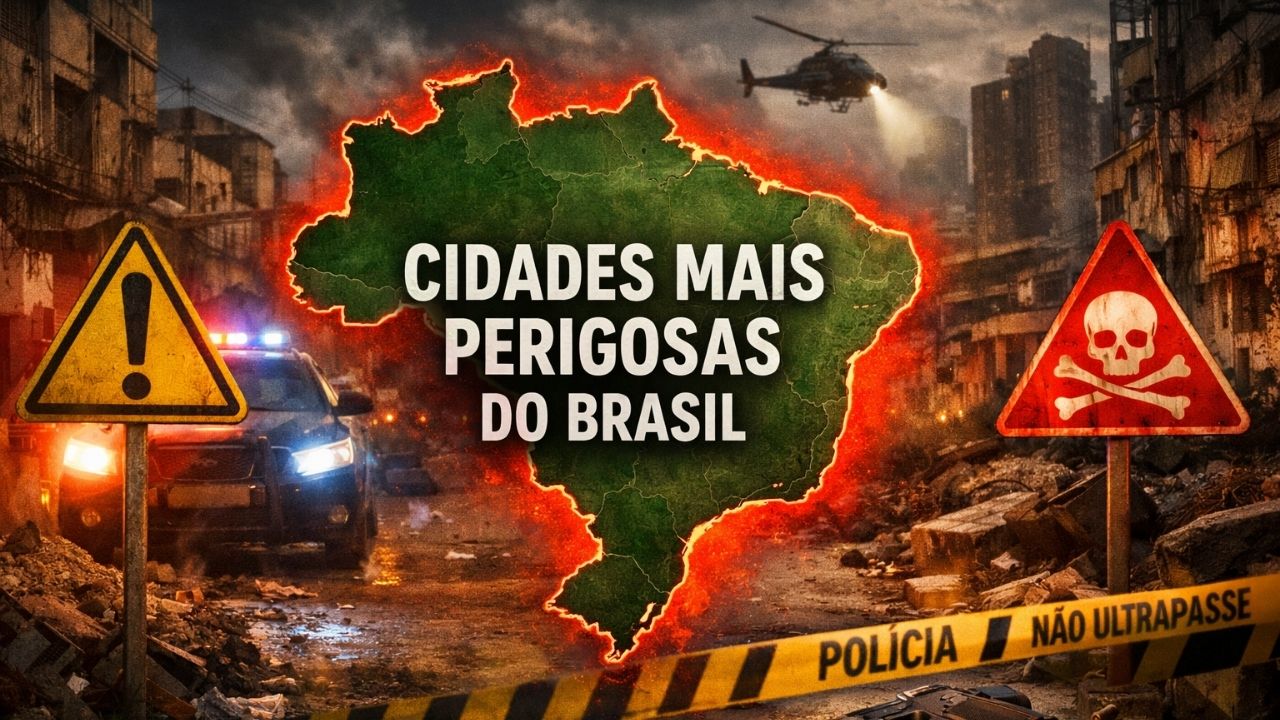


Check The Updated Ranking Of The Most Dangerous Cities In Brazil, Based On Intentional Violent Death Rates Per 100 Thousand Inhabitants. See Which Municipalities Lead The Violence Ranking.
Brazil faces a continuing challenge with high rates of crime in some of its most dangerous cities, especially in the Northeast and North regions.
Recent surveys from the Brazilian Yearbook of Public Safety 2026 identified municipalities that stand out for their high rates of intentional violent deaths per 100 thousand inhabitants, a measure that includes intentional homicides and other serious crimes.
Among the municipalities with the worst rates are Jequié (BA), Simões Filho (BA), Camaçari (BA), and Cabo de Santo Agostinho (PE).
-
21-Year-Old Brazilian Student Turns Homemade Popsicle Hobby into $100,000-a-Month Business

-
Australia Dumps Hundreds of Thousands of Tons of Gravel into Rivers to Restore Natural Barriers and Reverse 150 Years of Erosion

-
Bird-Inspired Robot Glides on Air Currents up to 10 m/s, Balances Itself, and Aims to Save Energy in Industrial Inspections and Meteorological Balloons
-
Eight Artists Secretly Lived in a Hidden 70m² Apartment Inside a Shopping Mall in Brazil for Four Years



Ranking Of The Most Dangerous Cities In Brazil In 2026
Official data indicates an especially intense clustering of violence in the Northeast.
The ranking of the most dangerous cities in Brazil in 2026, based on intentional violent deaths (IVD) per 100 thousand inhabitants, shows that public managers and security authorities face persistent difficulties in curbing crime.
- Jequié (BA)
- Santo Antônio de Jesus (BA)
- Simões Filho (BA)
- Camaçari (BA)
- Cabo de Santo Agostinho (PE)
- Sorriso (MT)
- Altamira (PA)
- Macapá (AP)
- Feira de Santana (BA)
- Juazeiro (BA)
- Teixeira de Freitas (BA)
- Salvador (BA)
- Mossoró (RN)
- Ilhéus (BA)
- Itaituba (PA)
- Itaguaí (RJ)
- Queimados (RJ)
- Luís Eduardo Magalhães (BA)
- Eunápolis (BA)
- Santa Rita (PB)
- Maracanaú (CE)
- Angra dos Reis (RJ)
- Manaus (AM)
- Rio Grande (RS)
- Alagoinhas (BA)
- Marabá (PA)
- Vitória de Santo Antão (PE)
- Itabaiana (SE)
- Caucaia (CE)
- São Lourenço da Mata (PE)
- Santana (AP)
- Paragominas (PA)
- Patos (PB)
- Paranaguá (PR)
- Parauapebas (PA)
- Macaé (RJ)
- Caxias (MA)
- Parnaíba (PI)
- Garanhuns (PE)
- São Gonçalo do Amarante (RN)
- Alvorada (RS)
- Jaboatão dos Guararapes (PE)
- Duque de Caxias (RJ)
- Almirante Tamandaré (PR)
- Castanhal (PA)
- Campo Largo (PR)
- Porto Velho (RO)
- Ji-Paraná (RO)
- Belford Roxo (RJ)
- Marituba (PA)
These numbers highlight that the issue of lethal violence remains concentrated in smaller localities, in contrast to the capitals and metropolitan areas of the South and Southeast regions.
Why Do Some Cities Stand Out As More Dangerous?
Public safety experts point to several factors that contribute to certain cities appearing among the most dangerous in Brazil.
Social inequality, lack of economic opportunities, and the presence of criminal organizations directly influence homicide rates and other violent crimes.
Additionally, fragmentation of policing and insufficient prevention in the peripheries foster a scenario where conflicts between factions, drug trafficking, and arms lead to confrontations resulting in deaths.
Regions With The Highest Urban Violence Rates
The Yearbook also reveals regional patterns of urban violence.
While most of the cities with high rates are in the Northeast, the Southeast and South regions have significantly lower rates of intentional violent deaths.
This geographical inequality reflects historical differences in public policies, security investments, and social conditions.
National Context Of Public Violence
Although Brazil has recorded a decrease in the overall homicide rate in recent years, the number of violent deaths remains a concern and is still high compared to other countries in Latin America and the world.
The Brazilian Yearbook of Public Safety showed, for example, that the total number of intentional violent deaths reached 44,127 in 2024.
On the other hand, this national reduction does not reflect uniformly across all cities, and many of the localities with the highest rates do not keep pace with the same rate of improvement, reinforcing the need for specific public policies and social and police prevention programs.
The Impact On The Life Of Communities And Public Policies
The most dangerous cities in Brazil face direct consequences on the quality of life of their residents.
The fear of violence can limit movement, impact local businesses, and influence decisions regarding housing and employment.
Public safety authorities emphasize that integrated actions between state and municipal governments, investments in education, infrastructure, and social programs are crucial to reducing violence rates in the long term.
Perspectives And Future Challenges
Although there are signs of improvement in national statistics, the fact that smaller municipalities lead the rankings of the most dangerous cities in Brazil reveals structural challenges that require more effective security policies, enhancement of community policing, and social inclusion programs.
Continuous monitoring of violence indicators and the creation of strategies adapted to each local context are required to effectively reduce insecurity and improve the lives of affected populations.
Source: Meu Tudo