Portuguese
  Spanish


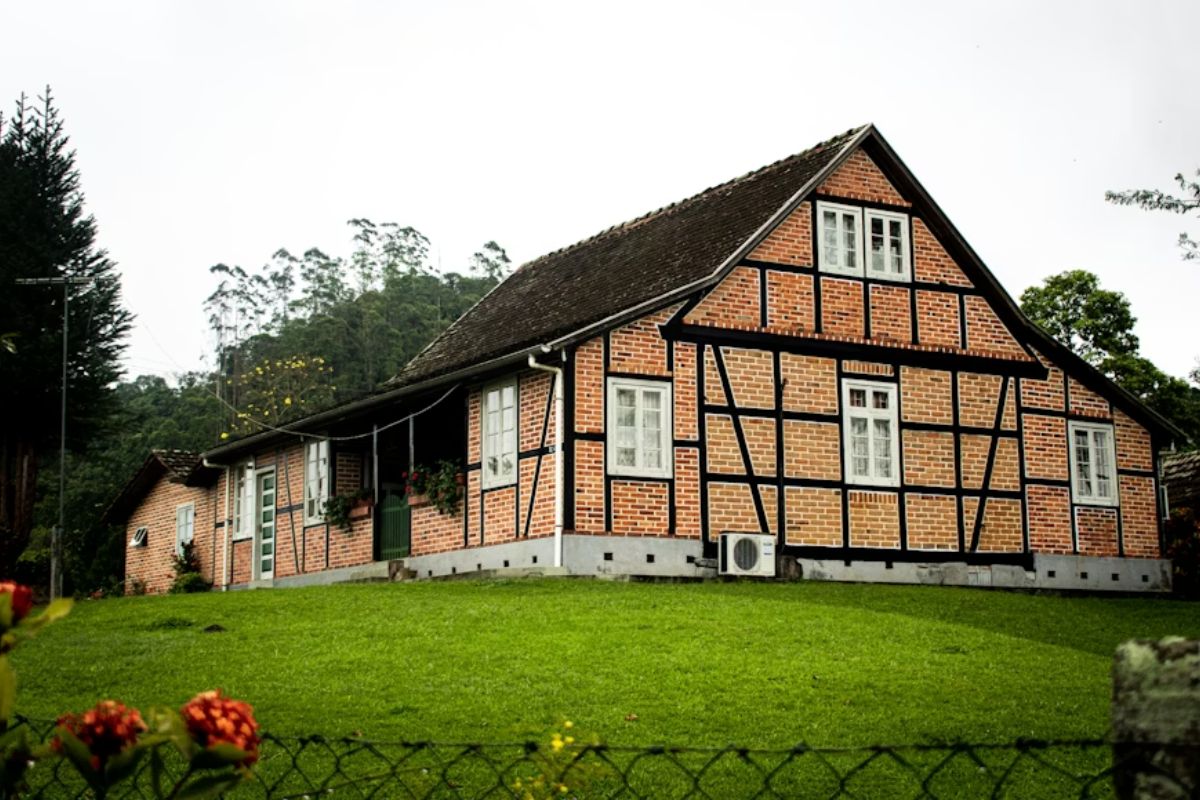


Among the happiest cities in the country, Pomerode ranks 6th on the list of 30 municipalities, with a preserved cultural identity even in times of accelerated urbanization.
Pomerode, in Santa Catarina, made it to the ranking of the happiest cities in Brazil and drew attention by appearing in 6th place, with a score of 8.84, on a list that includes 30 municipalities with high structural well-being indicators.
The highlight, according to the description of the survey, is not just visual or touristic: Pomerode gains strength from the cohesion of German culture, architecture, gardens, festivals, and community life, keeping the city “true to itself” even with urbanization.
How Pomerode appeared among the happiest cities in Brazil
The survey was published by Revista Bula, which claimed to have used UN criteria and was inspired by the World Happiness Report. The selection was built from municipal public data, focusing on identifying cities with more consistent conditions of structural well-being.
-
Engineers spend a decade building a $2.3 million bridge, but the project features a surreal curve, becomes a joke, and ends with seven suspended.

-
7-year-old boy acts without hesitation and saves his 1-year-old brother from drowning in the family pool in Texas: the boy’s courage impressed the sheriff and he may now receive an official police commendation.

-
The forgotten Atari stock that seemed like something out of a movie: millions of sealed cartridges were buried underground and were sold for very low prices.

-
Collector adapts forklift electric motor in a Kombi Corujinha pickup, hides 16 batteries under the bed, and makes the Brazilian classic run silently with up to 90 km of range.


All the cities in the ranking received scores between 8.5 and 8.94, placing Pomerode in a high-performance group within the scope of the happiest cities in the country.
“Cohesion” as an explanation for the score 8.84
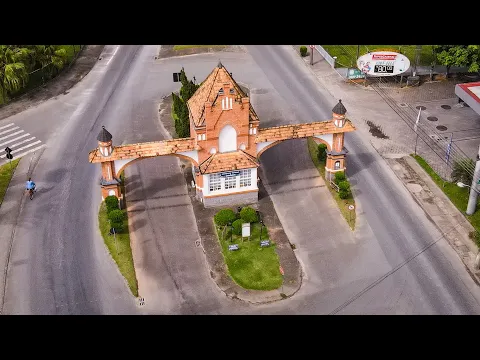

In the justification presented, Pomerode is described as a city where “everything seems to converse with everything”, with Pomeranian and German heritage visible in the architecture, cuisine, gardens, and the way it organizes its public appearance.
The text of the ranking also points out that the reduced scale translates into urban and cultural precision, as if the municipality had preserved a stable symbolic center even with accelerated urbanization and identity wear, a differentiator for understanding why it made it among the happiest cities.
The criteria used to define the happiest cities
According to the survey, the final score considered eight dimensions with different weights. They are:
Personal safety: 16%
Material capacity and economic security: 15%
Health and longevity: 15%
Social support and protection against vulnerability: 12%
Practical freedom and capacity for choice: 12%
Institutional trust and public integrity: 12%
Habitability and basic urban services: 10%
Civility, generosity, and community life: 8%
The proposal is to view well-being as a structure, not just perception, which helps explain the selection of the happiest cities within the set of evaluated municipalities.
Santa Catarina dominates the top of the happiest cities
Santa Catarina stood out in the ranking: five cities from the state are on the list, and the state occupies the top three positions. At the top, we have:
Jaraguá do Sul (8.94)
Joinville (8.91)
São José (8.90)
In addition to them, Pomerode (8.84) and Florianópolis (8.62) complete the presence of Santa Catarina among the happiest cities identified by the survey.
What this ranking says about identity and community life
The case of Pomerode reinforces a central idea: quality of life does not depend only on size, but on urban consistency, belonging, and organization of daily life.
When a city manages to maintain identity, services, and community ties, this tends to reflect in the indicators that support rankings like that of the happiest cities.
What weighs more for a city to be among the happiest cities, safety and services or cultural identity and community life?