






 Portuguese
  Spanish
  5 min of reading
  0 comments


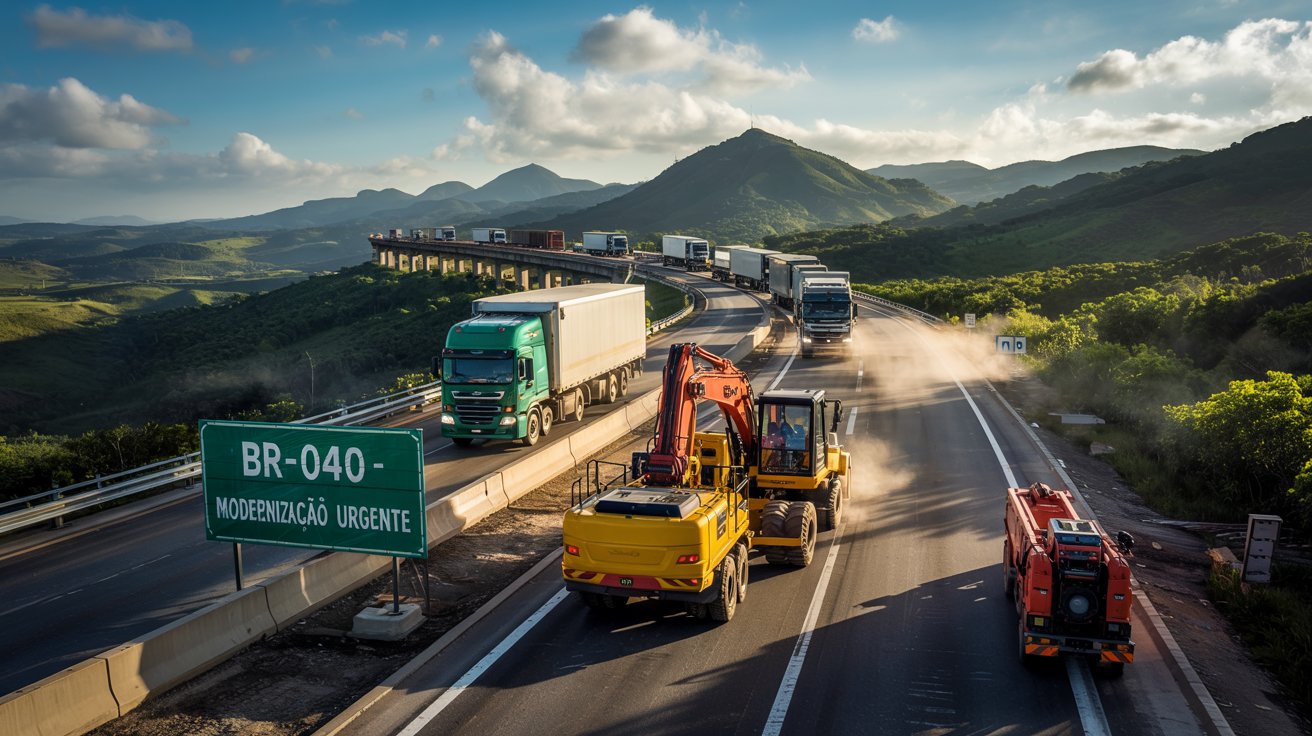
Investments Worth Billions Will Be Applied to One of the Most Historical Highways in Brazil, Bringing a More Secure and Efficient Future for Thousands of Users. Know What Is to Come!
One of the most historical highways in Brazil, BR-040, which connects Rio de Janeiro to Juiz de Fora, will be revitalized with a billion-dollar investment of R$ 8.84 billion.
The road, which began as Estrada União e Indústria back in the 19th century, is at the center of an ambitious federal government project that aims to combine memory, tourism, and modern logistics.
This Wednesday (4/30), the Ministry of Transportation will hold the auction for the concession of BR-040/495/MG/RJ, covering the stretch from the capital of Rio de Janeiro to the mining city of Juiz de Fora.
-
The Greatest Hoax in World Cup History? The Film That Denied Brazil’s 1958 Victory and Exposed How Fake Evidence Can Seem Convincing on TV

-
Fake South Korean Online Stores Offer Shopping Thrill Without Spending Money or Receiving Products
-
Brazilian Joins Homeownership Consortium, Faces Decade of Dual Payments Totaling $141,000, Surpassing Traditional Mortgage
-
The War of Jenkins’ Ear: How a Severed Ear Sparked One of the 18th Century’s Most Unusual Conflicts


The goal is to transform one of the most emblematic stretches of the Brazilian road network, modernizing its infrastructure to accommodate the current flow of heavy vehicles and ensure greater safety and efficiency.
From Real Road to Industrial Route
Inaugurated in 1861 by Dom Pedro II, BR-040 started as the Estrada União e Indústria, being the first macadamized highway in Latin America.
It connected Petrópolis, in the fluminense mountains, to downtown Rio de Janeiro, being fundamental for the transport of coffee and for the movement of the imperial elite, who used the mountain city as a refuge in the hottest months of the year.
The innovative layout was built using the macadamization technique — a system of overlaying and compacting stones — which allowed speeds of up to 20 km/h at the time.
A remarkable achievement by 19th-century standards.
BR-040 was the first paved stretch in Brazil, in 1928, by order of then-president Washington Luís, consolidating its role as a pioneer in national road transport.
During Juscelino Kubitschek’s government, the road gained even more importance by becoming one of the main links between Rio de Janeiro and Brasília, the newly created federal capital.
More Than History: A Strategic Axis for the Country
Today, BR-040 is a vital artery connecting two of the country’s largest economic hubs — Rio de Janeiro and Minas Gerais — responsible for about 20% of the national Gross Domestic Product (GDP).
The road crosses strategic industrial cities, such as Duque de Caxias, Três Rios, Juiz de Fora, and Petrópolis, moving more than 20,000 vehicles daily, including cars, trucks, and buses.
According to the president of the Federation of Industries of the State of Rio de Janeiro (Firjan), Luiz Césio Caetano, the highway “has not kept pace with the evolution of society and industry”.
A century ago, trucks transported up to six tons. Today, vehicles with a capacity of 70 tons travel the same infrastructure, overloading the system and compromising traffic fluidity.
The concession includes profound improvements to the highway’s infrastructure, such as widenings, duplications, and the construction of three tunnels on the ascent of Serra de Petrópolis, one of the most critical points of the road.
These tunnels promise to alleviate congestion and make the journey safer and faster.
Ascent of the Mountain: A Challenge of the Past and the Present
The Serra de Petrópolis, which was once a symbol of engineering in the 19th century, now represents one of the biggest logistical bottlenecks of BR-040.
The steep and winding stretch drastically reduces the speed of heavy vehicles, directly impacting the routine of tourists, residents, and transporters.
Jane Assis, owner of the traditional hotel Solar do Império, reports that many tourists contact her to inquire about road conditions before traveling.
“We receive such calls frequently. We even have contacts with firefighters and information channels to guide our guests,” she says.
The economy of the mountain region depends directly on the quality of BR-040. Tourism, for example, is one of the sectors most affected by the current journey’s slowness and insecurity.
Petrópolis: From Royalty to the Aerospace Sector
If in the 19th century Petrópolis was a refuge for the imperial court, today it houses one of the largest aviation engine workshops in the world: the GE Aerospace unit.
The company performs about 600 turbine overhauls per year and relies on BR-040 to transport equipment between the mountain and Rio de Janeiro.
“Every day, two turbines go up and two come down the mountain,” says the CEO of GE Aerospace in Brazil, Julio Talon. “About 95% of our volume comes from abroad, and BR-040 is essential to keep this chain functioning.”
The region is also strategic for the automotive, food and beverage industries, as well as for logistics and cargo transport.
The modernization of the highway could unlock historical bottlenecks and drive regional development, according to sector experts.
Ambitious Project Focused on Goals and Safety
The BR-040 concession project includes modern contractual clauses, with clear goals and control and inspection mechanisms to guarantee the execution of works and services throughout the 30-year concession period.
Among the commitments required from the future concessionaire are investments in technology, signaling, user service points, monitoring, and medical assistance.
According to the Ministry of Transportation, the proposal was designed to ensure a balance between investments and cost-effectiveness, that is, fair rates for users.
There will be contractual triggers that will require the fulfillment of goals in exchange for adjustments and renewals.
Heading to a New Chapter of the Imperial Road
The requalification of BR-040 represents not only a logistical advancement but also a historical rescue and an opportunity for social and economic transformation for the Brazilian Southeast.
From the road of the coffee barons to a strategic corridor of national industry, BR-040 carries 164 years of history in its asphalt.
“BR-040 needs to be safer and more efficient,” summarizes professor Ellen Drumond, a resident of Petrópolis, who has been traveling the road between Minas and Rio for years.
Her appeal reflects the sentiment of thousands of Brazilians who depend on the road to work, travel, and live.
And you, have you traveled on BR-040? What memories or experiences do you have of this historical road? Share in the comments!





Be the first to react!