






 Portuguese
  Spanish
  5 min of reading
  0 comments


Fibo’s laminated panels are presented as a waterproof alternative for bathrooms, kitchens, and wet areas. According to the manufacturer, the Aqualock system clicks pieces together, eliminates grout, has Norwegian certification for wet environments, and can be installed up to five times faster than traditional tiles in residential and commercial renovations.
The laminated panels for bathroom walls have been presented as an alternative to traditional tiles in renovations that aim to reduce construction time, dirt, and maintenance. Fibo’s proposal, a Norwegian manufacturer of waterproof wall systems, is to use entire panels that click together and eliminate grout.
The topic gained prominence in an article published by RIBAJ on February 1, 2021, in association with Fibo. The text describes the panels as a waterproof solution, easy to clean, and capable of being installed up to five times faster than conventional tiles, provided they are applied according to technical guidelines.
System promises to replace breaking with wall fitting
The main difference lies in the installation method. While traditional tiles require wall preparation, application, fixing, grouting, and drying time, Fibo’s panels are designed to fit together using the Aqualock system, which clicks the pieces together.
-
He got tired of renting, bought an old school bus, removed the seats, modified the roof, reinforced everything with steel, and created a two-story mobile home that looks small on the outside but houses two bedrooms inside.

-
How the right choice of blocks reduces construction costs by up to 30%, eliminates beams and pillars, and prevents structural failures that can lead to rework, material waste, and significant losses over the years.

-
Researchers create reusable brick walls that can be dismantled and rebuilt elsewhere, like Lego pieces, to reduce construction waste and cut emissions by up to 60%.

-
During the construction of the world’s highest bridge, the Huajiang Bridge in China, engineers discovered a giant aquifer and turned what would have been a serious problem into a 625-meter artificial waterfall, an engineering feat that no one had planned.



According to the manufacturer, this process reduces steps and speeds up assembly. The promise is not to eliminate all construction care, but to reduce the reliance on time-consuming procedures, such as grout hardening and piece-by-piece adjustment common in ceramic coverings.
Panels can even be applied over existing tiles
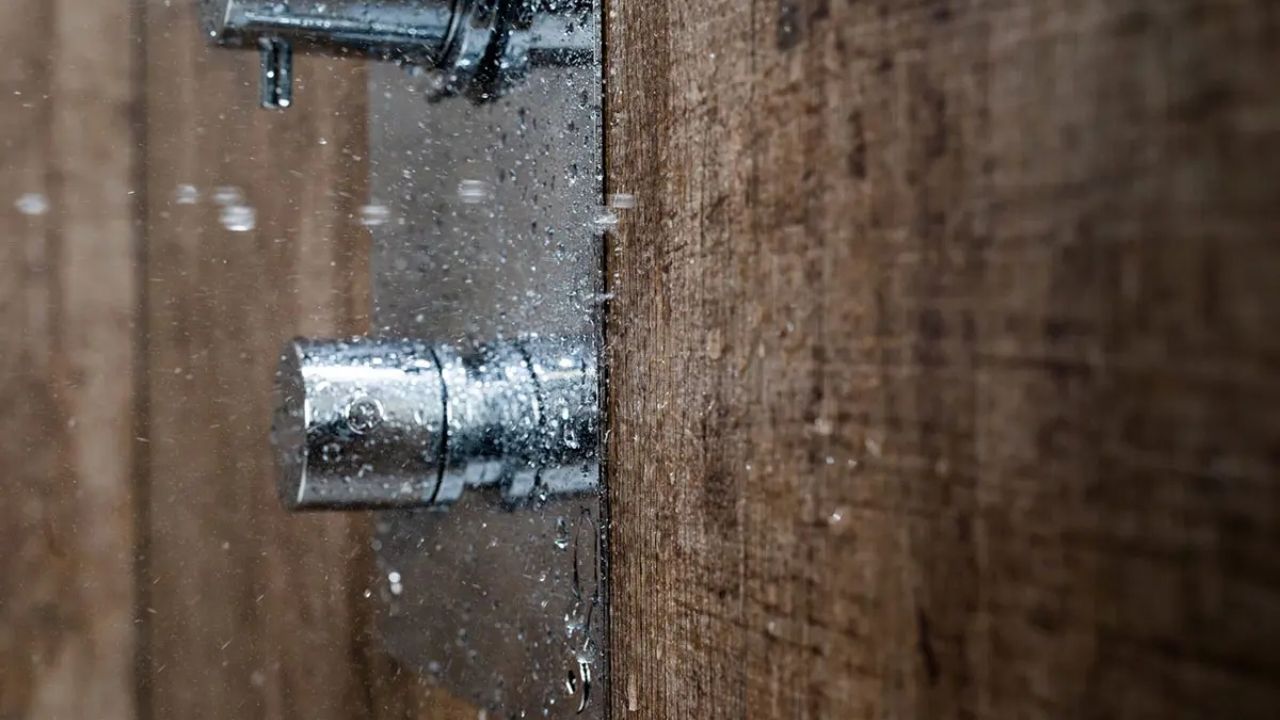
The RIBAJ article states that laminated panels can be attached to any suitable surface, including over existing tiles that are secure. This point is noteworthy because one of the most bothersome parts of bathroom renovation is often the removal of old tiling.
In practice, this can avoid some of the demolition, dust, and debris in internal works. Still, the application depends on the condition of the wall, the support behind the panel, and correct installation. If the base is compromised, no covering alone solves the structural problem.
Without grout, system targets cleaning and maintenance
The grout is one of the most sensitive points in bathrooms and wet areas. Over time, it can darken, stain, accumulate dirt, and require constant maintenance. The RIBAJ describes this point as one of the advantages of Fibo panels, which do not use grout between pieces as in traditional tiles.
This absence of cement joints can facilitate cleaning and reduce places where mold, dirt, and germs usually accumulate. The idea is to simplify daily maintenance, especially in environments where steam, water, and hygiene products are part of the routine.
Manufacturer highlights waterproofing and Norwegian certification

In institutional material, Fibo presents its panels as a 100% waterproof wall system for bathrooms, kitchens, and other environments that require more durable and easy-to-clean walls. The company also states that the system is approved by the Norwegian standard for wet environments.
The manufacturer’s page cites a 15-year warranty for the wall system. Meanwhile, the 2021 RIBAJ article states that tile-effect panels have a standard 25-year warranty when properly installed. The difference in information underscores the importance of consulting the technical documentation of the specific model before purchase.
Visual attempts to mimic tiles without using traditional ceramics
Besides the practical function, laminated panels also aim for visual finishing. The RIBAJ article highlights models with a tile effect, including the Metro Brick line, inspired by references from London and New York subways, with a relief pattern that simulates rectangular bricks.
Fibo also reports offering a wide variety of colors, textures, and designs, with options for bathrooms, kitchens, and commercial projects. The goal is to deliver the appearance of decorative cladding without exactly repeating the traditional ceramic tile installation process.
Faster renovation does not mean a project without planning
The promise of installation up to five times faster is one of the main selling points of the system. However, this data should be read within the context provided by the sources: it is a comparison with traditional tiles, which require more steps, specialized labor, and grout curing time.
Even with interlocking panels, the project still needs correct measurement, cutting, sealing, proper support, and adherence to the manufacturer’s instructions. The speed depends on the preparation of the environment and the quality of the installation, not just the chosen product.
Solution appears in projects beyond residential bathrooms
Fibo presents its laminated panels as an option for bathrooms, kitchens, and environments that need durable and easy-to-clean walls. The institutional material also mentions applications in projects such as residential buildings, stores, daycare centers, health centers, hotels, and student housing.
This broader use helps explain the architectural interest in the system. In high-traffic areas, quick maintenance and easy cleaning can weigh as much as the visual aspect. Therefore, grout-free solutions appear as an alternative for specifiers, builders, and clients looking to reduce maintenance over time.
Sustainability appears as part of the manufacturer’s argument
Fibo also presents its panels as a more sustainable choice, stating that they are made with certified wood and accompanied by environmental product declarations. This point appears in the institutional material as part of the brand’s strategy for humid environments.
Even so, the environmental assessment of a renovation depends on several factors, such as the origin of the material, durability, transportation, disposal of the old cladding, and the system’s lifespan. The real sustainability of a construction solution is not just in the product but in the complete cycle of the project.
What the consumer needs to observe before replacing tiles
For those considering using laminated panels in the bathroom, the first step is to check if the system is suitable for the type of environment, the level of humidity, and the condition of the existing wall. It is also important to observe warranty, certification, recommended sealing, and the need for support behind the panels.
Another point is to compare the total cost, not just the price of the material. Tiles may require more time, grout, cuts, and specialized labor. On the other hand, interlocking panels can reduce steps but require correct purchase, compatible accessories, and careful installation. The best choice depends on the state of the bathroom and the purpose of the renovation.
When the bathroom wall becomes renovation technology
The Fibo laminated panels show how bathroom renovation is moving away from relying solely on tiles, mortar, and grout. The click-fit proposal, waterproof surface, and simplified cleaning aim to address common issues faced by those who have already undergone home renovations: delays, dirt, mold, and maintenance.
The discussion, however, remains open: would you replace traditional tiles with laminated panels that promise faster installation and less grout, or do you still prefer conventional ceramics for their familiarity and perceived durability? Leave your opinion in the comments.







Be the first to react!