






 Portuguese
  Spanish


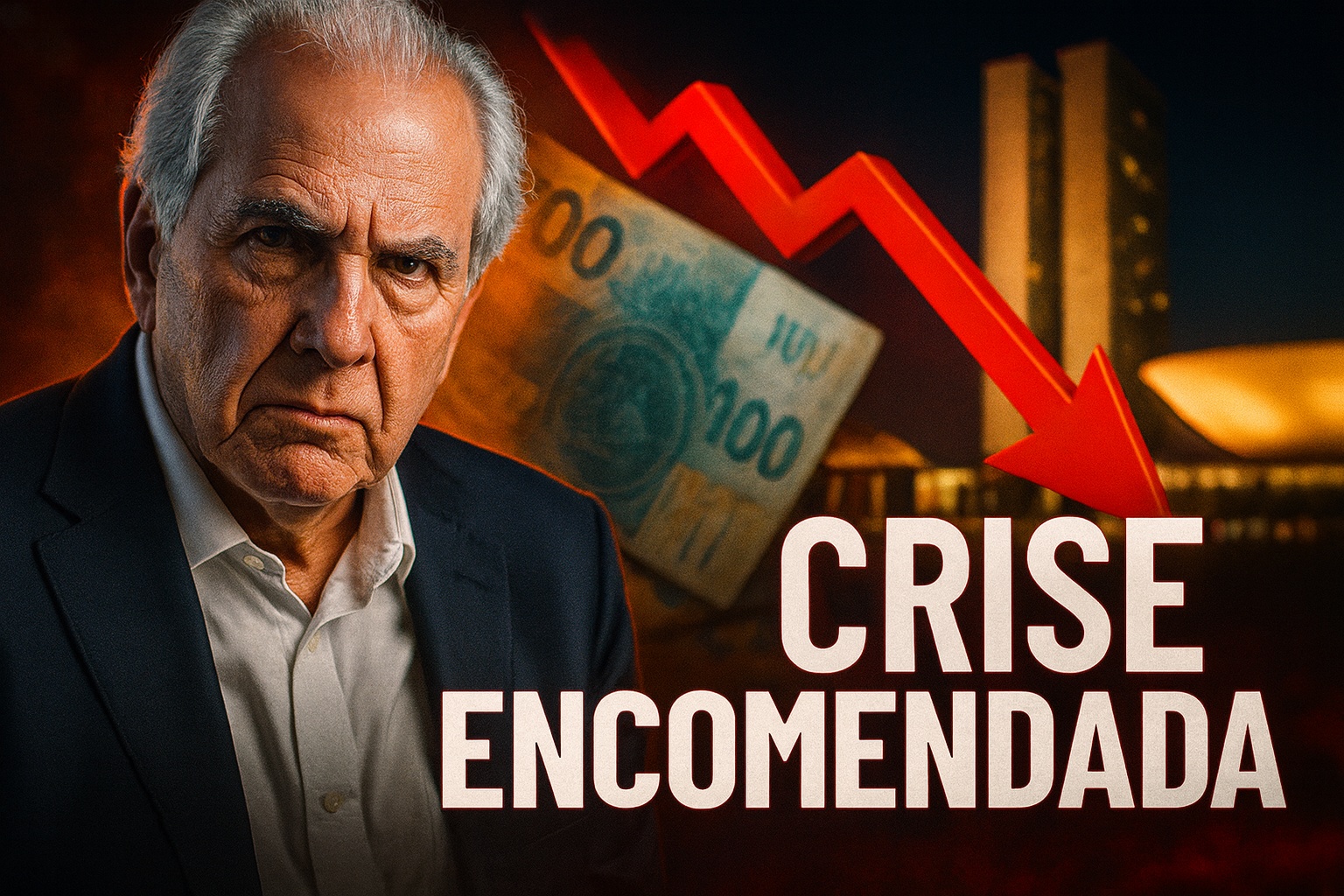


On September 13, 2025, Rubens Menin Warned in an Interview that High Interest Rates and Political Polarization Could Order a Crisis for 2027 if Reforms Do Not Advance.
On September 13, 2025, during the Inter Invest Summit in Belo Horizonte, businessperson Rubens Menin, founder of MRV and a prominent figure in the real estate and financial sectors, gave an interview to NeoFeed that resonated as a strong warning about the course of the Brazilian economy. In a direct tone, he stated that Brazil is about to reap the bitter fruits of an unbalanced economic policy and a political environment poisoned by polarization: “we have a crisis ordered for two years from now.”
The statement was not mere exaggeration but a diagnosis that combines numbers, context, and the experience of someone who has witnessed past crises and understands how today’s accumulated errors can transform into breaks tomorrow.
High Interest Rates and the Announced Crisis
The starting point of Menin’s criticism was the interest rate maintained at high levels for an extended period. Although interest rates have historically been used as a tool to combat inflation, the businessman argues that, in 2025, this mechanism ceased to be a solution and became part of the problem.
-
Controversial 6-day Workweek Elimination in Brazil Faces Economic Criticism Over Productivity Claims

-
Itaú to Refund Customers After 14 Years of Unauthorized Credit Card Charges; Agreement Includes No Interest or Adjustments, Deadline by 2028, with Potential Impact of Up to $6.5 Billion

-
Brazilian Company Grows from Bartering Soap for Food to Producing 30 Million Units Monthly, Challenges Global Giants with $100 Million Revenue and Expands into Premium Cosmetics
-
Petrobras and Engeko’s New Investment Plan Promises Billions and Thousands of Jobs, Capturing Market Attention


By making credit more expensive for businesses and families, the high Selic drains investments, stifles innovation, hampers job creation, and puts the country at a disadvantage compared to other economies.


In the United States and Europe, central banks have already begun cycles of cuts, while Brazil remains “behind,” insisting on maintaining the cost of capital at a level that increases public debt and stifles growth.
For Menin, if this posture is not corrected, the accumulated impacts are expected to explode by 2027, with a scenario of recession and instability that could have been avoided.
Political Polarization and Paralysis in Brasília
Another central aspect of the interview was the criticism of political polarization. Menin emphasized that, although the presidential elections are only scheduled for October 2026, the electoral climate has already contaminated the debate in Brasília.
This anticipation creates an environment where the government and opposition focus their energies on ideological disputes and veiled campaigns, sidelining issues that should be treated as emergencies, such as administrative reform, improving the efficiency of public spending, and creating conditions to unlock investments.
The businessman was emphatic in stating that extreme polarization diverts focus from what really matters and increases the country’s vulnerability to external shocks and internal pressures.
The Risk of a Prearranged Crisis by 2027
Menin pointed out that the combination of high-interest rates and political paralysis creates fertile ground for a future crisis.
Companies that already operate on tight margins are facing increasing difficulties in financing projects, families are going into debt under increasingly harsh conditions, and the state, bogged down in mandatory expenses, cannot present structural solutions.
The result is a vicious cycle where the economy stagnates and the risk of a rupture becomes inevitable. According to him, if there is no immediate change in posture, in two years Brazil will be faced with a prearranged crisis, with a loss of confidence, retraction of investments, and a possible social explosion.
Comparisons with Previous Crises
Menin’s statement echoes the history of other crises faced by Brazil. In 1999, the significant devaluation of the real exposed vulnerabilities in external accounts; in 2015, fiscal collapse and political instability plunged the country into deep recession; and in 2020, the pandemic laid bare the reliance on emergency measures to prevent a social collapse.
In all these instances, the warning signs were clear, but solutions were slow to be implemented or were treated palliatively.
For Menin, the difference now is that the crisis will not come from an unexpected shock, but from a set of mistakes already visible in the present that, if not corrected, will lead to a rupture by 2027.
The Urgency of Structural Reforms
Another point highlighted was the need to resume the reform agenda. Menin argued that administrative reform is essential to reduce the burden of the public apparatus and improve state efficiency.
In addition, he emphasized that the tax reform needs to advance towards a real simplification and a reduction of the Brazilian cost, so that companies can invest with more predictability.
He also highlighted the importance of investing in innovation and technical education, areas that can elevate productivity and enable Brazil to reduce its dependence on commodities, paving the way for a more diversified and competitive economy.
A Call for Collective Responsibility
Menin stated that this is not about pessimism but realism. Brazil still has the means to avoid the prearranged crisis, but only if there is political courage and societal engagement.
This means immediately addressing fiscal issues, sustainably reducing the cost of capital, and abandoning the logic of a permanent war between ideological poles.
For the businessman, it is time to build a broader pact that involves the government, business leaders, workers, and social leaders, capable of unlocking investments and restoring confidence in the economy.
Rubens Menin closed the interview by reminding that when the country grows, everyone wins, but when the country stagnates, everyone loses. His message was clear: Brazil needs to act in 2025, and not wait until 2026, because by then it will be too late to correct the course.
Otherwise, the country will reap in 2027 the crisis it is planting today. The businessman’s warning should serve as a turning point in the public debate, prompting leaders to choose between continuing to push solutions aside or facing head-on the challenges that define the future of the national economy.








Melhor investimento do momento, disparado é: qquer lugar fora do país.
Quem é de família abastada e pode enviar os filhos par estudar fora, eu incentivo fortemente que fique por lá.
Quem não é, mas se virou e conseguiu sair, fique por lá.
Aqui, vc sustenta os 3 poderes mais ineficientes e caros do mundo, só isso.