






 Portuguese
  Spanish
  5 min of reading
  0 comments


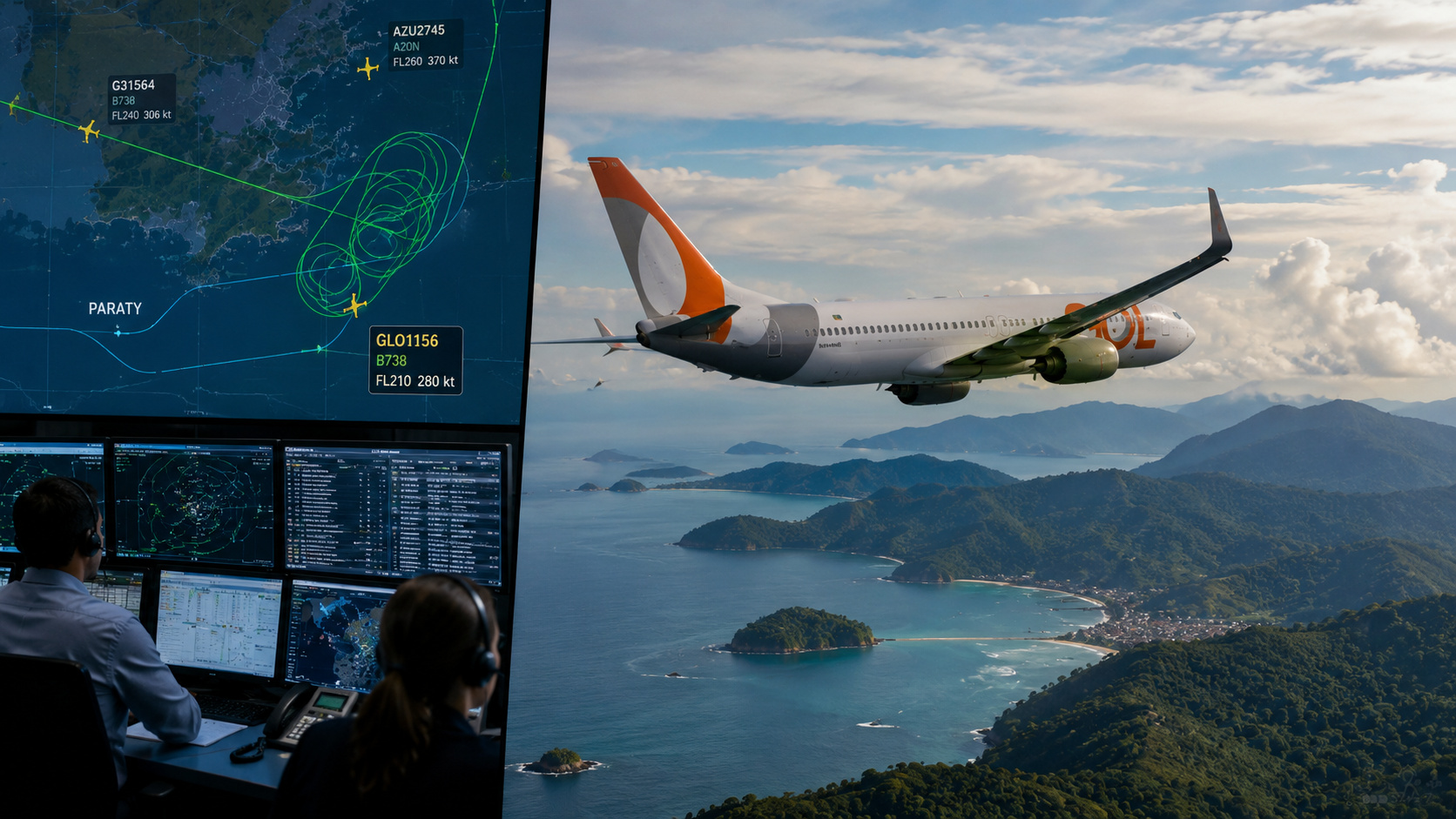
Temporary interruption in the approach control system affected flights on the morning of June 2, 2026, and led aircraft to remain on hold before landing clearance at major São Paulo airports
An operational failure recorded on the morning of this Tuesday, June 2, 2026, caused impacts on air traffic in the metropolitan region of São Paulo and forced several aircraft to remain longer in the air before receiving clearance to land. The problem mainly affected the airports of Guarulhos and Congonhas, two of the busiest in Brazil.
The information was released by g1, based on data from FlightRadar24, a platform that monitors flights in real-time worldwide, as well as information provided by the Brazilian Air Force (FAB), airport concessionaires, and agencies responsible for air traffic management.
Images recorded by the monitoring system showed aircraft performing holding patterns over different regions of the state of São Paulo and the coast of Rio de Janeiro while waiting for operations to normalize.
-
Offshore air transport soars in Brazil, surpasses 2.5 million passengers, and reveals how oil has transformed Rio’s airports into key pieces of national logistics.

-
Latin America becomes the “global champion” of aviation taxes, tickets may become more expensive in Brazil, and IATA’s warning exposes risk for flights, tourism, and passengers.

-
Brazil has lost 85 air routes since 2019 and is still flying less than before the pandemic, leaving passengers with fewer destinations, fewer frequencies, and a more limited air network.

-
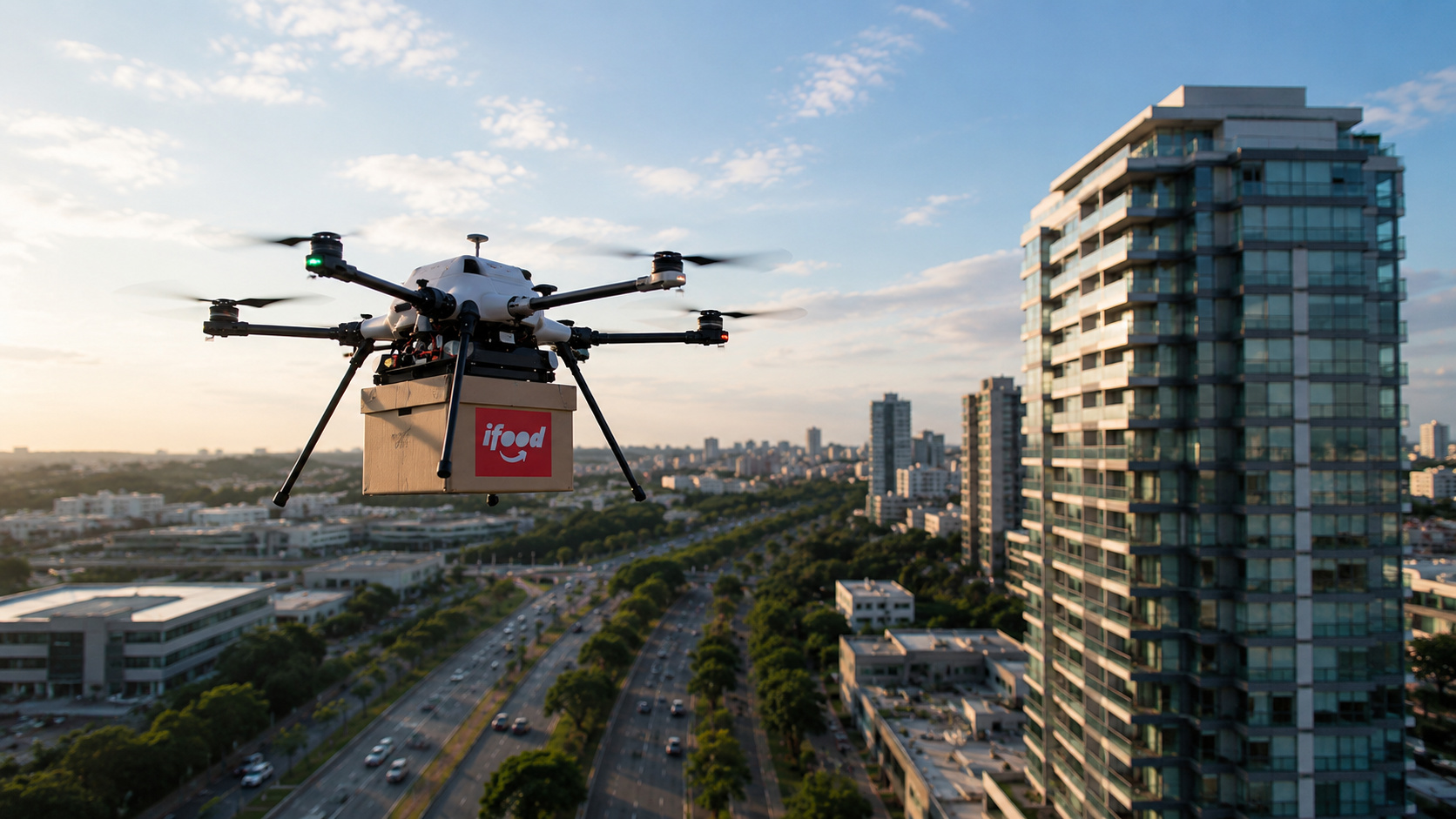
Anac and Decea are behind iFood’s drones in Barueri and explain how aerial delivery got the green light in Brazil, as orders leave the mall, cross the sky in a few minutes, and reveal the behind-the-scenes of new commercial drone deliveries in the country.

The episode caught the attention of passengers and professionals in the aviation sector because it occurred in one of the areas with the highest flight flow in Latin America.
Planes needed to wait for landing clearance
Data from FlightRadar24 revealed that some aircraft needed to remain on hold before completing the landing procedure.
One of the most observed cases involved a flight that departed from Vitória, in Espírito Santo, bound for São Paulo International Airport in Guarulhos. Around 9:55 AM, the aircraft began circling near Paraty, on the southern coast of Rio de Janeiro, waiting for clearance to proceed to the final destination.
The tracking system images clearly showed the circular pattern executed by the aircraft, a procedure normally used when there is a need to manage air traffic flow.
Another case occurred with a flight that departed from Porto Alegre, in Rio Grande do Sul, bound for Congonhas Airport.
According to FlightRadar24, the aircraft began circling over the maritime region around 10:09 AM, shortly after the start of operations normalization.
The plane landed at Congonhas at 10:40 am.
The platform data also indicated an increase in the total travel time.
According to the route history, the average flight time between Porto Alegre and São Paulo is approximately 1 hour and 16 minutes.
However, the flight affected by the operational interruption took 1 hour and 29 minutes to complete.
Although the delay was not considered significant by commercial aviation standards, the case illustrates the direct effects that interruptions in the air traffic control system can have on the air network.
What caused the interruption of air operations
After reports about the aircraft on hold, the companies responsible for the airports clarified the situation.
GRU Airport, the administrator of Guarulhos International Airport, reported that operations were temporarily interrupted due to a failure involving the São Paulo Approach Control.
This system is responsible for organizing the flow of aircraft arriving at the region’s airports and managing the sequence of landings and takeoffs.
In practice, the Approach Control functions as a kind of air traffic coordinator in areas near airports, ensuring safe distancing between aircraft and ordering the arrival queue.
Aena, the company responsible for managing Congonhas Airport, also confirmed that the problem was related to air traffic control.
Both companies emphasized that the situation was temporary and that safety procedures remained active throughout the period of instability.
FAB confirms external operational technical problem
In light of the case’s repercussion, the Brazilian Air Force, responsible for the Department of Airspace Control (Decea), released an official statement on the occurrence.
According to the FAB, there was a temporary interruption of air operations at the aerodromes in the São Paulo region.
The agency explained that the provisional suspension occurred due to an external operational technical problem.
Although the FAB did not detail the exact origin of the failure, it reported that international safety protocols were fully followed throughout the occurrence.
Furthermore, the institution highlighted that the controllers maintained proper management of the affected aircraft.
According to the official note, all aircraft received appropriate sequencing for landing and continued operating within international flight safety parameters.
This measure avoided risks to passengers and crews during the period of instability.
Holding Pattern is Standard Aviation Procedure
Although it causes concern among passengers who follow real-time tracking apps, circling before landing is part of normal aviation procedures when there is some type of operational restriction.
Technically known as “holding,” this procedure allows aircraft to remain in predefined areas while awaiting authorization to continue the approach.
Traffic controllers use this resource to keep the flow organized and maintain safe separation margins between planes.
Therefore, experts emphasize that performing these orbits does not necessarily represent a risk situation.
Most of the time, it is a preventive measure used to ensure that all operations occur safely and in a coordinated manner.
São Paulo Airports Returned to Normal After Failure
After identifying and correcting the problem, operations at Guarulhos and Congonhas airports were gradually normalized.
Monitoring systems showed that the flow of landings and takeoffs returned to the usual pattern still during the morning.
Even so, the episode highlighted the importance of air traffic control systems for the functioning of Brazilian commercial aviation.
The occurrence also demonstrated how a temporary interruption at a single point in the infrastructure can impact dozens of flights and alter the schedule of aircraft operating in one of the busiest regions in the country.
Although the glitch caused occasional delays and required holding maneuvers in the air, there were no reports of safety incidents.
According to the FAB, all aircraft followed the established protocols and operated within the international requirements provided for this type of situation, ensuring the safety of passengers, crews, and airport operations throughout the occurrence recorded on June 2, 2026.
If you were on an aircraft that needed to hold before landing, would you feel reassured knowing it’s a safety procedure or would you feel concerned about the situation?









Be the first to react!