






 Portuguese
  Spanish
  3 min of reading
  1 comment


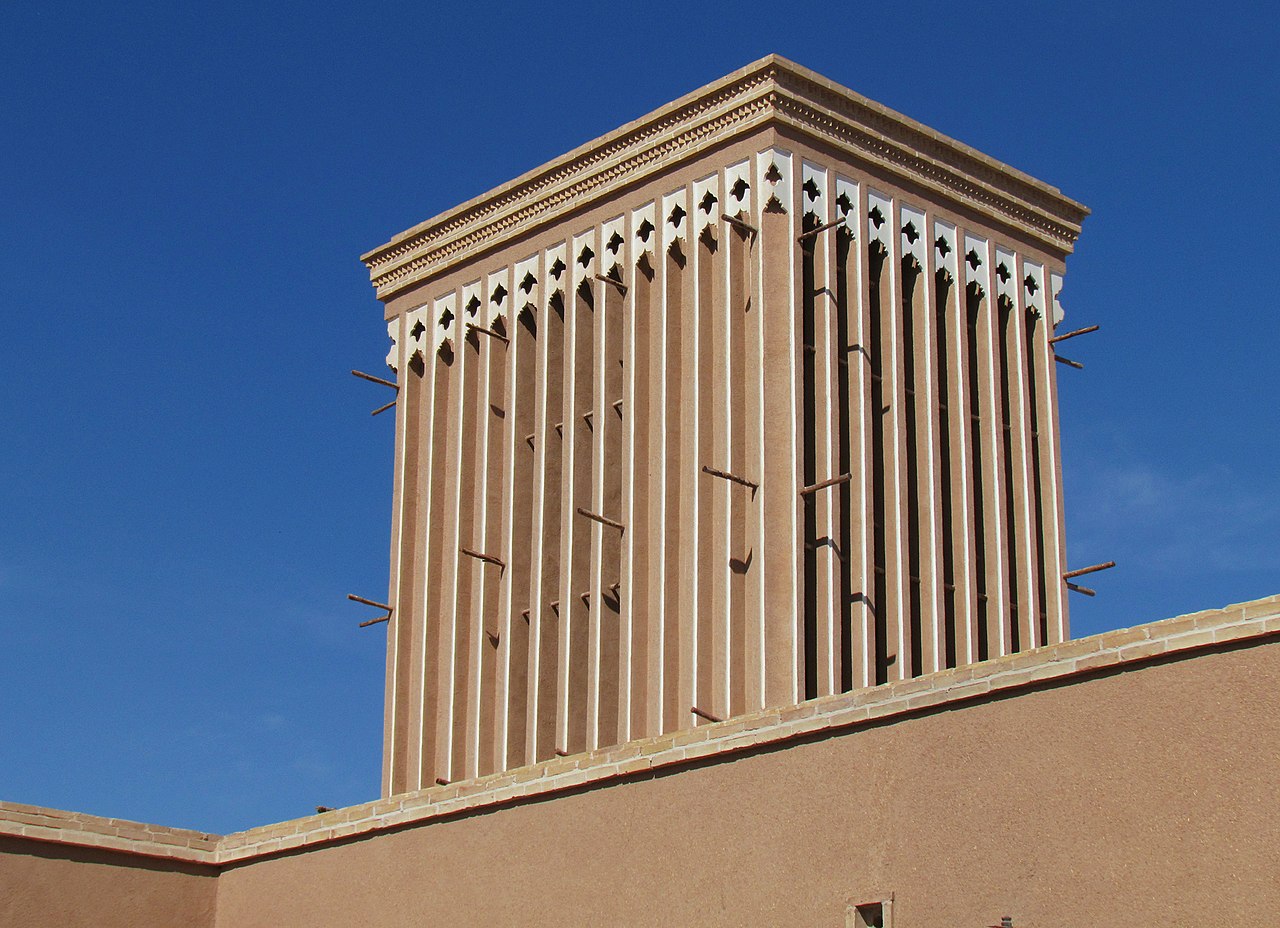


Long Before The Electric Age, The Persians Created A Natural Ventilation System With Wind Towers And Underground Tunnels That Still Works Today
In the middle of the desert, long before the existence of modern devices, the ancient Persians found a way to beat the heat. While other civilizations built temples and monuments, a clever solution was emerging in the heart of the Middle East to tackle the arid climate: Persian air conditioning.
Air Conditioning In The Achaemenid Empire
This system emerged over 2,000 years ago, during the Achaemenid Empire. The first records date back to the 5th century B.C. in Persepolis, one of the capitals of that period.
The Persians mastered techniques that took advantage of the environment in their favor. Buildings already showed adaptations to the intense heat of the central regions of present-day Iran.
-
Tired of High Rent in Portland, Newlyweds Buy 37m² Tiny House with 36 Cabinets, King-Size Bed, and Loft Office, Paving Way to Financial Freedom

-
In Sweden’s Jukkasjärvi, Artists Transform the Frozen Torne River into the Icehotel, a Seasonal Ice Structure That Melts Back into Nature

-
Innovative Heat Storage Tower in Finland Uses 2,000 Tons of Crushed Soapstone to Warm Cities
-
17-Year-Old Homeschooler from the Bahamas Solves 40-Year-Old Math Puzzle, Earns Direct PhD Admission


Over the centuries, the methods evolved. During the Sasanian Empire, between 224 and 651 A.D., the technology was refined.
Later, during the medieval Islamic period, it reached even more sophisticated levels. Cities like Yazd, Kerman, and Kashan still maintain structures that reveal the ingenuity of the ancient Persian engineers.
Badgirs: Wind Catchers
The main component of this system was the badgir, a name that means “wind catcher.” These tall and narrow structures were located on top of buildings and served the function of capturing air currents.
The wind would enter through these towers, descend through the internal ducts, and push the hot air outside, creating natural ventilation.
This continuous circulation process cooled the interiors of houses, mosques, and palaces. The air moved without the need for electrical energy or any modern mechanism.
The Help Of Qanats And Cold Underground Water
The badgirs worked even better when connected to the qanats, underground tunnels that carried water from the mountains to the cities.
As it passed through these channels, the wind captured by the towers was cooled by the water and the soil temperature. This resulted in indoor environments up to 10 °C cooler than outside.
It was an effective and sustainable solution. Water was also stored in underground cisterns, which further enhanced the cooling of the air before it circulated through the rooms of the buildings.
Materials That Aid In Thermal Comfort
The buildings were made of mud bricks and adobe. These materials have high thermal mass, meaning they help keep the environment cool during the day and release heat slowly at night. This contributed to a balanced indoor climate, even under the strong desert sun.
Today, cities like Yazd still preserve these systems. They operate almost the same way they did centuries ago. They are examples of bioclimatic architecture — when the design considers the local climate and does not rely on electrical energy.
In times of climate crisis, this type of ancestral technology stands out. The Persian system proves that it is possible to seek comfort without harming the environment.
Persian Air Conditioning: A Legacy That Crosses Centuries
The Persian air conditioning is one of the greatest proofs that knowledge and creativity can arise anywhere. It does not depend on modern technology. It relies on adaptation and respect for the climate.
More than an ancient achievement, it is a lesson on how to build intelligently. A simple, natural, and efficient idea that continues to teach us today.
With information from Revista Fórum.


Os persas hoje Irã foram o primeiros a realizar cirurgias interna século 12 dc
O que eles usavam para anestesiar o paciente?