Portuguese
  Spanish



Project inspired by the 1970s demonstrates how a house can produce energy, reuse water, and maintain thermal comfort even in extreme climates
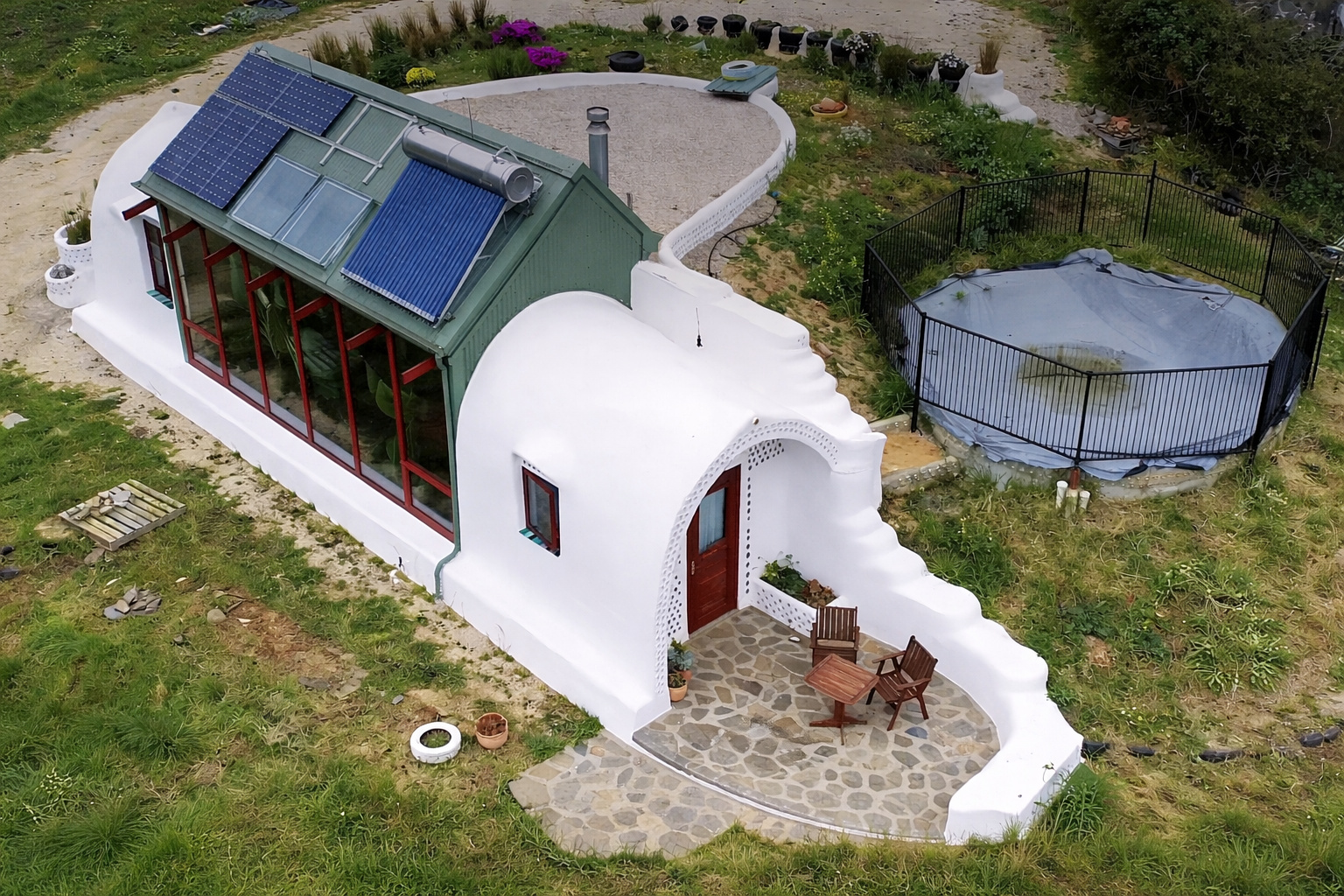
A construction that resembles a spaceship has attracted attention for combining sustainable architecture, energy independence, and resource reuse. The model known as Earthship off-grid operates entirely off the traditional electrical and water grid, showcasing a real alternative to the conventional housing standard. The proposal was developed by architect Michael Reynolds starting in the 1970s and has undergone adaptations in different regions around the world over the years. In southern Australia, in the Adelaide region, the concept was adjusted to local conditions characterized by intense heat, droughts, and wildfire risks, reinforcing its practical efficiency.
Concept of Earthship off-grid and its consolidation over time
The Earthship off-grid model was created with the aim of achieving maximum self-sufficiency. The house produces its own energy, collects rainwater, and uses recycled materials in construction, forming an integrated operating system. This concept, which began testing in the 1970s, gained greater international visibility starting in the 2000s, as noted by Earthship Biotecture. The proposal combines architecture, sustainability, and energy efficiency, creating a structure that operates independently and continuously.
Compact structure and official recognition in Australia
The Australian construction has about 70 square meters and features a functional layout with an integrated living room, internal greenhouse, bathroom, and entry area. To meet legal requirements, the project was registered as a guesthouse, which allowed its approval by the local council. This process made the house the first officially approved Earthship in Australia, consolidating the model in the country. Additionally, the property also serves as a demonstration space, welcoming visitors interested in sustainable housing and alternative solutions.
-
Warm water hidden deep in the ocean has been moving towards Antarctica for 20 years, potentially accelerating glacier melting from below.

-
U.S. Offers Nearly $200,000 to Combat Invasive Mussels Threatening Waterways and Hydroelectric Plants
-
Cigarette Butts Pollute Brazilian Beaches, Sparking Debate on Coastal Environmental Protection Measures
-
App Drivers Unite in Major Solidarity Effort to Aid Venezuela Earthquake Victims, Mobilizing the Brazilian Amazon with Donation Campaign


Construction solutions and thermal efficiency
The structure of the house uses approximately 700 tires filled with compacted earth, forming walls with high thermal retention capacity. This system allows heat to be absorbed throughout the day and gradually released during the night. At the back, an earthen slope helps maintain a stable internal temperature. The roof integrates solar panels and a water heating system, while areas with gravel and vegetation help filter rainwater before storage.
Water Management and Resource Reuse
Rainwater is directed to underground reservoirs, where it remains in suitable conditions for a longer time. This system increases the water autonomy of the residence and reduces dependence on external sources. In the front area, a glass greenhouse acts as a thermal regulator and also allows for the reuse of gray water. This space also contributes to the cultivation of plants, integrating different functions in a single environment.
Thermal Comfort Even in High Temperatures
Even when external temperatures exceed 40 °C, the interior of the house remains about 10 °C cooler. This result is achieved through the combination of thermal mass, planned ventilation, and shading. Double windows reduce heat entry, while earthen floors and walls help regulate the internal temperature. Another important feature is the earth tubes, installed up to 2.5 meters deep, which conduct air at the soil temperature, close to 13 °C, functioning as a natural air conditioning system.
Integrated Indoor Environment and Functionality
The interior of the Earthship combines elements that merge efficiency and comfort. Among them are wood stove, walls made with reused bottles, vaulted ceiling, and earthen floors, creating a cozy and functional environment. The project also serves as a practical reference for sustainable construction, demonstrating how different solutions can be integrated into a single structure.
The off-grid Earthship presents a model that combines self-sufficiency, sustainability, and thermal efficiency, raising a relevant question about the future of construction.
Could this type of housing become a viable large-scale alternative?